Israel Prime Minister Benjamin Netanyahu addresses the 80th session of the United Nations General Assembly, Friday, Sept. 26, 2025.
Prime Minister Benjamin Netanyahu once again turned to props and dramatic visuals during his United Nations address. Known for his theatrical speeches, the Israeli leader elevated his trademark showmanship to new heights this year. His latest performance combined maps, questions, symbols, and even a QR code in a bold attempt to sway global opinion.
A Map Called “The Curse”
Just minutes into his speech, Netanyahu held up a large map titled “THE CURSE.” With a thick black marker, he crossed out nations where Israel claimed to have eliminated its enemies during the ongoing regional conflict. The act set the tone for a fiery address that blended symbolism with sharp rhetoric.
Multiple-Choice Questions for World Leaders
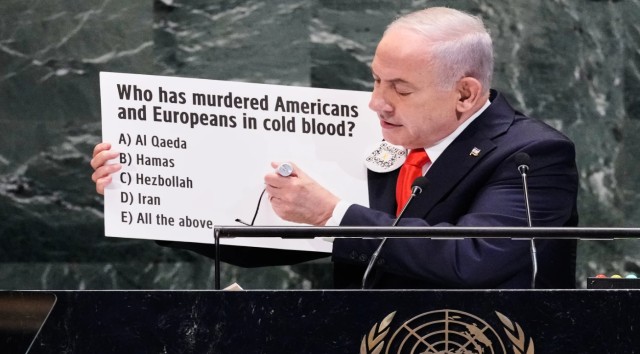
Next came a striking classroom-style prop. Netanyahu revealed a board displaying two multiple-choice questions. One of them read, “Who shouts ‘Death to America’?” The listed options included Iran, Hamas, Hezbollah, and Yemen’s Houthi militia. His answer was simple: “All of the above.”
This moment highlighted Netanyahu’s skill at reducing complex issues into simplified visuals designed to leave a lasting impact. It was reminiscent of his past displays, such as the cartoon bomb illustration he once used to criticize Iran’s nuclear ambitions.
The QR Code Symbol
Perhaps the most unexpected prop was a giant button bearing a QR code pinned to Netanyahu’s suit. QR codes, once made popular during the COVID-19 pandemic, now served as his latest communication tool. When scanned, the code directed viewers to a website focused on the October 7, 2023 Hamas attacks, the hostages taken, and Israel’s narrative of the war.
According to his office, Netanyahu’s team even arranged loudspeakers on trucks along the Gaza border. The aim was to broadcast his UN speech directly into Gaza, with a specific message to Israeli hostages. “We have not forgotten you,” he declared.
Claims of Phone Hacking
His office further alleged that the Israeli army had hacked phones inside Gaza, including devices used by Hamas operatives, to ensure the speech was heard. Yet, reports from Palestinians contradicted this claim. Residents inside Gaza said they neither heard the speech nor noticed hacked communications. No immediate evidence supported the hacking announcement.
Walkouts at the UN
Inside the UN General Assembly hall, Netanyahu faced visible resistance. Dozens of diplomats staged walkouts in protest of Israel’s actions in Gaza. By the time he continued speaking, the audience had thinned significantly. Only his aides, loyal supporters, and a handful of delegates remained to applaud and cheer.
Despite the sparse attendance, Netanyahu pressed on with a defiant tone. His speech rejected mounting international criticism over Israel’s military campaign and policies in Gaza.
Targeting His Real Audience
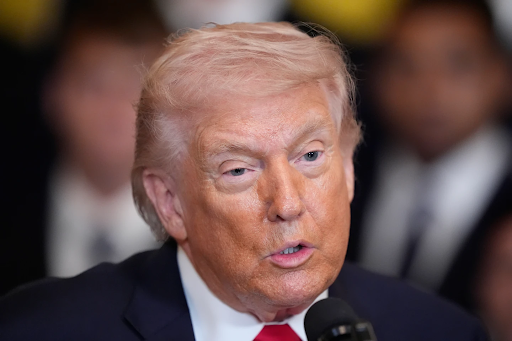
While the speech resonated little with the global assembly, Netanyahu seemed focused on different audiences. Domestically, his message aimed at energizing his supporters within Israel, a nation divided over the war and its leadership. Internationally, he sought to send signals ahead of his upcoming meeting with former U.S. President Donald Trump at the White House.
Throughout the address, Netanyahu praised Trump repeatedly. His words appeared designed to strengthen ties and ensure smoother diplomatic talks scheduled for Monday.
A Calculated Display of Showmanship
Netanyahu’s UN speeches have long been remembered for their visual flair. From bomb sketches to bold maps, his style often mixes dramatic props with hardline messaging. This year, his approach once again underlined his identity as both a communicator and political performer.
By showcasing defiance, loyalty to his base, and compliments toward Trump, Netanyahu managed to frame the speech as a success — at least for the audiences he most wanted to reach.