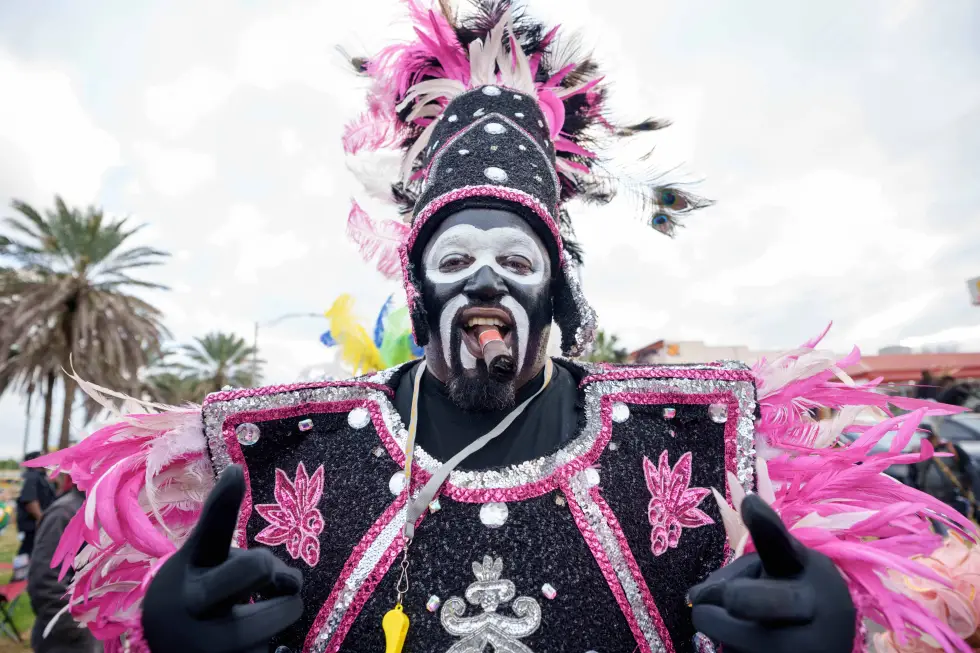
Members of the Zulu Tramps take part in the Mardi Gras Day parade in New Orleans on Tuesday, February 17, 2026, as part of the city’s annual Carnival celebrations. AP Photo
New Orleans burst into colour and celebration Tuesday as thousands gathered for Mardi Gras, the grand finale of the Carnival season. Along historic St. Charles Avenue, parade-goers leaned from wrought-iron balconies and shouted the familiar call, “Throw me something, Mister,” hoping to catch beads and other souvenirs tossed from passing floats.
Mardi Gras, or Fat Tuesday, signals the final day of festivities before the Christian season of Lent begins. For many, it represents one last opportunity for celebration, rich food and lively gatherings before a period of reflection and sacrifice that starts on Ash Wednesday.
Streets Come Alive at Sunrise
In Louisiana’s largest city, famous worldwide for its Mardi Gras traditions, people arrived early to claim their spots along the parade route. As the sun rose, families and friends set up folding chairs, coolers, portable grills and even ladders to get a better view.
Revelers dressed in the traditional Mardi Gras colours of green, gold and purple. Some wore elaborate costumes covered in sequins and feathers, while others proudly displayed homemade creations.
As floats rolled by, marching bands filled the air with music. Dancers waved to the crowds and performers in towering feathered headdresses tossed beads and small gifts. Many people enjoyed drinks and snacks, choosing festive cocktails over their usual morning routines.
Treasured “Throws”
Each parade offers its own special “throws,” the small items tossed from floats into the crowd. These include plastic beads, candy, toys, cups and stuffed animals.
One of the most sought-after items comes from the Zulu parade — hand-decorated coconuts. Named after the largest ethnic group in South Africa, the Zulu Social Aid and Pleasure Club’s parade is a major highlight of Mardi Gras.
At one point, a man dressed as a bright red crawfish, complete with fabric claws, caught one of the glitter-covered coconuts. He raised it high above his head as it sparkled in the sunlight.
Costumes and Community Spirit
The spirit of Mardi Gras stretches far beyond the main parade route. In the French Quarter, celebrations spilled onto balconies, porches and narrow streets. Music echoed from brass bands, and spontaneous parades formed throughout the day.
One such parade featured a man dressed as a blue alligator playing a washboard instrument, his paper-mâché tail sweeping stray beads from the pavement. A brass band played “The Saints,” drawing cheers from bystanders.
In Jackson Square, creative costumes drew smiles from visitors. One person painted entirely as a zebra mingled with a group dressed as characters from the board game Hungry Hungry Hippos. Another wore a vintage diving helmet made of brass and copper.
“The world will be here tomorrow, but today is a day off and a time to party,” said Sue Mennino, dressed in an Egyptian-inspired outfit complete with a gold headpiece and glittered makeup.
Martha Archer, dressed as Madame Leota from a well-known theme park attraction, added, “The people are the best part. Everybody is just so happy.”
Celebrations Across the Region
The festivities extend beyond New Orleans. Communities across Louisiana mark the day with their own traditions, including elegant balls and the Courir de Mardi Gras in rural areas, where participants chase chickens for a communal gumbo.
Other cities along the Gulf Coast, including Mobile, Alabama, and Pensacola, Florida, also host parades. Internationally, Mardi Gras celebrations take place in Brazil and across parts of Europe.
One unusual tradition occurs in Liberal, Kansas, and Olney, England, where women compete in a Pancake Day race. Contestants run while flipping pancakes in frying pans, a nod to the custom of using up rich ingredients before Lent.
As the sun set over New Orleans, another Carnival season came to a close — marked by music, laughter and the unmistakable joy of Mardi Gras.