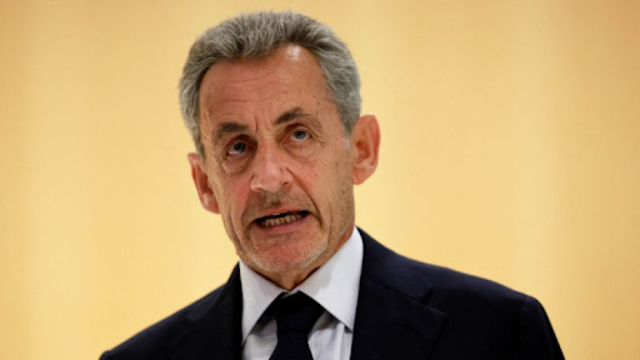
A court in Paris has sentenced former President Nicolas Sarkozy to five years in jail for plotting to use Libyan funds to finance his 2007 election campaign. CNN
A Paris court handed former French President Nicolas Sarkozy a five‑year prison term after finding him guilty of criminal conspiracy linked to Libyan funding of his 2007 campaign. The ruling marks the first time a modern French president faces actual jail time. The court said he must go to prison even as he pursues an appeal.
The Verdict and Its Scope
Judges found Sarkozy guilty of criminal association connected to fundraising between 2005 and 2007. He offered diplomatic favors in return for funds from Libya. The court dropped three other charges: passive corruption, illegal campaign financing, and concealing embezzlement.
The court judged his behavior “exceptionally serious”, warning that such actions can erode public confidence in institutions. “The goal of the criminal conspiracy was to give you an advantage in the electoral campaign,” the court declared.
Sarkozy Speaks Out
Sarkozy rejected the verdict. Standing beside his wife Carla Bruni‑Sarkozy, he said:
“If they absolutely want me to sleep in prison, I will sleep in prison. But with my head held high. I am innocent. This injustice is a scandal.”
He appealed to the French public: “Hatred truly knows no bounds.”
He framed the case as one in which he was punished for allowing aides to act on an “idea” of illicit funding—not for direct involvement.
Associates Also Implicated
Two of Sarkozy’s former ministers, Claude Guéant and Brice Hortefeux, were convicted of criminal association too, though cleared of some charges. The court said Sarkozy allowed them to negotiate with Libyan contacts for campaign support.
Interestingly, the court noted it could not prove for certain that the Libyan money actually financed the campaign—but ruled that conspiracy itself is a punishable offense in French law.
Historical Context and Reaction
Sarkozy served as president from 2007 to 2012. During the trial—which lasted months and involved 11 co‑defendants—he denied wrongdoing. He called accusations part of a politically motivated plot.
He also pointed to a controversial memo allegedly from Libyan intelligence that claimed a 50 million‑euro funding agreement. The court now believes that document is likely a forgery.
One co‑defendant, Ziad Takieddine, died in 2025. He had claimed to deliver cash from Libya to France during Sarkozy’s tenure but later retracted those claims.
Legacy and Ongoing Legal Battles
Despite this conviction, Sarkozy remains a major figure in conservative politics in France. He already faced a separate corruption conviction connected to a 2014 case and lost his Legion of Honor.
He also was convicted over illegal financing in his 2012 campaign, though his appeal in that case remains pending.
Forward Steps
The court will decide when Sarkozy must start serving his sentence. Because the ruling allows incarceration during an appeal, the timeline is uncertain.
This conviction shakes French politics. It may affect Sarkozy’s influence and how future political campaigns are funded. The case highlights accountability at the highest levels of leadership.