North Korea Test-Fires Missiles Ahead of Trump’s Asia Visit, Raising Regional Tensions. Associated Press
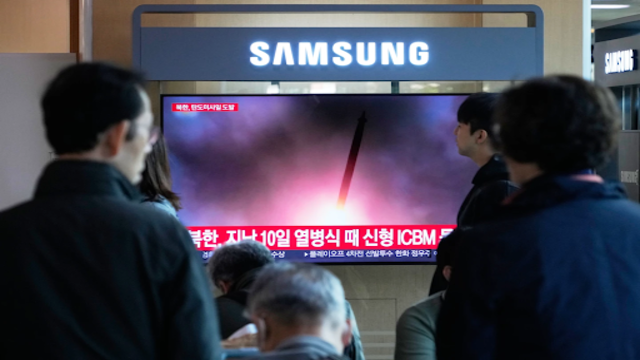
North Korea test-fired multiple ballistic missiles on Wednesday, just days before U.S. President Donald Trump begins his Asia trip. This marks the country’s first missile test in five months and has reignited concerns over regional stability.
According to South Korea’s Joint Chiefs of Staff, the missiles were launched from an area south of Pyongyang and traveled about 350 kilometers (220 miles) toward the northeast. While the exact details were not disclosed, the missiles reportedly did not land in the sea.
South Korea confirmed that its military remains on high alert and ready to respond to any provocations, emphasizing its firm alliance with the United States.
Japan, U.S., and South Korea in Close Coordination
Japan’s new Prime Minister, Sanae Takaichi, stated that Tokyo is in constant communication with both Washington and Seoul. The three nations are reportedly sharing real-time missile warning data to closely monitor North Korea’s activities.
So far, Pyongyang has not issued an official statement regarding the test launches.
Trump’s Asia Tour to Focus on Diplomacy and Security
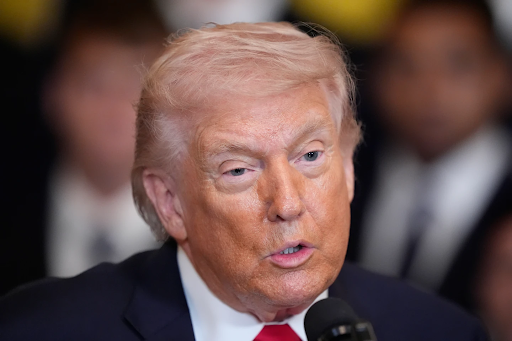
President Trump is scheduled to depart for Asia later this week, marking his first regional trip of his second term. His itinerary includes visits to Malaysia for a regional summit, followed by Japan and then South Korea for the Asia-Pacific Economic Cooperation (APEC) meeting.
Trump is also expected to hold bilateral discussions with Chinese President Xi Jinping and South Korean President Lee Jae Myung in Gyeongju before the summit. However, South Korean officials have indicated that Trump may not attend the main APEC conference scheduled from October 30 to November 1.
Analysts predict North Korea’s latest missile launch may be a calculated move to gain global attention ahead of the summit and to reinforce its claim as a nuclear weapons state.
Strategic Provocation Ahead of Diplomatic Talks
Experts believe North Korean leader Kim Jong Un is using these tests as a strategic reminder of his military capabilities. They suggest that Pyongyang aims to strengthen its bargaining power before any potential diplomatic engagement.
Kim has repeatedly sought recognition for North Korea as a nuclear power—a status he views as essential for negotiating the lifting of U.N. sanctions imposed for its weapons program.
History of Tensions and Failed Diplomacy
This week’s launches mark North Korea’s first missile activity since May 8, when it tested short-range systems simulating nuclear counterstrikes against the U.S. and South Korea. The tests also come just months after South Korean President Lee Jae Myung took office, pledging to pursue peace and dialogue on the Korean Peninsula.
Relations between Washington and Pyongyang have remained tense since the collapse of Trump and Kim’s denuclearization talks in 2019. However, recent statements from Kim hint at a possible diplomatic reopening—if the U.S. relaxes its stance on denuclearization.
New Missile Display Underscores Kim’s Military Ambitions
Earlier this month, North Korea showcased its latest intercontinental ballistic missile (ICBM) during a military parade attended by Chinese, Russian, and other senior officials. The event featured the Hwasong-20 ICBM, described by state media as the nation’s “most powerful nuclear strategic weapon system.”
Defense experts believe the Hwasong-20 is capable of carrying multiple nuclear warheads designed to penetrate U.S. missile defenses. Analysts warn that a test launch of the new missile could occur in the coming months, heightening international tensions once again.
Rising Tensions Ahead of APEC Summit
With President Trump’s Asia tour about to begin and North Korea’s latest missile provocations dominating headlines, the geopolitical stakes are high. Regional allies are intensifying communication and defense readiness, fearing Pyongyang could escalate further during or after the APEC meetings.
As the world watches closely, the timing of North Korea’s missile launches sends a clear message—Kim Jong Un is determined to assert his nation’s nuclear status, even as global leaders gather to discuss peace and economic cooperation in Asia.