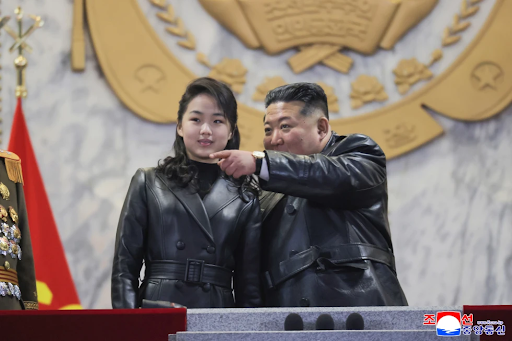
Kim Jong Un delivers a North Korea warning at a major party congress, threatening Seoul while signaling possible US talks.
Kim Jong Un has warned that North Korea could “completely destroy” South Korea if its security is threatened, even as he signalled that dialogue with the United States remains possible under certain conditions. His remarks came at the close of a major ruling party congress in Pyongyang, where he outlined the country’s strategic priorities for the next five years.
The message combined defiance toward Seoul with a more conditional tone toward Washington, reflecting a calibrated approach that analysts say is aimed at strengthening North Korea’s regional leverage without foreclosing diplomatic options.
A Harder Line on South Korea
During the congress, Kim reaffirmed his refusal to engage with Seoul, describing South Korea as a permanent adversary rather than a partner in reconciliation. He dismissed calls for renewed inter-Korean dialogue and reiterated that there was “absolutely nothing to discuss” with what he called an enemy state.
This stance builds on his earlier decision to abandon the long-standing goal of peaceful reunification between the two Koreas. Instead, North Korea now frames the South as a hostile neighbor whose actions must be countered with military preparedness.
State media reported that Kim emphasized his military’s readiness to “immediately and thoroughly retaliate” against any perceived threat. While experts believe such rhetoric does not necessarily signal imminent conflict, they view it as part of a broader strategy to reinforce deterrence and project strength.
Tensions may rise further as South Korea prepares for its annual joint military exercises with the United States, drills that Pyongyang routinely condemns as rehearsals for invasion.
Conditional Openness Toward Washington
Although Kim maintained what he described as the “toughest stance” against Washington, he also suggested that relations could improve if the United States abandons what North Korea calls a “hostile policy.” That phrase typically refers to sanctions and military pressure tied to Pyongyang’s nuclear program.
Kim stated that the future of US-North Korea relations depends entirely on Washington’s approach. He added that his country is prepared for either peaceful coexistence or prolonged confrontation, placing responsibility for the outcome on the United States.
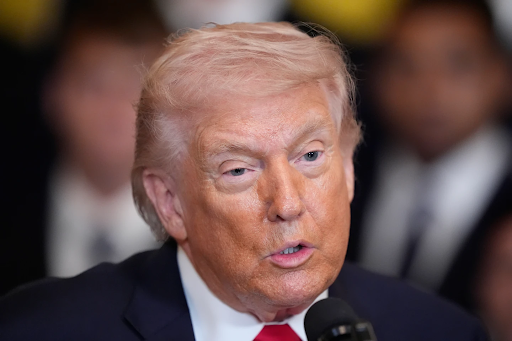
Diplomacy between the two sides has remained stalled since the collapse of Kim’s second summit with former US President Donald Trump in 2019. Since then, North Korea has repeatedly rejected calls from Washington and Seoul to resume talks aimed at curbing its nuclear ambitions.
Expanding Nuclear and Military Capabilities
Alongside his political messaging, Kim used the congress to lay out ambitious military goals. He declared that rapid advances in nuclear and missile development have “permanently cemented” North Korea’s status as a nuclear weapons state.
Among the priorities for the next five years are new intercontinental ballistic missiles capable of being launched from underwater platforms, suggesting plans to equip a developing nuclear-powered submarine. He also called for expanding tactical nuclear weapons, including short-range systems and artillery aimed at South Korea.
In addition, Kim outlined efforts to strengthen electronic warfare capabilities, deploy artificial intelligence-equipped attack drones, and expand reconnaissance satellite technology. Faster production of nuclear warheads and a wider range of delivery systems were also emphasized.
North Korea has already tested solid-fuel ICBMs and advanced missile systems in recent years, while claiming progress in military satellite launches and submarine development.
Strategic Calculations Beyond the Peninsula
Kim’s rhetoric toward Seoul coincides with closer ties to Moscow, including reported military cooperation related to the war in Ukraine. Analysts suggest that while North Korea has deepened its partnership with Russia, it may still seek flexibility in dealing with Washington, particularly if geopolitical dynamics shift.
By pairing threats with conditional diplomacy, Kim appears to be reinforcing deterrence at home while preserving space for negotiation abroad. As regional tensions persist, the coming months will test whether confrontation or cautious engagement defines the next chapter in Korean Peninsula politics.