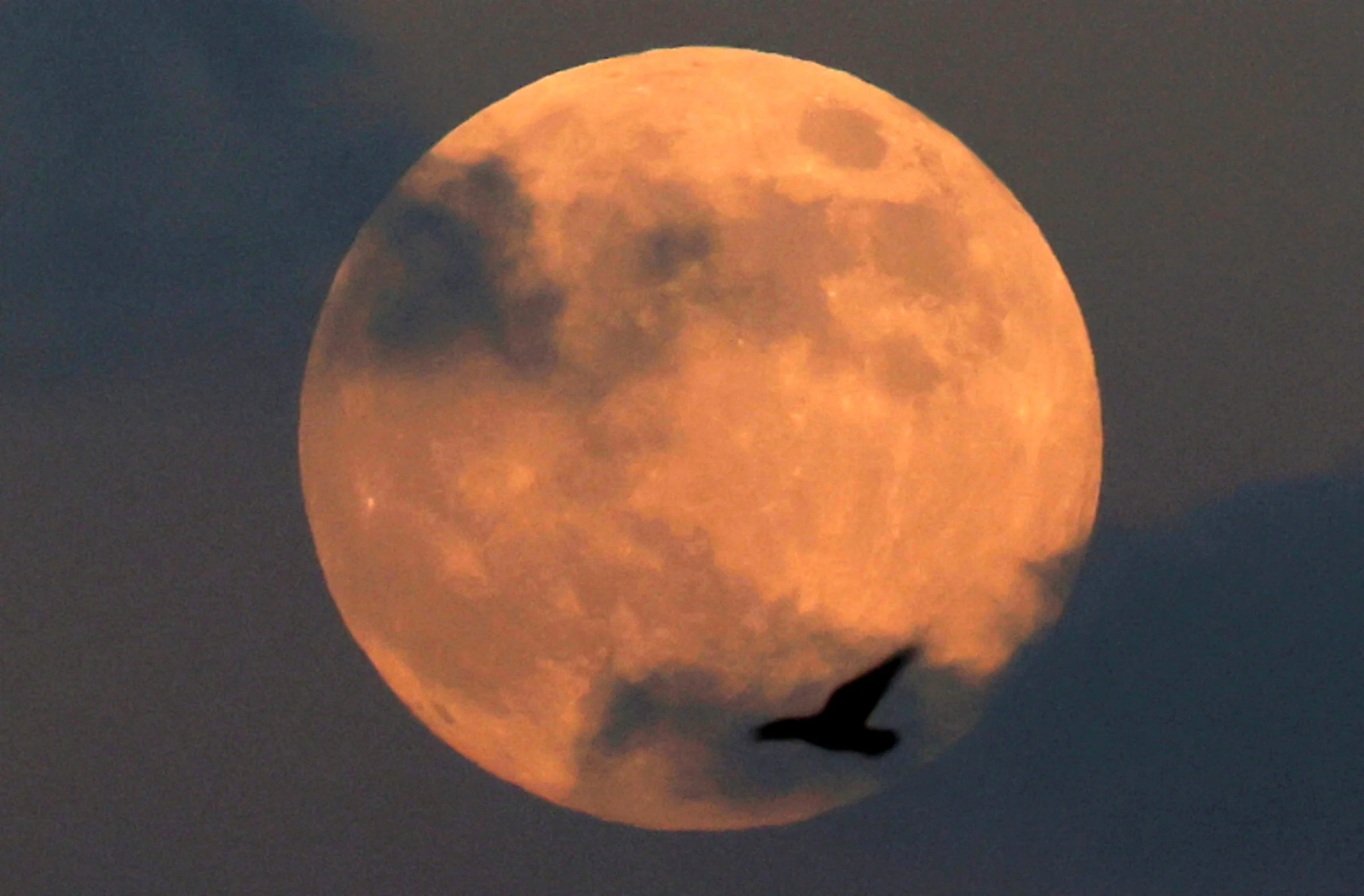
The last supermoon of 2024, dubbed "Beaver Moon" rises in Cairo, Egypt November 15, 2024.
Skywatchers have a reason to look up this week — November is bringing the year’s closest and brightest supermoon. The celestial event, known as the Beaver Moon, will peak on Wednesday, November 5, glowing nearly 30% brighter and appearing up to 14% larger than usual, according to NASA.
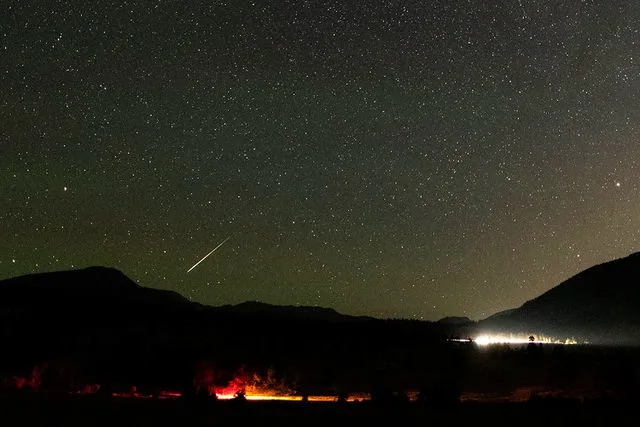
The spectacular sight will occur just one night after the Southern Taurids meteor shower reaches its peak, though the moon’s brightness may outshine the smaller meteors streaking across the sky.
When and Where to Watch
The full moon will officially peak at 8:19 a.m. ET on November 5, shortly after sunrise in the Eastern U.S. But skywatchers won’t miss out — the moon will appear nearly full and luminous throughout the nights of November 4 and 5, and will continue to glow impressively for several days after.
For the best view, experts suggest heading outdoors after sunset, when the moon rises above the horizon and the glow appears more dramatic against the twilight sky.
Why It’s Called a Supermoon
A supermoon happens when the moon’s orbit brings it closest to Earth — a point called perigee. During this time, the moon appears larger and brighter because it’s physically nearer to our planet.
NASA explains that this happens only a few times a year, when a new or full moon coincides with perigee. The result is a brilliant, oversized lunar display that feels closer and more striking than usual.
Click here to watch the supermoon
This November event marks the second supermoon of 2025, following one in October and preceding another expected on December 4. Among the three, November’s moon will be the closest to Earth at 221,817 miles, making it the most dazzling of the trio. December’s supermoon will follow at 221,965 miles, while October’s was slightly farther at 224,600 miles.
Weather Conditions May Affect Visibility
Stargazers in parts of the Northeast, Pacific Northwest, and California may face cloudy skies, according to the National Weather Service. Forecasts predict heavy sky cover from 7 p.m. ET on November 5 to 1 a.m. ET on November 6, which could obscure visibility in those regions.
However, viewers across much of the Midwest, South, and Plains are likely to enjoy clearer skies and a perfect view of the glowing spectacle.
The Story Behind the ‘Beaver Moon’
The November full moon carries a name rooted in Native American and early Colonial folklore. According to the Farmer’s Almanac, the Beaver Moon marks the time when beavers begin preparing their lodges for the winter freeze. It was also the season when fur traders set traps for beavers to collect warm winter pelts.
Other traditional names for this moon include the Frost Moon, Freezing Moon, Whitefish Moon, and Deer Rutting Moon, each tied to natural cycles that signaled the coming of winter.
A Night to Remember
Whether or not the skies are perfectly clear, this week’s Beaver Moon promises to light up November nights with a celestial glow unlike any other this year.
For those lucky enough to catch it, the supermoon of November 2025 will be a reminder of nature’s quiet beauty — a luminous beacon closing the autumn season and ushering in the chill of winter.