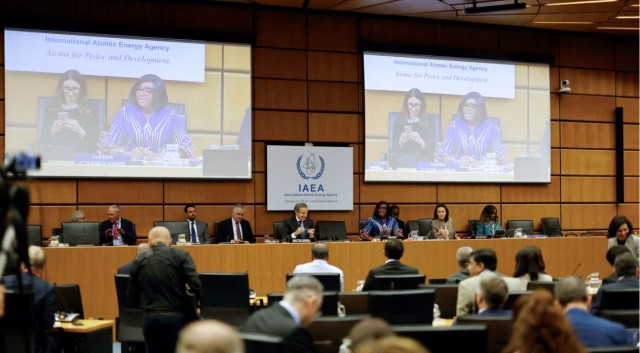
A view before the start of quarterly Board of Governors meeting at the IAEA headquarters in Vienna, Austria, on June 9.
Iran has issued a stern warning to the international community, threatening to accelerate its nuclear program in response to a resolution passed by the United Nations’ nuclear watchdog. The International Atomic Energy Agency (IAEA) formally declared Iran in breach of its non-proliferation obligations on Thursday, sparking global concern.
Iran Reacts Sharply to IAEA Censure
Shortly after the IAEA board passed the resolution, Iran retaliated by announcing new nuclear steps. Tehran said it would launch an additional uranium enrichment facility and begin operating advanced centrifuges.
These moves significantly raise the stakes ahead of indirect talks with the United States scheduled for Sunday in Muscat, Oman.
The 35-member board of governors voted with 19 in favor of the resolution, three against, and 11 abstentions. The motion was backed by the United States and key European allies including the United Kingdom, France, and Germany.
Nuclear Escalation Plans Revealed
An Iranian official revealed to CNN that Tehran’s response would be swift and serious. These steps include reducing cooperation with the IAEA, activating new-generation centrifuges, and even removing monitoring cameras from its Isfahan nuclear facility.
This marks Iran’s latest attempt to push back against what it calls a “politicized” resolution. Iran insists its nuclear program is strictly for peaceful energy use and blames the West for trying to derail its sovereign rights.
The Trigger: A Damning IAEA Report
The resolution followed a May 31 IAEA report accusing Iran of multiple breaches. The agency said Iran had failed to explain uranium traces found at undisclosed sites and noted that Iran’s uranium stockpile was nearing weapons-grade levels.
Despite these findings, Iran maintains that it has no intention of building a nuclear bomb. The country argues that it is being unfairly targeted and that the report is influenced by political motives.
Foreign Minister Abbas Araghchi echoed this sentiment, warning on social platform X, “Iran will react strongly against any violation of its rights.”
History of Tensions With the IAEA
This isn’t the first time Iran has locked horns with the IAEA. In 2022, a similar censure prompted Tehran to remove surveillance cameras from nuclear sites, further clouding international insight into its enrichment activities.
Such actions not only disrupt monitoring but also complicate diplomatic efforts to revive the stalled nuclear deal.
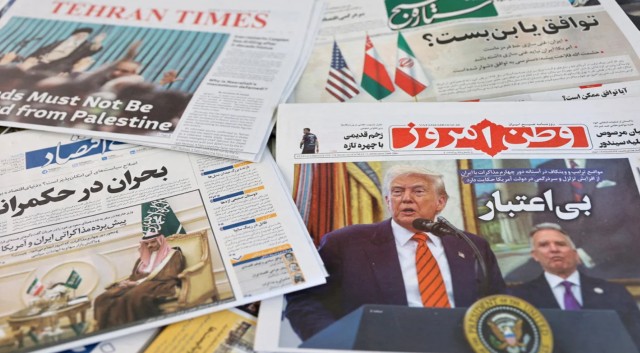
US and Iran Prepare for More Talks Amid Growing Uncertainty
The timing of this resolution is critical. Iran and the United States are set to resume indirect nuclear negotiations this weekend. However, prospects appear bleak.
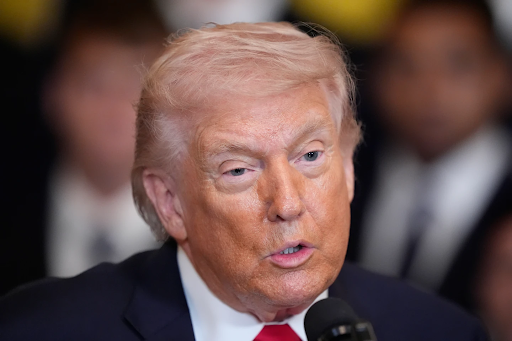
Former President Donald Trump, in a recent podcast interview, expressed deep skepticism about Iran’s intentions. “They seem to be delaying, and I think that’s a shame,” he remarked, indicating his diminishing confidence in reaching a new agreement.
The talks in Muscat will be the sixth round of negotiations, and key differences—particularly Iran’s demand to retain its right to enrich uranium—remain unresolved.
Middle East on Edge as Security Measures Tighten
In anticipation of possible fallout, the U.S. has started withdrawing non-essential personnel from parts of the Middle East. Officials from the State and Defense Departments have taken precautionary steps to safeguard American interests in the region.
Additionally, the U.S. embassy in Jerusalem has restricted the travel of American staff and their families, limiting movement to Tel Aviv, Jerusalem, and Be’er Sheva. These alerts reflect a growing sense of unease in the region.
A Volatile Nuclear Path Ahead
As Iran moves to escalate its nuclear efforts and tensions mount globally, the future of nuclear diplomacy remains uncertain. The recent IAEA resolution has not only deepened mistrust but also pushed both Tehran and Washington further from compromise.
The international community now watches closely, hoping that dialogue will prevail over escalation.