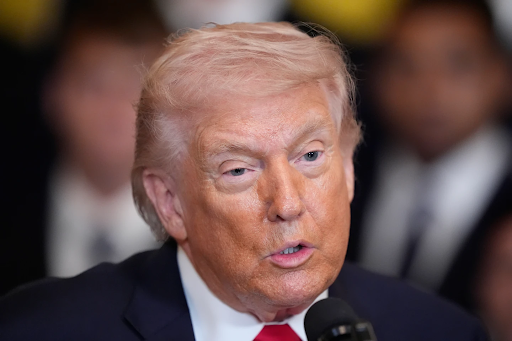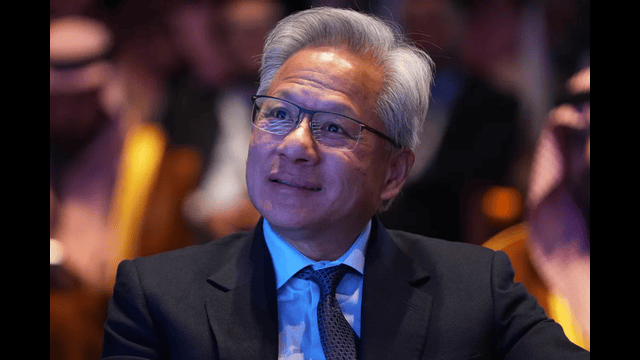
Nvidia CEO Jensen Huang listens as President Donald Trump speaks during the Saudi Investment Forum at the Kennedy Center, Wednesday, Nov. 19, 2025, in Washington.
Nvidia CEO Jensen Huang held closed-door meetings with President Donald Trump and Republican senators on Wednesday, signaling how critical federal policy has become in the rapidly escalating AI race. His visit comes as lawmakers debate U.S. competitiveness, export controls, and the role of tech giants in shaping the future of artificial intelligence.
High-Stakes Visits on Capitol Hill
Huang met privately with Republicans on the Senate Banking Committee, joining a wave of tech leaders pushing for federal policies that protect the AI industry. At the center of the discussion was the controversial issue of selling Nvidia’s prized AI chips to China and other global rivals.
The meetings unfolded amid soaring AI investments, intense corporate lobbying, and increasing political pressure to regulate advanced technology.
Huang Defends Export Strategy in the AI Race
Speaking to reporters before the meeting, Huang stressed that the U.S. must lead the global AI competition. He argued that American companies should have unrestricted access to advanced hardware and warned that excessive controls could hinder innovation.
He acknowledged concerns about selling chips to China but insisted that current restrictions have not slowed China’s AI development.
“We need to compete around the world,” Huang said. “We can’t degrade the chips we sell to China. They won’t accept that. We should offer the most competitive chips possible.”
Earlier that day, Huang also met with Trump to discuss export regulations, wishing the president “happy holidays” afterward.
Policy Shifts Shape a New AI Landscape
The Trump administration recently reversed Biden-era limits that had blocked Nvidia and other chipmakers from exporting chips to many countries. In August, the White House announced an unusual arrangement allowing Nvidia and AMD to sell chips in China—if the U.S. government receives a 15% cut of those sales.
The deal has split lawmakers. Many in Congress strongly support limiting AI chip exports to China, which they view as the United States’ primary rival in the pursuit of artificial superintelligence.
Lawmakers React: Support, Skepticism, and Frustration
Reactions to Huang’s visit varied.
Republican Senator Mike Rounds called the meeting “healthy” and said senators discussed broad AI issues while staying open to many policy options. He noted Nvidia currently does not sell chips in China but wants to keep future global markets open while respecting national security concerns.
However, not all Republicans were convinced.
Senator John Kennedy dismissed Huang’s input, saying he skipped the meeting entirely.
“I don’t consider him an objective or credible source,” Kennedy said. “He’s got more money than the Father, the Son and the Holy Ghost—and he wants more.”
On the Democratic side, frustration was even more pointed.
Democrats were excluded from the meeting, prompting criticism from Senator Elizabeth Warren, the top Democrat on the Banking Committee.
Warren accused Huang of lobbying Republicans “in secret” and called for the Nvidia CEO to testify publicly. She said Congress needs answers about why Nvidia supports chip sales that could benefit Chinese manufacturers over American competitors.
A New Battlefront in Washington’s AI Debate
As the AI race intensifies, tensions continue to rise over how the U.S. should balance innovation, business interests, and national security. Huang’s visit highlights the widening gap between tech companies seeking global flexibility and lawmakers fearful of strengthening foreign rivals.
With no AI bills passed yet this year, Congress remains divided on how to regulate the industry. What is clear, however, is that Nvidia—one of the world’s most influential AI chipmakers—will stay at the center of the debate.