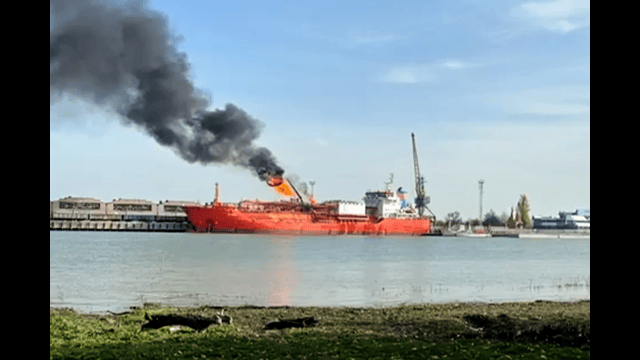
This image, released on Monday, Nov. 17, 2025, by Romania’s Emergency services, ISU, shot from the Romanian side of the border on the Danube river, shows a cargo ship loaded with liquified petroleum gas engulfed by flames following Russian strikes on Ukrainian port infrastructure in Izmail, Ukraine.
A Turkish-flagged tanker caught fire on Monday after a drone strike in Ukraine’s Odesa region, intensifying security concerns around the country’s vital Black Sea trade routes. The attack came just one day after President Volodymyr Zelenskyy finalized a deal to import U.S. liquefied natural gas (LNG) through the same area.
Drone Strike Sparks Fire at Odesa’s Izmail Port
The tanker MT Orinda was struck while offloading liquefied petroleum gas at the Izmail port. Turkey’s Directorate for Maritime Affairs confirmed the hit and reported that all 16 crew members evacuated safely.
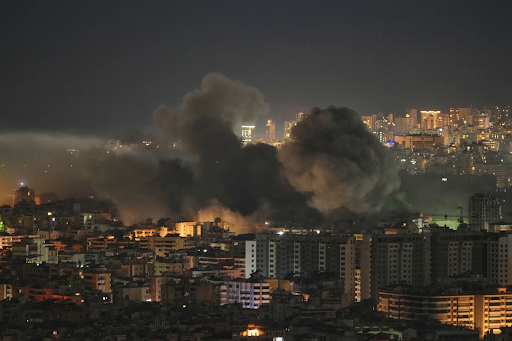
The drone strike ignited multiple fires at the port and damaged several civilian vessels. Regional military chief Oleh Kiper said Russian drones targeted Odesa overnight, hitting energy facilities and port infrastructure. One person was injured during the attack.
Russia, which has repeatedly bombarded Odesa’s ports since invading Ukraine nearly four years ago, offered no immediate comment.
Izmail’s Growing Importance for U.S. LNG
The drone strike occurred at a crucial time for Ukraine’s energy strategy. Izmail, located on a Black Sea estuary, has become a lifeline for Ukrainian imports and exports as Russia continues to hit major ports.
President Zelenskyy signed a key agreement in Greece on Sunday to bring U.S. LNG to Odesa starting January. The gas will be transported through pipelines connected to the Alexandroupolis port in northern Greece, offering Ukraine another critical energy source ahead of winter.
With Russia intensifying attacks on Ukraine’s power grid, the LNG deal is seen as a strategic move to stabilize energy supplies.
Romanian Villages Evacuated Over Tanker Cargo Risk
Across the border, Romanian authorities ordered the evacuation of two villages near Izmail due to the hazardous nature of the tanker’s cargo. People and animals were moved to safety as a precautionary measure.
The decision underscores the broader regional risks linked to Russia’s continuous strikes on southern Ukraine’s shipping routes.
Deadly Strikes Hit Other Ukrainian Cities
The Odesa attack coincided with several deadly assaults across Ukraine:
- In Balakliya, located in the Kharkiv region, Russian missile strikes killed three people and injured 11, including four girls aged 12 to 17.
- In Nikopol, a daylight drone and artillery attack killed two people and wounded two others. Residential blocks, shops, and a hair salon were damaged, according to regional official Vladyslav Haivanenko.
The United Nations reports that more than 12,000 Ukrainian civilians have died due to Russian strikes since the war began.
Massive Overnight Drone and Missile Assaults
Ukraine’s air force stated that Russia fired two Iskander-M ballistic missiles and 128 drones, including decoys, in overnight operations.
Russia, meanwhile, said it intercepted 36 Ukrainian drones targeting its territory as Kyiv continues efforts to disrupt Moscow’s power grid.
A Ukrainian drone hit an electricity substation in Russia’s Ulyanovsk region, but local officials said power services remained stable and no injuries were reported.
Rising Stakes Ahead of Winter
The drone strike on the Turkish tanker highlights the increasing risks facing Ukraine’s critical ports as the country prepares for harsh winter conditions. With Russia repeatedly targeting energy facilities, the incoming U.S. LNG supply is poised to play a crucial role in supporting Ukraine’s resilience.
As the conflict intensifies, Odesa and its surrounding ports remain central to Ukraine’s survival—both economically and energetically—making security in the region even more vital in the months ahead.