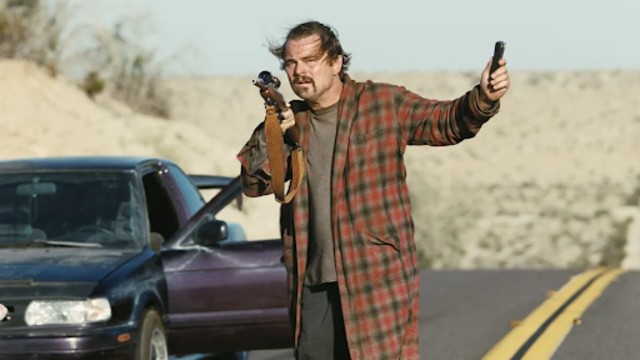
Leonardo DiCaprio in 'One Battle After Another.' Courtesy of Warner Bros.
Paul Thomas Anderson returns with One Battle After Another, a gripping new drama that critics are calling a masterpiece. Early reviews praise it as a politically charged triumph, both horrifying and absurdly funny, and among the most ambitious works of his career.
Anderson, known for exploring America’s past, now turns his lens to the present. The director, whose filmography includes Boogie Nights, There Will Be Blood, and Licorice Pizza, has crafted a contemporary story that speaks directly to today’s world. This latest work is loosely adapted from Thomas Pynchon’s 1990 novel Vineland, reshaped to reflect modern times.
A Story Rooted in Resistance
The film follows Bob Ferguson, played by Leonardo DiCaprio, an explosives expert drawn into a revolutionary underground. His partner and leader, Perfidia Beverly Hills (Teyana Taylor), is fierce and uncompromising. She fights for reproductive rights, open borders, and Black liberation. Her fire burns so brightly that even her enemy, Colonel Steven Lockjaw, played with menace by Sean Penn, cannot resist her pull.
Lockjaw, a brutal figure of authority, embodies seething racism and unchecked power. His twisted attraction to Perfidia sets the stage for years of conflict, betrayal, and pursuit. Anderson draws clear parallels between this fictional villain and real-world figures, refusing to soften his political commentary.

(Photo by Warner Bros. Pictures)
A Furious and Timely Vision
The director has long been fascinated by history’s darker corners. Yet One Battle After Another feels different — more urgent, more personal. Critics note that Anderson’s anger at America’s current political climate pulses through the film. His fears for marginalized communities, including his own family, inform every frame.
The film spans decades, beginning with the revolutionary fervor of Perfidia’s movement. Later, it shifts to focus on her daughter Willa (Chase Infiniti), raised in hiding with Bob. By then, the group’s resistance has faded, its members scattered. Bob, numbed by alcohol and time, has lost his edge. But danger returns when Lockjaw resurfaces, forcing father and daughter back into the fight.
Blending Suspense With Social Commentary
At its core, One Battle After Another is a thriller. Anderson uses chase sequences and tense standoffs to deliver suspense, while never losing sight of larger ideas. The story explores radicalism, state power, and the human cost of resistance. It also asks audiences to consider how ordinary people can support those who fight on the front lines.
DiCaprio brings both gravity and humor to Bob. At times, his stoner comedy veers into indulgence, but the narrative regains focus through its action and moral weight. Taylor’s performance as Perfidia is described as magnetic and unforgettable. Sean Penn, meanwhile, leans into villainy with unnerving conviction.
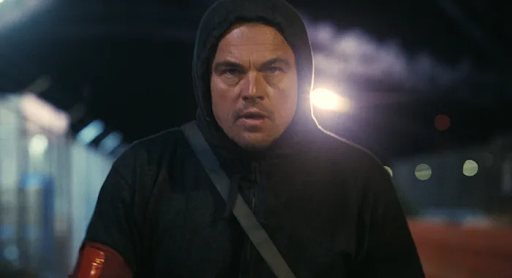
(Photo by Warner Bros. Pictures)
Moments of Humanity Amid Darkness
Despite its bleak themes, Anderson balances despair with glimpses of solidarity. A subplot featuring Benicio Del Toro, as a small-business owner helping immigrants escape deportation, provides one of the film’s most moving sequences. These moments highlight the quiet heroism of everyday people.
Visually, the film is striking. Anderson uses VistaVision cameras to capture both nightmarish violence and fleeting beauty. Rebel silhouettes racing across rooftops, desert highways glowing under moonlight — these images linger long after the credits. Jonny Greenwood’s score shifts seamlessly between jazz and ominous tones, heightening both tension and tenderness.
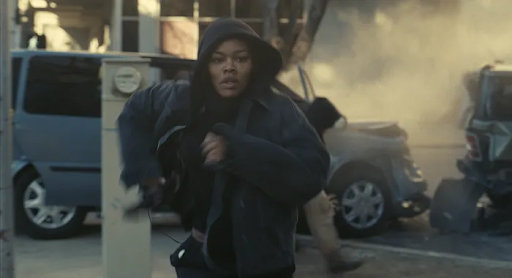
(Photo by Warner Bros. Pictures)
A Rallying Cry for Today
One Battle After Another is not sentimental, nor does it offer easy hope. It is tough, sardonic, and unflinching in its view of America’s fractures. Yet, in its final moments, the film suggests that a future worth fighting for still exists — fragile, uncertain, but possible.
With this film, Anderson delivers not just a story, but a rallying cry. It is one of the rare major studio releases of recent years to confront politics so directly, and it does so with fearless artistry. For critics and audiences alike, One Battle After Another stands as a masterpiece of both cinema and conviction.