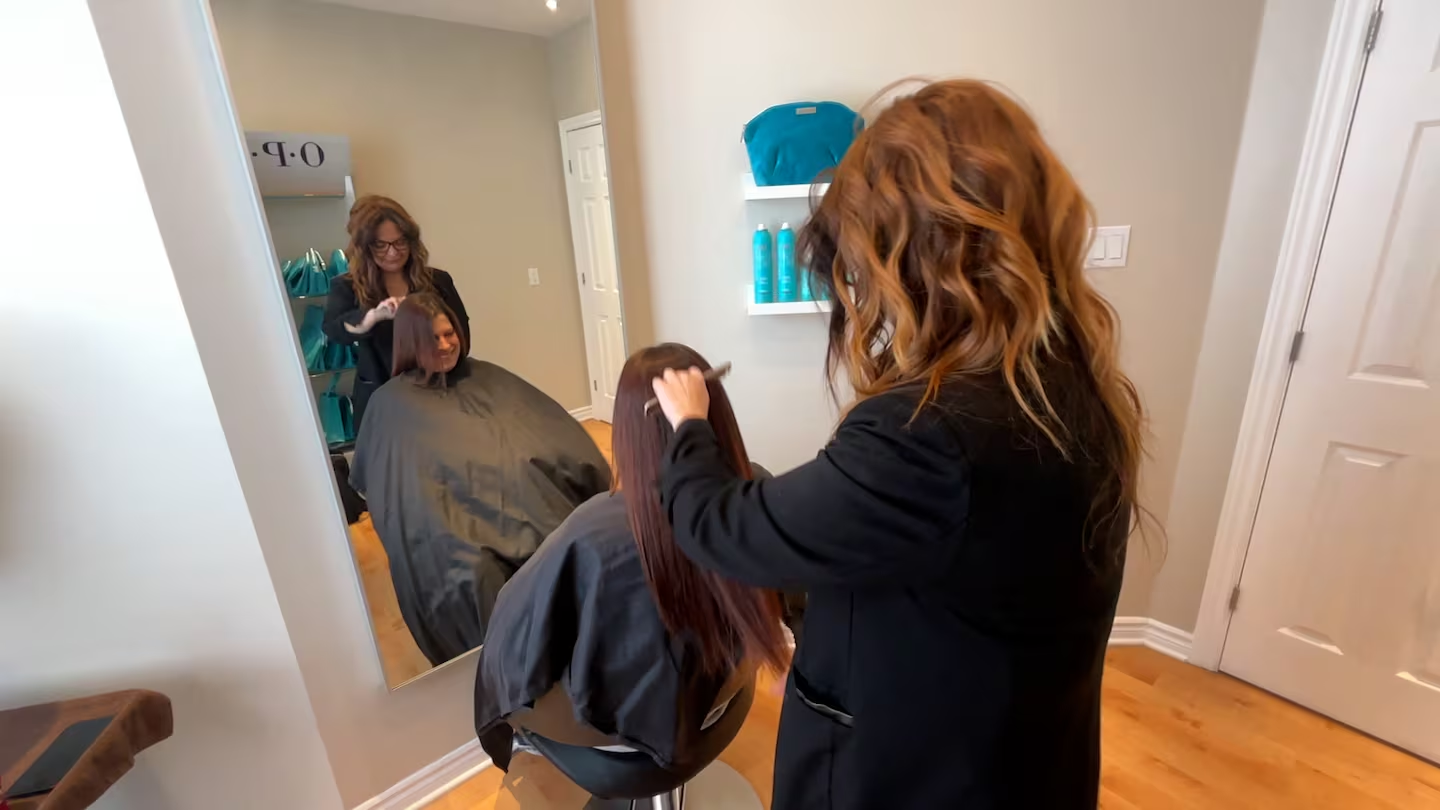
Embrun hairstylist Dawn Barton says she was asked to pay back $17,000 in pandemic relief benefits. Jan. 8, 2026. CTV News
When Ontario’s salons were forced to shut their doors during the COVID-19 pandemic, Dawn Barton says her income disappeared overnight.
The Embrun-based hairstylist, who had spent nearly 30 years in the industry, says lockdowns and public health orders left her unable to work and scrambling to support her family. Like thousands of Canadians facing sudden unemployment, Barton turned to federal pandemic relief programs for help.
Now, years later, she has been told to pay back every dollar.
Turning to Emergency Support
Barton applied for the Canada Emergency Response Benefit (CERB) after being directed there while attempting to access Employment Insurance.
“We were told to go home,” she said. “When I applied for EI, it redirected me instantly to CERB, so I assumed that was where I was supposed to be.”
During periods when salons briefly reopened and later shut down again due to COVID exposure, Barton also applied for the Canada Recovery Benefit and the Canada Recovery Sickness Benefit. In total, she received about $17,000 in pandemic assistance.
“I needed this income,” she said. “I had a family to feed.”
CRA Says She Was Not Eligible
The Canada Revenue Agency later determined Barton was not eligible for the benefits she received.
According to the CRA, Barton earned more than $1,000 during at least one CERB payment period, making her ineligible under program rules — a claim she disputes. The agency also says she did not experience a 50 per cent reduction in average weekly income compared to the previous year, which is required for the recovery benefits.
Barton argues that the criteria failed to account for how hairstylists are paid.
“Most of us don’t get paid by the hour,” she said. “We’re commission-based. That’s something I feel the CRA should take into consideration.”
Appeals Rejected, Recoveries Underway
Barton says she appealed the CRA’s decision twice, only to be denied both times. She says she still doesn’t fully understand why she was deemed ineligible.
Meanwhile, the agency has already begun recovering the funds by withholding tax refunds and other government benefits.
“About $7,000 they’ve taken from me this year alone,” she said. “That money could have helped keep my head above water.”
She says the financial strain has been severe, forcing her to turn to food banks and personal loans to cover basic expenses.
A Widespread Issue
Barton’s experience is far from unique.
The CRA estimates it is owed more than $10 billion in COVID-19 relief payments from Canadians later found not to qualify. Many of those recipients say they applied in good faith during a period when eligibility rules were confusing and rapidly evolving.
“It’s very common,” said Doug Hoyes, a licensed insolvency trustee and co-founder of Hoyes Michalos Associates Inc. “A lot of people received CERB when the rules weren’t entirely clear, and now the government wants the money back.”
After sharing her story on Facebook, Barton says dozens of hairstylists and salon workers reached out with similar experiences.
“There’s a lot of us out there who need guidance,” she said. “We shouldn’t feel like we’re being penalized or treated like thieves.”
CRA Response and Next Steps
In a statement, the Canada Revenue Agency said it remains sensitive to the financial hardship some Canadians continue to face as a result of the pandemic.
The agency says flexible repayment arrangements are available for those unable to repay the full amount immediately. Applicants who disagree with a second review decision can also apply to the Federal Court for judicial review within 30 days.
For Barton, the process has been exhausting and disheartening.
“I did what I was told to do at the time,” she said. “Now it feels like I’m paying the price for a system that failed people when they needed help most.”