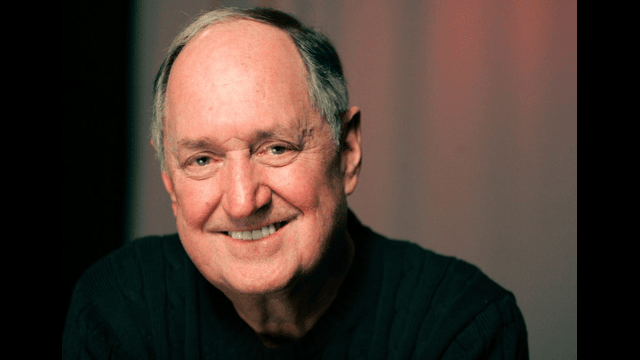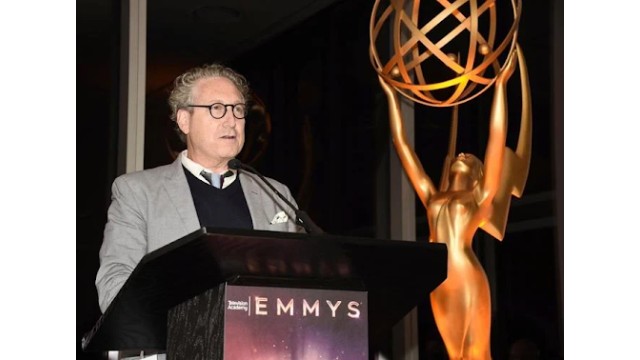
This image released by the Television Academy shows Bernard Telsey at the Television Academy’s Casting Directors Nominee Reception in West Hollywood, Calif., on Sept. 12, 2019. (AP Photo)
Casting has finally taken center stage in Hollywood. For the first time in its history, the Academy Awards will honor achievement in casting, giving long-overdue recognition to a profession that shapes every story before filming even begins.
The new award will debut at the 98th Oscars, airing March 15, 2026. It marks a major shift for an industry that often praises performances, direction, and design, but rarely spotlights the people who choose the actors audiences fall in love with.
Behind every major film — including the two-part “Wicked” — casting directors help determine who steps into iconic roles. They often make those decisions months before sets are built or crews arrive.
Bernard Telsey, one of the industry’s most respected casting directors, explains their mission simply. Their job is to know every actor or know how to find them. He and Tiffany Little Canfield shaped the massive ensemble of both “Wicked” films.
Telsey believes the Oscar acknowledgment will change how people view this work. Much of casting happens quietly, far from the public eye. More attention, he says, will strengthen the profession and deepen understanding of its importance.
Why Casting Often Goes Unseen
Other major awards bodies have acknowledged casting for years. The Emmys feature three casting categories. The Critics Choice Awards added one recently. And casting professionals have their own long-running Artios Awards.
But the Golden Globes and the Tony Awards still do not recognize the field.
Destiny Lilly, president of the Casting Society, says great casting can feel “invisible.” When the choices are perfect, audiences don’t notice the craft behind them. She believes recognition took time because casting often happens before the full production team is assembled.Telsey’s own résumé spans theater, film, and television. His company has cast everything from “Mary Poppins Returns” to “The Gilded Age.” His roots in theater include “Hairspray,” “Kinky Boots,” and other award-winning productions.
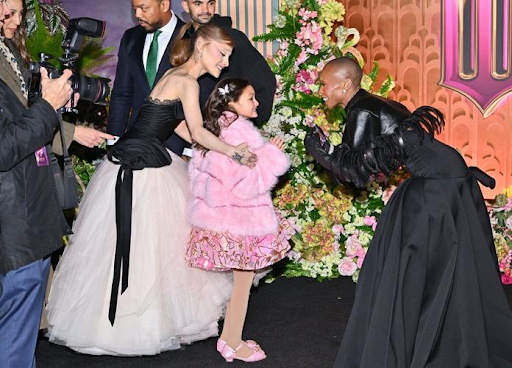
Ariana Grande, left, Scarlett Spears and Cynthia Erivo attend the premiere of “Wicked: For Good” at Lincoln Center, Monday, Nov. 17, 2025, in New York. (AP Photo)
Yet “Wicked” may have been one of his biggest challenges. Hundreds of roles were filled across continents and over more than a year. While fans now view Cynthia Erivo and Ariana Grande as inevitable choices for Elphaba and Glinda, the decision was far from automatic.
Magic happens only when actors step into the room, Telsey says. Only then can casting directors sense when a pairing feels undeniable.
Inside the Casting Process
Keeping up with actors is a relentless task. Telsey attends theater shows most nights of the week and spends weekends catching up on movies and TV. His team meets twice a week to share discoveries and recommendations. Despite that, he often feels he is racing time.
Casting begins with creative conversations. Directors, writers, and producers outline their vision. Casting teams then search for the right talent to bring that vision to life. Telsey compares it to costume design — both require deep knowledge of countless possibilities.
Lilly recently made headlines by suggesting comedian Bill Burr for a Broadway revival of “Glengarry Glen Ross.” It marked his stage debut, yet his style fit seamlessly with David Mamet’s sharp dialogue. She believes many performers shine when offered the right opportunity and support.
Breaking Down Old Barriers
Over the years, Telsey has seen actors move freely between film, TV, and theater. He pushes back against the belief that stage and screen require fundamentally different talents. At its core, he says, good acting is universal. Performers like Glenn Close prove that skill can transcend every medium.
Technology has also reshaped casting. Online auditions are now common. Streaming content continues to expand. Productions are increasingly global. As a result, casting teams must cover more ground, more quickly, and with tighter budgets.
Telsey’s first major breakthrough was the original production of “Rent,” a show he jokingly recalls as “a little musical that nobody wanted to do.” That experience taught him that casting can change the fate of a project.
Today, he sees the new Oscar category as both validation and motivation. Casting, he says, is only getting more demanding. Time is limited, expectations are rising, and audiences want more. The Academy’s recognition arrives at a crucial moment — one where casting’s impact on the industry has never been clearer.