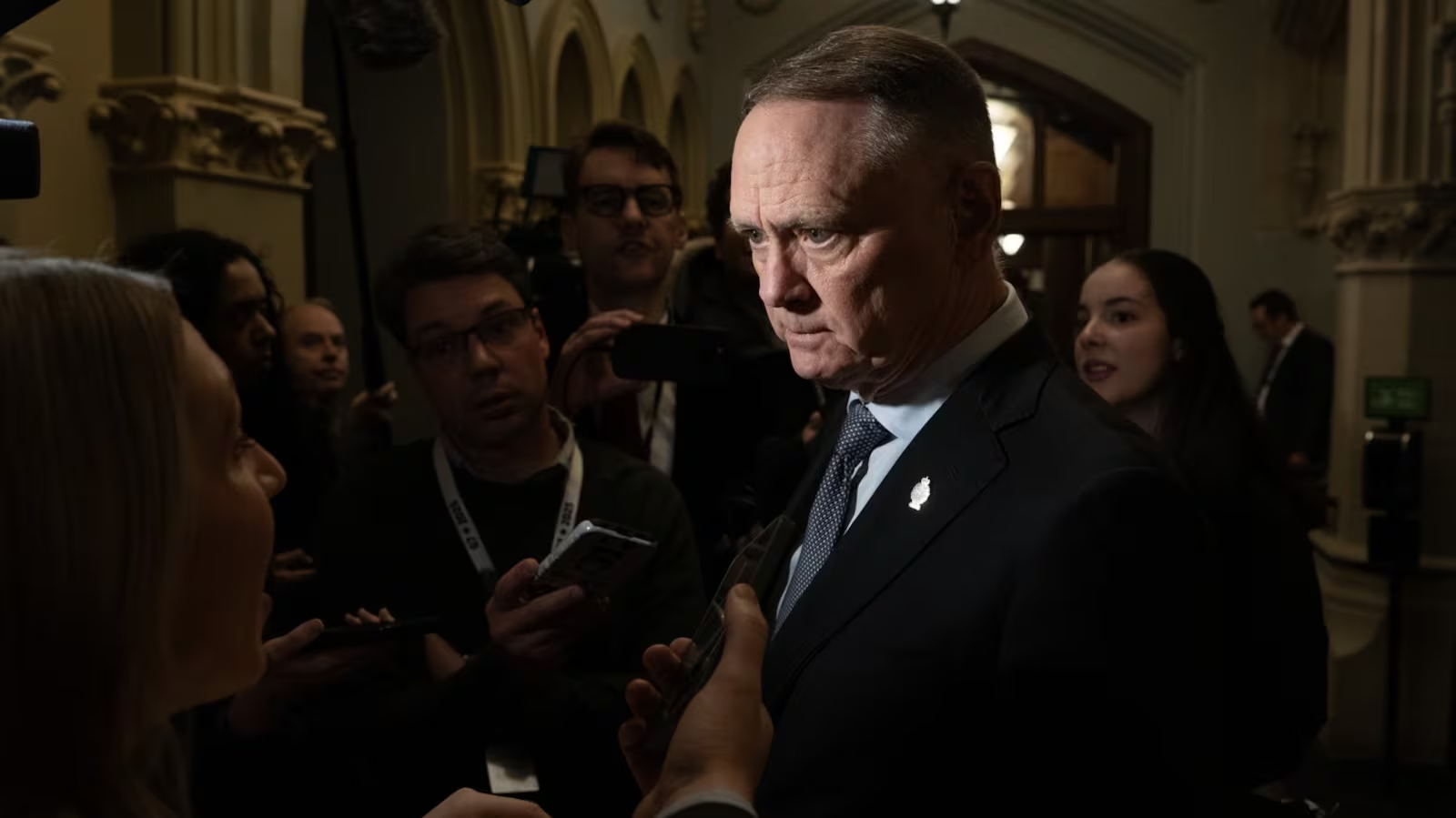
Defence Minister David McGuinty spoke with reporters on Parliament Hill in Ottawa before heading into a cabinet meeting on Tuesday, February 3, 2026. THE CANADIAN PRESS
Canada will not pursue nuclear weapons, the federal defence minister said Tuesday, pushing back against recent comments that suggested the country should keep the option open.
David McGuinty said the government has no plans to acquire nuclear arms and remains committed to long-standing international agreements that oppose their spread.
Canada’s Position Remains Unchanged
Speaking to reporters as he arrived at a cabinet meeting, McGuinty said Canada has “absolutely no intention” of developing or acquiring nuclear weapons. He stressed that Canada has followed a clear path for decades as a country without nuclear arms.
“Canada is a signatory to international treaties which preclude us, number one, and Canada has been a non-nuclear-proliferation state for a long time,” McGuinty said.
He added that the government will continue to focus on strengthening the country’s conventional military capabilities instead.
“We are going to continue to build conventional weapons. We’re going to continue to re-arm. We’re going to continue to reinvest. We’re going to continue to rebuild our Canadian Armed Forces and we’re doing that.”
Comments Spark Debate
The minister’s remarks came after former chief of the defence staff Wayne Eyre suggested Canada should not fully rule out nuclear weapons during a discussion in Ottawa on Monday.
Reports said Eyre raised concerns about Canada’s long-term security and suggested the country may never achieve full strategic independence without a nuclear deterrent. However, he also said Canada should not pursue nuclear weapons at this time.
Eyre made his comments during a private event focused on Canadian sovereignty and military independence in a changing global environment.
Political Leaders Respond
Bloc Québécois Leader Yves-François Blanchet said the government acted correctly by rejecting the idea quickly. He told reporters he felt reassured by Ottawa’s clear stance against nuclear weapons.
The comments from Eyre sparked discussion but did not shift the government’s position.
Global Tensions Add Context
The debate comes at a time when nuclear weapons have returned to global attention. A major arms control agreement between the United States and Russia, known as New START, is set to expire this week. Experts worry this could increase the risk of a new arms race.
Questions about global security have also grown as some world leaders reconsider long-standing alliances. Recent moves and statements by U.S. President Donald Trump have led some countries to question how much they can rely on American military support.
In Europe, these concerns have triggered discussions about nuclear co-operation. Sweden, for example, has publicly debated closer nuclear ties with other countries, including talks with France and the United Kingdom.
Canada Stands by Non-Proliferation
Canada remains a non-nuclear state and a strong supporter of the international treaty on the non-proliferation of nuclear weapons. The treaty bars countries without nuclear arms from acquiring or producing them and aims to reduce global reliance on such weapons.
Canada has supported the treaty since it came into force in 1970 and continues to view it as a cornerstone of global security.