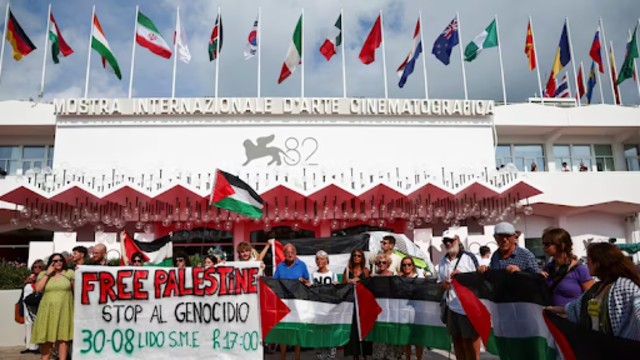
In August, people held Palestinian flags in front of the Palazzo del Cinema to mark the opening of the 82nd Venice Film Festival, in Venice, Italy. (Reuters via CBCNews)
A growing wave of voices from the global film industry is taking a stand over the war in Gaza. More than 2,000 actors, producers, and filmmakers have pledged to cut ties with Israeli film institutions they say are complicit in violence against Palestinians.
The pledge, launched by the group Film workers for Palestine, demands an end to what it calls “genocide and apartheid.” It echoes Palestinian filmmakers’ calls for solidarity and for the industry to reject “silence, racism, and dehumanization.”
A List of Prominent Names
The statement has attracted major Hollywood and European figures. Oscar winners Emma Stone and Olivia Colman, along with Javier Bardem, Mark Ruffalo, Riz Ahmed, Ayo Edebiri, Tilda Swinton, Ava DuVernay, Adam McKay, Brian Cox, Elliot Page, and Josh O’Connor are among those who have signed. As of Monday evening, the pledge had collected just over 2,100 signatures, with more expected to join.
The organizers stress that the boycott does not target Israeli individuals. “This refusal takes aim at institutional complicity, not identity,” the group explained in its frequently asked questions guide. While a few Israeli entities are considered exceptions, the group argues that most companies in the country have not endorsed the full rights of Palestinians under international law.
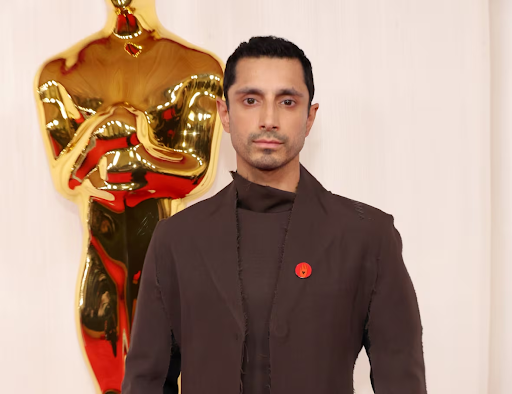
British actor and rapper, shown here wearing a red Artists4Ceasefire pin, is among the signatories of the pledge. (Getty Images)
Cinema as a Tool for Change
The pledge emphasizes the influence of film in shaping public opinion. “In this urgent moment of crisis, where many governments enable the carnage in Gaza, we must address complicity in this unrelenting horror,” it reads.
Veteran producer Mike Lerner, an Oscar nominee, called the campaign a non-violent means of pushing back against impunity. “It is the responsibility of every independently minded artist to use their powers of expression to support global resistance,” Lerner said.
The action echoes historical efforts, drawing inspiration from the Filmmakers United Against Apartheid movement of 1987, which pressured Hollywood to stop distributing films in South Africa during apartheid.
Wider Industry Response Against Israeli Violence
This is not the first time the entertainment world has spoken out over the Gaza conflict. Earlier this year, a petition condemning the “silence” of the film industry gathered support from Pedro Pascal, Joaquin Phoenix, and Ruffalo. Members of SAG-AFTRA also urged their union leaders to safeguard artists who express pro-Palestinian views.
Palestinian filmmakers themselves have accused Hollywood of dehumanizing portrayals that, they say, contribute to justifying violence against civilians. Their open letter in 2024 sharply criticized the industry’s narratives about the region.
The crisis has also spilled onto festival red carpets. At the Venice Film Festival, protesters carried flags and unfurled banners demanding an end to the conflict. In Toronto, demonstrators laid towels streaked with red paint beside the iconic TIFF sign to symbolize the deaths of Palestinian children.
Mounting Death Toll
The humanitarian toll remains severe. Health officials in Gaza say nearly 63,000 Palestinians have been killed since the conflict escalated. A United Nations-backed assessment has further declared a famine in the enclave, deepening concerns within the global community.
With mounting casualties and growing public outrage, the film industry’s latest pledge adds another layer to cultural resistance. By refusing ties with Israeli institutions, thousands of artists are signaling that cinema is not just about storytelling — it can also be a platform for political conscience.