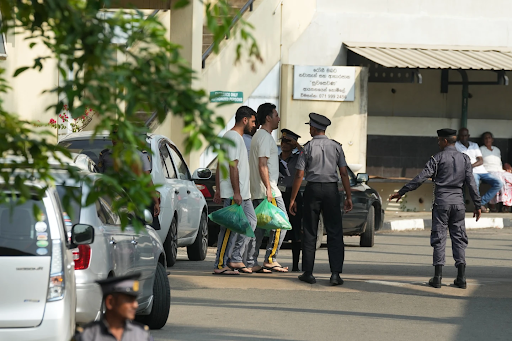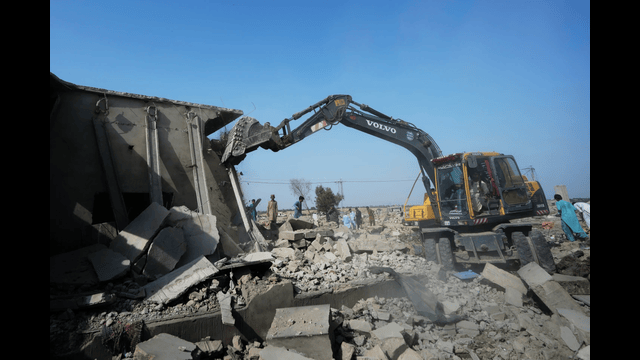
A hydraulic shovel demolished a structure during an operation against illegal settlement of Afghan refugees conducted by local government, on the outskirts of Karachi, Pakistan, Wednesday, Oct. 15, 2025.
After days of intense border clashes, Pakistan and Afghanistan have declared a ceasefire, marking a temporary halt to the region’s deadliest violence in years. The fighting left dozens dead and many more injured on both sides, raising fears of renewed instability in an already volatile region.
Regional Appeals Lead to Ceasefire
The announcement came Wednesday following urgent appeals from regional powers, including Saudi Arabia and Qatar. Their intervention aimed to prevent further bloodshed as the conflict risked escalating into a broader crisis.
Pakistan’s Foreign Ministry confirmed that the ceasefire would last 48 hours and said it was initiated at Afghanistan’s request. However, the Taliban government’s chief spokesman, Zabihullah Mujahid, claimed the truce was arranged at Pakistan’s insistence and did not mention any time limit.
Clashes Mark the Deadliest in Years
The latest clashes erupted earlier this week along the volatile border, where both nations have long accused each other of harboring militants. Pakistan reported killing dozens of Afghan security forces and militants during heavy overnight fighting.
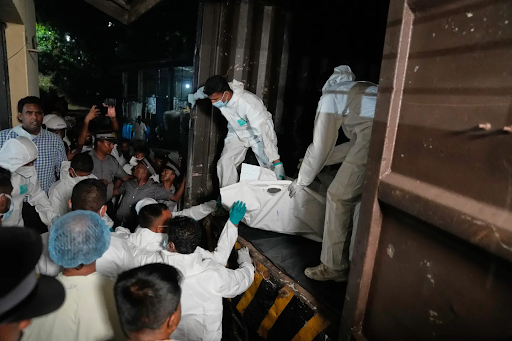
In Kabul, humanitarian group Emergency NGO said it treated 40 wounded and received five bodies following explosions in the capital. “The victims had shrapnel wounds, blunt force trauma, and burns,” said Dejan Panic, the NGO’s country director. Ten patients were reported to be in critical condition.
Conflicting Claims Over the Attacks
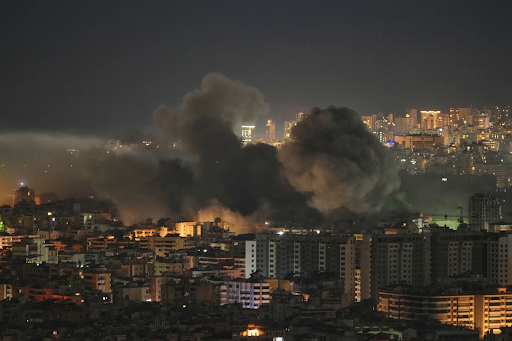
The cause of the explosions remains unclear. The Taliban confirmed an oil tanker explosion, while Pakistani officials—speaking anonymously—said their army targeted militant hideouts.
According to Taliban spokesman Mujahid, Pakistani forces launched assaults using light and heavy weapons on Spin Boldak in southern Kandahar province, killing over a dozen people and injuring more than 100. Afghan troops, he said, retaliated and killed several Pakistani soldiers.
Pakistan rejected those claims, asserting that it repelled “unprovoked” attacks but denied striking civilians during the operation.
Border Residents Caught in the Crossfire
Civilians living along the Pakistan-Afghanistan border have borne the brunt of the violence. In the Pakistani border town of Chaman, residents reported mortar shells landing near villages.
“People living close to the border are fleeing the area,” said Najibullah Khan, a Chaman resident. “Both countries should end this fighting permanently. It’s the people who suffer most.”
A History of Border Tensions
Border tensions between Pakistan and Afghanistan date back decades. Violence has periodically erupted since 1979, when Pakistan became a frontline state during the U.S.-backed war against the Soviet invasion of Afghanistan.
Following the 9/11 attacks, Pakistan’s tribal belt descended into turmoil as militant groups such as the Taliban and al-Qaida operated across both sides of the border. These groups launched attacks on NATO forces and Pakistan’s security agencies, deepening mistrust between the neighboring nations.
Rising Militancy Fuels Instability
Pakistan continues to face a surge in militant attacks, which have intensified since the Taliban’s return to power in Afghanistan in 2021. Islamabad has repeatedly accused Kabul of sheltering armed groups responsible for cross-border terrorism—claims Afghanistan’s Taliban rulers deny.
Fragile Peace Amid Deep Divides
While the 48-hour ceasefire offers temporary relief, analysts warn it may not hold unless both nations address the underlying issues fueling the violence.
“Without sustained dialogue and trust-building, such ceasefires will remain short-lived,” said Abdullah Khan, defense analyst and managing director of the Pakistan Institute for Conflict and Security Studies.
For now, the guns have fallen silent. But the fragile peace underscores the deep-rooted tension between Pakistan and Afghanistan—two nations bound by geography yet divided by decades of suspicion and conflict.