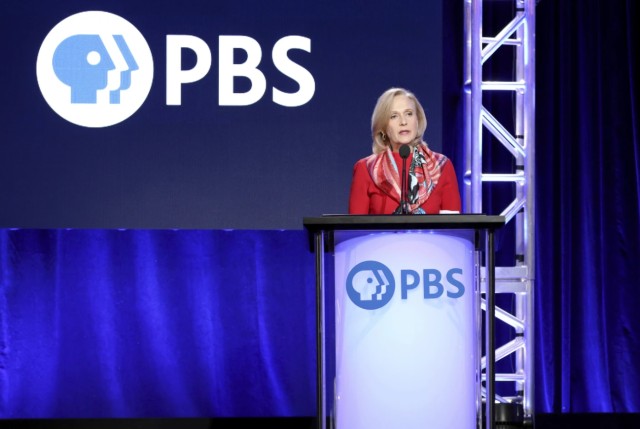
Paula Kerger, President and CEO at PBS, speaks at the executive session during the PBS Winter 2020 TCA Press Tour at The Langham Huntington, Pasadena, Jan, 10 2020, in Pasadena, Calif.
Public broadcasting in the U.S. is facing one of its toughest moments. A sudden $1.1 billion cut in federal support has left PBS and NPR stations across the country scrambling to survive.
Spokane Station Faces Double Setback
In Spokane, Washington, PBS affiliate KSPS was hit harder than most. Not only did it lose 18% of its budget, but many of its Canadian donors also pulled support. Their withdrawal stemmed from anger at former President Donald Trump’s push to consider Canada as “the 51st state.”
With a $1.2 million gap to fill, KSPS is now openly tying its appeals for member donations to the loss of government funds. “We have definitely seen some attrition from our Canadian members,” said interim general manager Skyler Reep.
Public Support Surges Nationwide
Despite the cuts, many stations are reporting overwhelming public support. In Wilmington, North Carolina, WHQR raised $200,000 in just three days, surpassing its $174,000 target. Hawaii Public Radio, faced with a $525,000 deficit, secured $650,000 in an emergency campaign.
“It’s a validation that what you’re doing is essential to the community,” said Hawaii Public Radio CEO Meredith Artley, recalling their coverage of the devastating 2023 Maui wildfires.
NPR president Katherine Maher also praised the public’s response. “When lobbying efforts failed, people turned to direct support,” she said.
Big and Small Donors Step In
Some donations have been extraordinary. A regular $300 donor surprised PBS SoCal with a $100,000 check. One Florida child collected money for stations in Alaska, sending it with a crayon-written note. These stories, while heartwarming, also highlight the uneven landscape of support.
Not every community has wealthy donors. For Jeff Hanks of PBS LPTV in Lakeland, Minnesota, the challenge is daunting. He is searching for $1 million to keep his nightly newscast alive. “These are extremely challenging times,” he admitted.
Cuts and Sacrifices Already Visible
Even with emergency donations, sacrifices are unavoidable. In Spokane, 12 of KSPS’s 35 staff members have lost jobs, pay, or hours. Local shows like Northwest Profiles and Inland Sessions may face shorter seasons.
Alaska Public Media has already canceled Alaska Insight and may cut Indie Alaska, a video series showcasing local lives. Yet, its president Ed Ulman remains optimistic. “Our community needs us. What we’ve seen is an outcry in support,” he said.
Relief Efforts and Shared Resources
To ease the crisis, PBS and NPR have reduced annual dues for struggling stations, in some cases forgiving over 50% of payments. Philanthropic groups, including the Knight and MacArthur foundations, are also working to raise $50 million for the hardest-hit stations.
Some donors in wealthier regions are being encouraged to “adopt” rural stations. This support could prove vital for places where public media remains a primary source of local news.
Stations are also collaborating in new ways. In Los Angeles, PBS SoCal has shared fundraising templates and celebrity-recorded pitches with others. Public stations in Washington are even considering seeking state-level funding.
The Road Ahead Looks Uncertain
For now, an influx of donations and rainy-day reserves have softened the immediate blow. But PBS president Paula Kerger warns the true test is still ahead. “I have to believe that some vulnerable stations are not going to make it,” she said.
Still, leaders like Maura Daly Phinney of PBS SoCal remain hopeful. “The system will look different,” she said. “But we’re going to make it.”