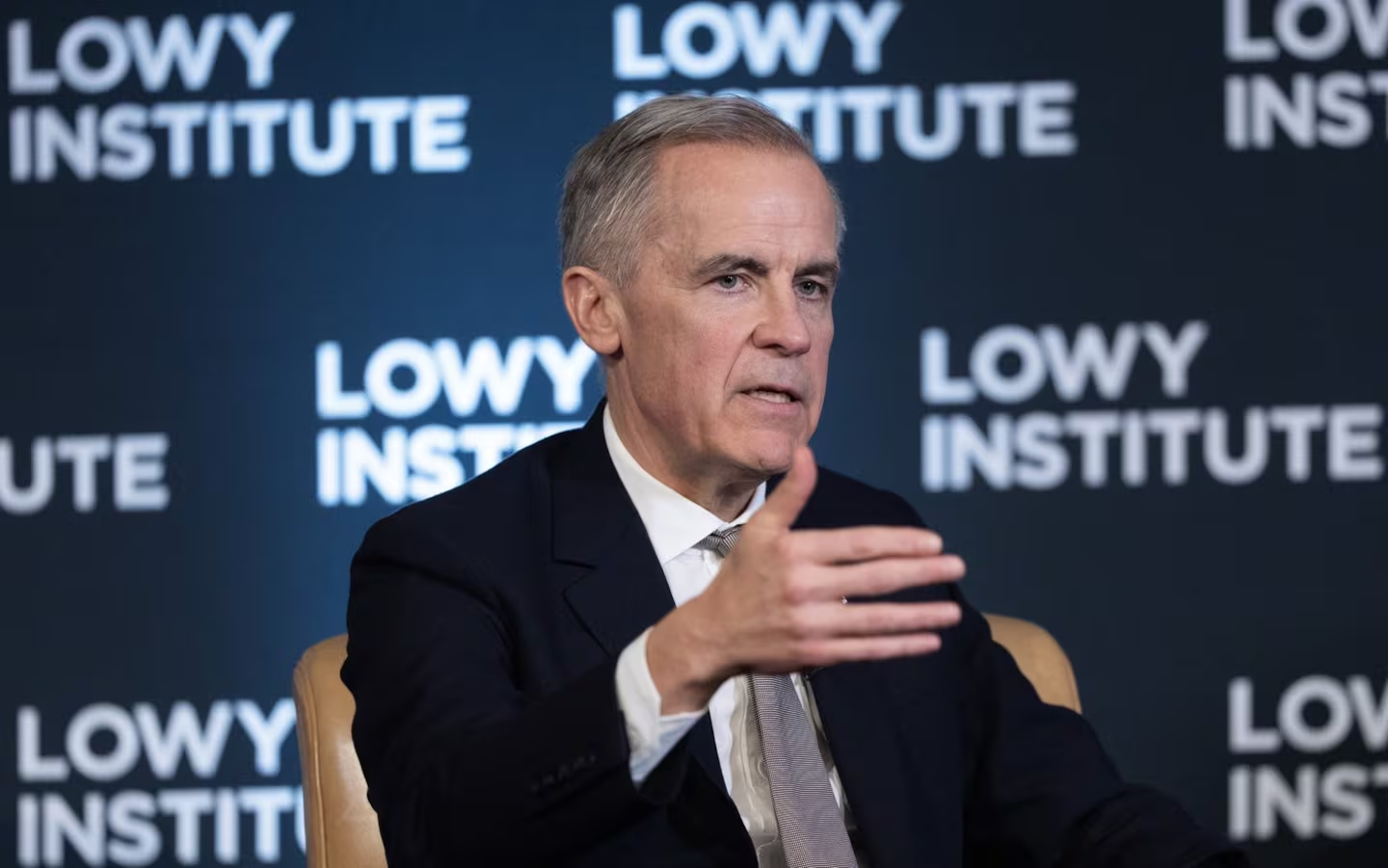
Prime Minister Mark Carney answers a question during a sit-down discussion at the Lowy Institute in Sydney, Australia, on Wednesday, March 4, 2026. THE CANADIAN PRESS
The conflict in the Middle East grew more intense on Wednesday as Israel and the United States carried out more strikes across Iran. The war entered its fifth day with attacks hitting Tehran and several other cities.
Iran responded with missile and drone strikes aimed at Israel and U.S. allies in the region. Officials warned that the fighting could damage military bases and key economic facilities across the Middle East.
Authorities in Iran reported that at least 1,045 people have died since the conflict began.
Canada Leaves Door Open to Military Role
Prime Minister Mark Carney spoke to reporters during a visit to Australia and addressed questions about Canada’s possible involvement in the conflict.
“One can never categorically rule out participation,” Carney said. “We will stand by our allies, when makes sense.”
Carney explained that Canada supports efforts to prevent Iran from developing nuclear weapons. At the same time, he said the situation remains complicated and continues to change quickly.
He also called for a reduction in violence before any discussion of a ceasefire.
“It is a very volatile, it’s an extremely complex situation, it’s getting more complex as time goes on but we absolutely stand by the fundamental principle that Iran should not be allowed to have a nuclear weapon,” Carney said.
Political debate has started in Canada over the government’s stance. Some critics say the position sounds unclear because the government has supported military action while also speaking about de-escalation.
Canada Works to Help Citizens Leave Region
The Canadian government now focuses on helping thousands of citizens who want to leave the Middle East.
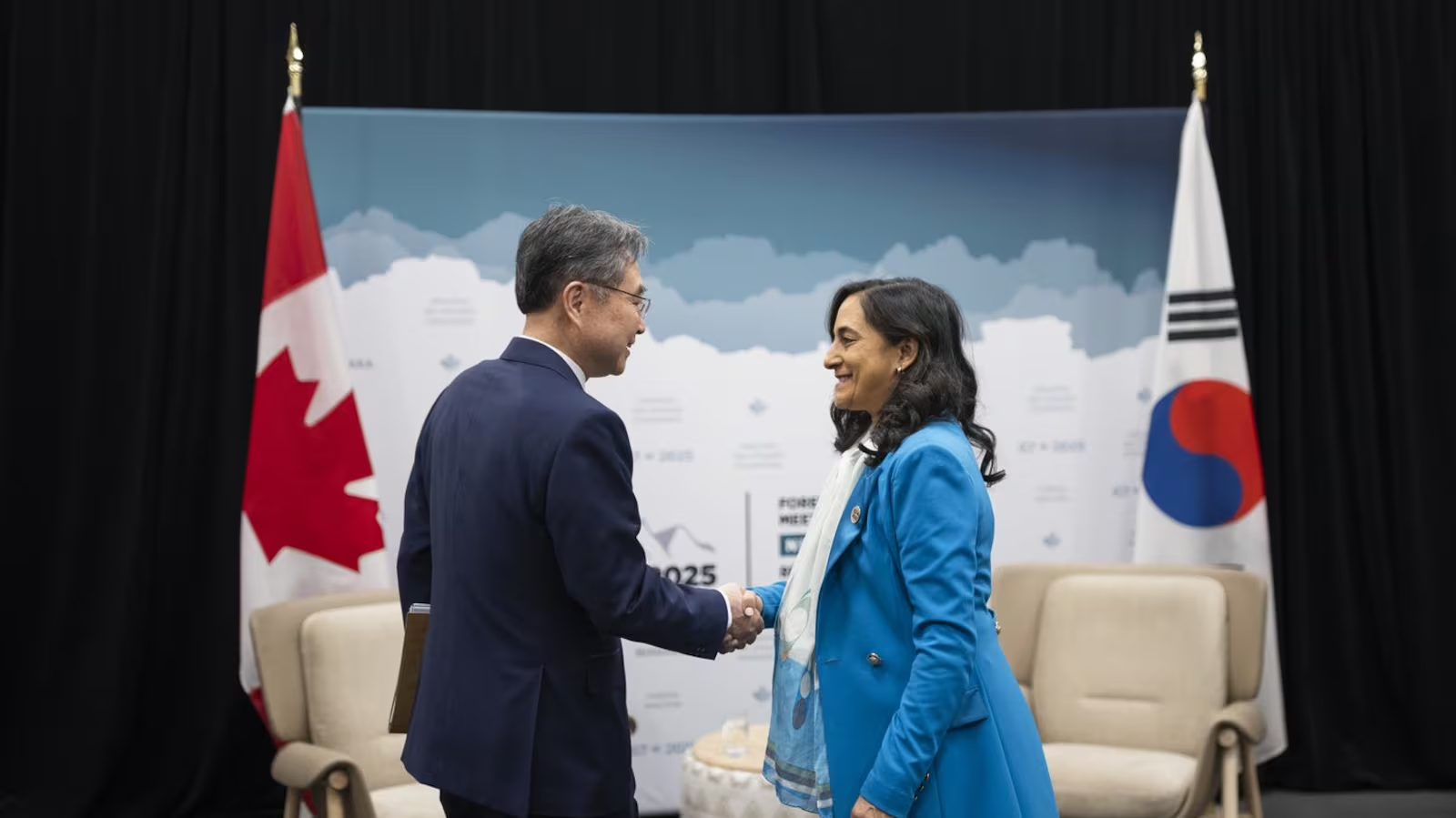
Foreign Affairs Minister Anita Anand said more than 2,000 Canadians have contacted the government asking for help to return home.
Officials have started arranging several travel options, including charter flights, reserved seats on commercial flights, and ground transportation.
Seventy-five Canadians left Beirut earlier this week on a flight arranged by the government.
Flights from Israel remain difficult because the country’s airspace stays closed. Canadians there can travel by bus to Egypt and fly from there.
In Iran, however, Canada cannot provide direct assistance because the two countries do not have diplomatic relations.
War Disrupts Oil Supply and Raises Gas Prices
The conflict has already begun affecting energy markets around the world.
Tanker traffic through the Strait of Hormuz has slowed sharply. This narrow waterway carries roughly one-fifth of the world’s oil shipments.
As a result, oil prices have climbed quickly. The global price of Brent crude briefly rose above US$84 per barrel, more than ten dollars higher than before the fighting began.
Drivers in Canada have started feeling the impact at the pumps. Gas prices increased in several provinces this week, and analysts warn that prices could rise further if the conflict continues.
Growing Global Concern
The fighting has also expanded beyond Iran and Israel. Israeli forces launched strikes on Hezbollah targets in Lebanon, while Iran fired missiles and drones across the region.
Security experts say the widening conflict creates serious risks for neighbouring countries and international shipping routes.
Meanwhile, political leaders across the world continue to debate how the war could reshape the balance of power in the Middle East.
For now, the fighting shows no sign of slowing.