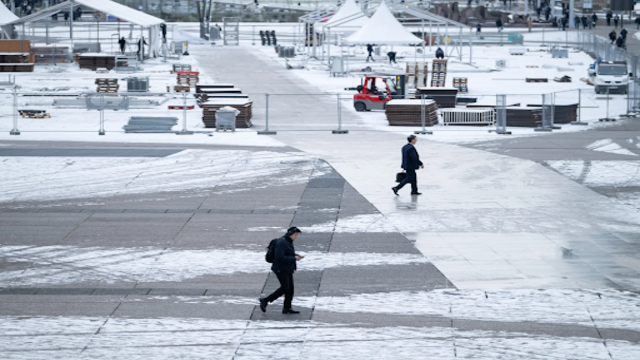
A wave of Arctic cold swept through Paris, France, in January 2024, bringing freezing temperatures across the city. Bloomberg
Meteorologists are warning that a sharp drop in temperatures could sweep across parts of the United States, Europe, and Asia this winter. The concern comes as signs point to a possible weakening of the polar vortex — the strong band of winds that normally keeps icy Arctic air contained.
If that barrier weakens, frigid air could spill south, driving up heating demand and energy costs at a time when households and businesses are already struggling with high prices.
Rising Risk of Deep Freeze
Experts say the risk of a major cold snap is climbing, even though some of the same factors that created last year’s unusually warm winter remain in place. This time, however, the polar vortex could behave differently.
Dan Hart, a meteorologist with OpenWeather Ltd. in London, says the situation is worth close attention. “Further into December, keep an eye on the polar vortex,” he said, noting that its strength will determine how cold conditions get in the Northern Hemisphere.
United States Faces a Colder Season
In the United States, forecasters expect winter to be chillier than last year. Matt Rogers, president of Commodity Weather Group, says most northern states — from the Pacific Northwest to central New England — will likely see below-average temperatures.
The coldest weather is expected in the northern Great Plains and Great Lakes regions. That means energy use could spike, especially as electricity demand is already growing quickly because of expanding data centres.
Higher power consumption will likely push wholesale electricity prices up further. Bitter temperatures may also disrupt travel and threaten key wheat crops in the U.S. and Europe.
Europe and Asia Also on Alert
While many weather models predict an overall mild winter for Europe, forecasters are warning that cold outbreaks could strike northern and central regions more often. These intermittent freezes could cause heating bills to fluctuate and put extra pressure on energy supplies.
In China, conditions may become even colder. Analysts say a La Niña weather pattern — which cools the surface of the Pacific Ocean — could bring widespread drops in temperature. According to official forecasts, southern and northeastern China could face below-normal readings, raising concerns about gas shortages if demand surges.
Uncertain Timing, But Big Impact Possible
There’s no guarantee the cold will arrive early in the season. Last year, the polar vortex didn’t weaken until March, meaning most of winter stayed relatively mild.
Still, scientists warn that if Arctic air moves south before the holidays, it could cause major disruptions — from flight cancellations to delayed freight shipments. Sudden cold spells also increase the likelihood of heavy snow and more intense winter storms.
Judah Cohen, a seasonal forecaster with Verisk Atmospheric and Environmental Research, says a set of eastward-blowing winds known as the “quasi-biennial oscillation” could trigger a sudden rise in atmospheric temperatures. This event, called sudden stratospheric warming, often leads to a breakdown of the polar vortex.
“If that happens sooner rather than later,” Cohen said, “it would have important implications for the overall winter weather.”