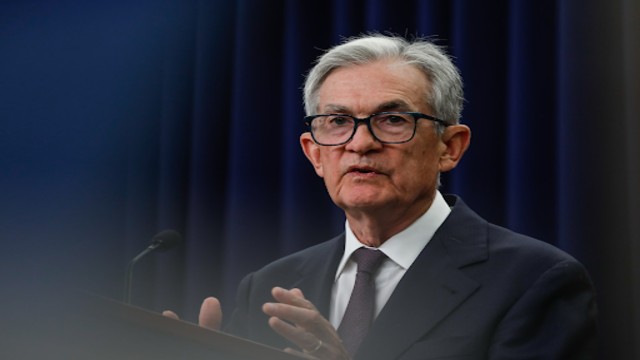
Federal Reserve chair, Jerome Powell, at a news conference in Washington DC, on 17 September. Getty Images
US Federal Reserve Chair Jerome Powell has firmly rejected claims that the central bank allows politics to dictate its decisions. His remarks come as tensions rise between the White House and the Fed over interest rate policies and the institution’s independence.
Donald Trump, now seeking greater control over the Fed, recently branded Powell “a very political guy.” The criticism followed Powell’s refusal to meet the president’s demand for sharp interest rate cuts. Trump’s allies have also accused the Fed of acting with political motives, intensifying pressure on the central bank.
Fed’s Independence Under Fire
The White House has begun an aggressive effort to reshape the Fed’s leadership. Moves include placing a senior administration official on the Fed’s board of governors and attempting to oust a Biden appointee using unproven claims of mortgage fraud.
Such attempts are seen as unprecedented, raising concerns about political interference in an institution designed to function independently from the executive branch.
On Tuesday, speaking at an event in Rhode Island, Powell pushed back strongly against these accusations. Though he avoided naming Trump directly, his comments left little doubt about the target of his remarks.
“Many people don’t believe we let economic data guide our choices,” Powell said. “But the truth is, those calling us political are just taking a cheap shot.”
Rate Cut Adds Fuel to Debate
Powell’s remarks came just a week after the Fed announced its first interest rate cut since December. The move aimed to shore up a weakening labor market, even as Trump’s tariffs added upward pressure on consumer prices.
The Fed chair described the current environment as unusually difficult. “Near-term risks to inflation are tilted to the upside and risks to employment to the downside,” he said. “It is a challenging situation.”
The central bank’s decision reflected a cautious balancing act — lowering rates to support job growth without worsening inflation.
Internal Divide on Monetary Policy
Despite the Fed’s majority decision, not all voices within the board agreed. Stephen Miran, a Trump appointee recently elevated to the Fed’s board, dissented from the rate decision. He argued for a steeper cut, claiming inflation risks were overstated.
“Relatively small changes in some goods prices have caused unreasonable levels of concern,” Miran said in a speech earlier this week. He added that tariffs could eventually produce “substantial swings in net national savings” for the United States.
Miran’s dissent underscores a widening policy rift within the Fed at a time when markets are already jittery.
A Growing Political Showdown
Trump has long been one of Powell’s harshest critics, both during his first term in office and now again in his renewed push for influence over the Fed. The latest clash highlights an intensifying struggle over who controls the direction of US monetary policy.
Powell’s sharp response signaled that, despite mounting political pressure, the Fed intends to defend its independence. Whether it can maintain that stance under escalating scrutiny remains a defining question for the months ahead.