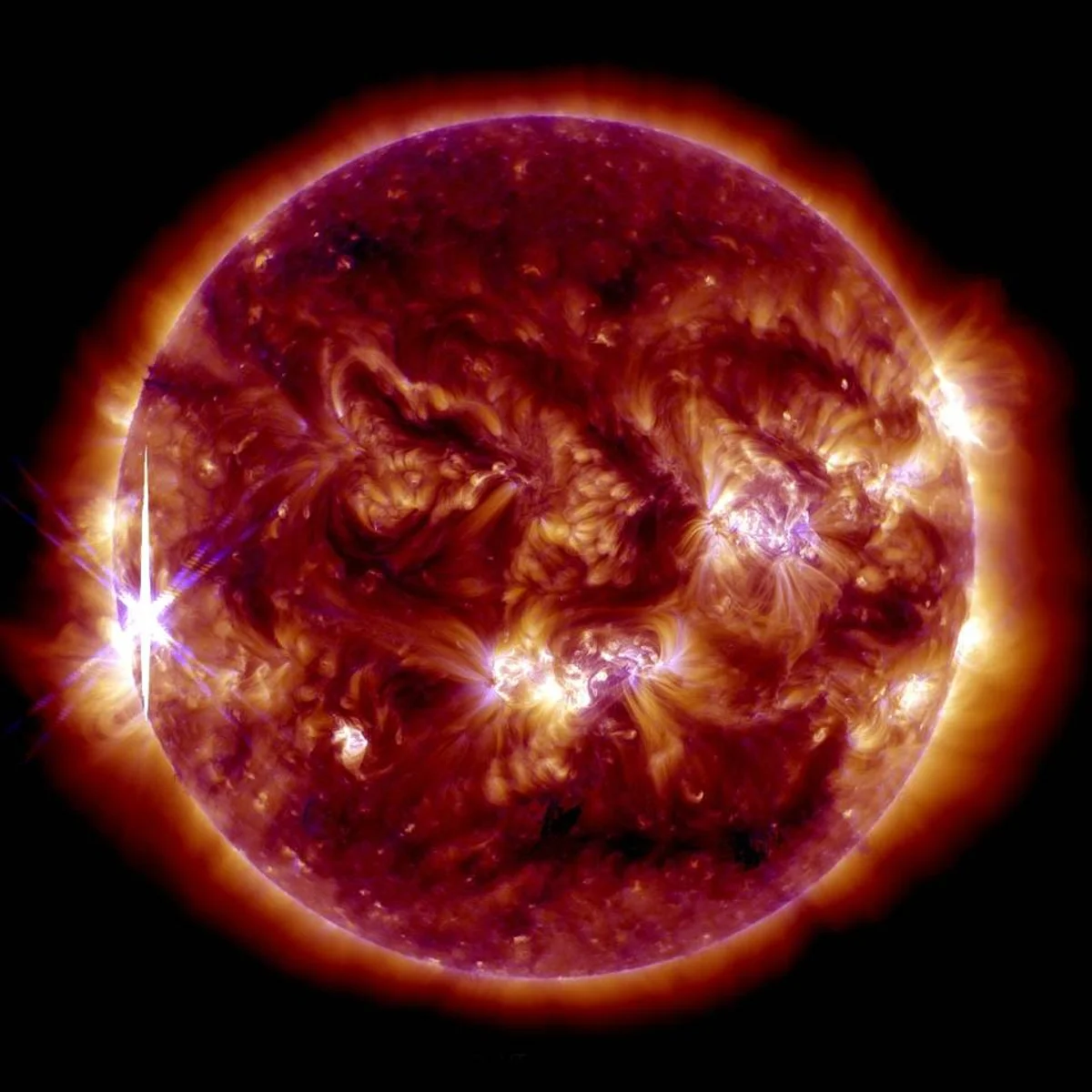
A powerful X-class solar flare appears in an image taken by NASA’s Solar Dynamics Observatory in 2013. Over the past two days, the sun has produced four similar flares. NASA
The sun delivered an extraordinary display on Sunday after releasing several powerful solar flares, including one of the strongest eruptions seen in decades. Scientists closely watched the activity as bright flashes and bursts of energy spread across the sun’s surface, marking a rare and intense period of solar action.
Many people imagine the sun as calm and steady. In reality, its surface constantly moves with hot, charged gases shaped by powerful magnetic forces. When these magnetic fields suddenly snap, they send huge amounts of energy and charged particles into space. Scientists call these events solar flares.
Record-Breaking Flare Captured
Early Sunday morning, at 7:33 a.m. Eastern Time, space scientists recorded one of these eruptions and classified it as an X-class flare, the strongest category. Later that day, the sun produced three more X-class flares, along with dozens of smaller bursts.
The most powerful moment came at 6:37 p.m. Eastern Time, when the sun released an X8.1 flare. This event stood out as the brightest solar flare since October 2024 and ranked among the top 20 strongest flares recorded since 1996. Scientists say the sheer strength of the eruption places it among the most notable solar events in recent history.
What It Means for Earth
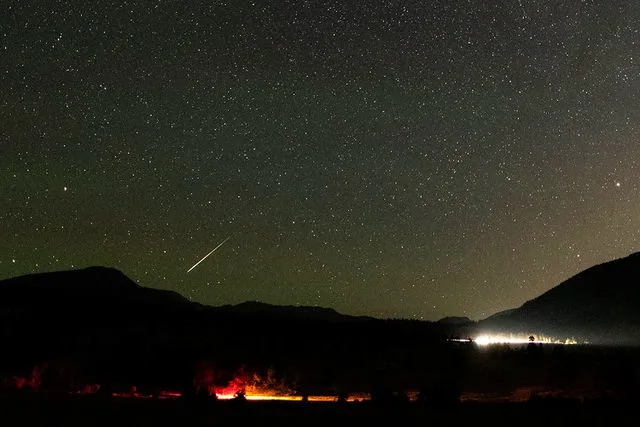
Astronomers expect much of the released plasma to pass near Earth by Thursday. Some of the charged particles may reach the planet’s atmosphere. If conditions align, people in northern regions could see bright and colourful northern lights lighting up the night sky.
Space weather experts continue to monitor the active region on the sun that produced the flares. They warn that more eruptions could follow in the coming days. While most solar flares pose no direct danger to people on the ground, strong events can disrupt satellites, radio signals, and power systems.
A Turbulent Time for the Sun
The recent activity reflects a restless phase in the sun’s natural cycle. Solar activity rises and falls over an 11-year period. Scientists believe the sun has already passed the peak of its current cycle. Still, powerful flares often continue even as activity slowly declines.
This pattern explains why strong eruptions may still occur for months or even years. Researchers say the sun can remain unpredictable during this phase, producing sudden bursts without much warning.
Watching the Skies Ahead
Experts urge satellite operators and power companies to stay alert as the sun remains active. Meanwhile, skywatchers across Canada may want to keep an eye on the night sky later this week. Clear skies could offer a rare chance to witness vivid northern lights caused by the solar storm.
As scientists continue to study the latest eruptions, the sun reminds us that even familiar stars can still surprise us with powerful and beautiful displays.