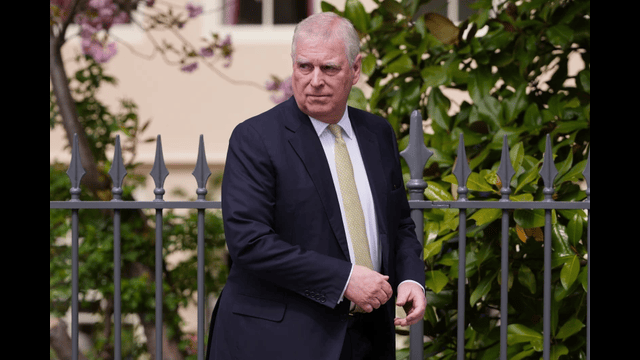
Britain’s Andrew Mountbatten-Windsor, formerly known as Prince Andrew, looks round as he leaves after attending the Easter Matins Service at St. George’s Chapel, Windsor Castle, England, April 20, 2025.
Britain witnessed an extraordinary legal moment after Prince Andrew's arrest news broke on Thursday.
Police detained the former royal for hours while investigating misconduct claims tied to Jeffrey Epstein.
The development stunned observers and signaled how public scrutiny of the monarchy has intensified.
Authorities later released Andrew after roughly eleven hours in custody.
The investigation, however, remains active and politically sensitive.
Investigation Behind the Prince Andrew Arrest
Officers from Thames Valley Police confirmed a man in his sixties was detained.
British procedure prevented officials from publicly naming the suspect.
The arrest followed a formal assessment of allegations involving trade information exchanges.
Investigators believe correspondence with Jeffrey Epstein may be central to the inquiry.
The messages reportedly date back to 2010.
At that time, Andrew served as Britain’s international trade envoy.
Documents recently released in the United States revived questions about those communications.
Police then upgraded their review into a full misconduct investigation.
Royal Family Responds Publicly
The Prince Andrew arrest quickly drew a rare statement from King Charles III.
The king said the legal process must proceed without interference.
He also declined further comment while the investigation continues.
Such direct royal acknowledgment is highly unusual.
Historically, the palace preferred silence during scandals.
This response suggests a more transparent approach under the current monarch.
Detention at Norfolk Residence
Police detained Andrew at his residence on the Sandringham estate.
He had moved there recently after leaving his longtime Windsor home.
Photographs later showed him departing a local police station by car.
Authorities also searched both his current home and former residence.
Witness images showed unmarked vehicles and plainclothes officers nearby.
The searches signaled the seriousness of the ongoing probe.
Andrew, now known as Andrew Mountbatten-Windsor, denies all wrongdoing.
His representatives insist his association with Epstein involved no illegal conduct.
Survivors Seek Accountability
News of the Prince Andrew arrest triggered strong reactions from abuse survivors.
Relatives of Virginia Giuffre described mixed emotions after hearing the update.
They said the moment felt like partial vindication but also painful.
Family members stressed that further accountability remains essential.
They called for investigators to identify additional suspects linked to Epstein’s network.
Advocates also urged cooperation between British and American authorities.
A Dramatic Fall From Royal Life
Royal analysts described the arrest as a historic reputational collapse.
One expert compared the crisis to the abdication era of Edward VIII.
He warned the long-term consequences for the monarchy remain uncertain.
Andrew’s relationship with Epstein has troubled the royal family for years.
In 2019, Elizabeth II removed him from official duties.
That decision followed a controversial BBC interview defending the friendship.
More recently, Charles stripped Andrew of remaining royal privileges.
He also ordered him to vacate long-occupied royal property.
These steps aimed to protect the institution from further damage.
Wider Political Shockwaves
The Epstein document release has shaken British politics beyond the palace.
Prime Minister Keir Starmer faced questions about diplomatic appointments.
Separate allegations involving political figures are also under review.
Police chiefs recently formed a national coordination group.
The team supports forces examining whether Epstein associates committed crimes in Britain.
Investigators suspect trafficking routes may have involved private flights into the country.
Historic Context of Royal Arrests
The Prince Andrew arrest carries unusual historical weight.
Britain has not seen a senior royal detained in nearly four centuries.
The previous case dates back to the English Civil War era.
That rarity explains the intense global attention surrounding Thursday’s events.
It also highlights shifting attitudes toward accountability within modern Britain.
What Comes Next
Police have not disclosed details of Andrew’s questioning.
Legal experts say further interviews or evidence reviews could follow.
No formal charges have yet been announced.
For now, the investigation continues quietly behind closed doors.
Yet the Prince Andrew arrest has already reshaped public debate.
Questions about royal responsibility, transparency, and justice now dominate national discussion.