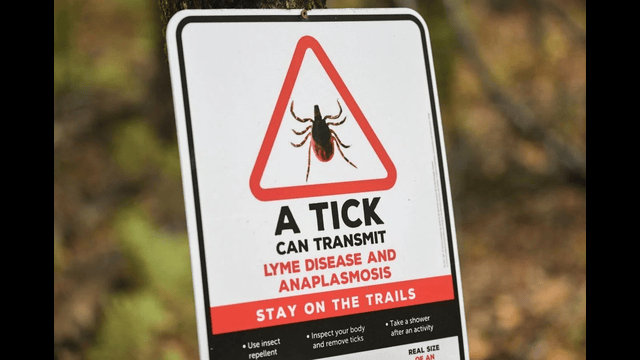
A sign advising hikers of Ticks is shown on a trail in the woods in the Eastern Townships west of Montreal, Wednesday, Oct. 16, 2024. The Canadian Press
As summer arrives, Quebec’s health officials are urging residents to stay alert for tick and mosquito bites. The province has issued a fresh advisory warning about the growing risk of insect-borne diseases that thrive during the warmer months.
Diseases Are on the Rise
Ticks and mosquitoes in Quebec are not just annoying—they can be dangerous. Health experts warn these insects can carry serious illnesses like Lyme disease, West Nile virus, and viruses from the California serogroup.
Lyme disease, in particular, is showing alarming growth. Quebec reported 681 cases between January 1 and October 26, 2024. That number already surpasses the 652 cases recorded in all of 2023. A decade ago, in 2014, only 125 cases were reported. The steady increase since then reflects a worrying trend.
Climate Change Fuelling the Spread
Rising temperatures across Quebec are allowing ticks to survive longer and spread further. Warmer winters and earlier springs are creating a more favourable environment for these pests to thrive.
As their habitats expand, so does the risk to humans. People are more likely to come into contact with ticks and mosquitoes in places that were once considered low-risk.
How to Stay Safe Outdoors
The Health Department has shared clear tips to help reduce the risk of infection. For mosquitoes, it recommends using insect repellents containing DEET or icaridin. These ingredients are proven to keep mosquitoes at bay.
Wearing lightweight, long-sleeved clothing in light colours is also advised. Mosquitoes are less attracted to pale colours, and full coverage reduces the chance of bites.
To avoid ticks, stick to well-worn paths and avoid tall grass or dense vegetation. After being outdoors, check your body carefully—especially around the ankles, knees, groin, and scalp—for any ticks that may have latched on.
Awareness Could Prevent Bigger Problems
Lyme disease, if caught early, is treatable with antibiotics. However, delayed diagnosis can lead to more serious complications like joint pain, nerve issues, and even heart problems.
Symptoms of Lyme disease can include a red rash (often in a bullseye shape), fever, fatigue, and muscle aches. Anyone experiencing these symptoms after a tick bite should seek medical attention promptly.
A Shared Responsibility
Quebecers are being encouraged to stay informed and take simple steps to protect themselves and their families. As outdoor activities ramp up with the arrival of summer, awareness is the first line of defense.
By staying cautious and following health guidelines, residents can enjoy the season while keeping themselves safe from insect-borne illnesses.