It was announced on Wednesday that Christian Horner has been replaced as CEO and team boss at Red Bull by Racing Bulls’ Laurent Mekies.
Red Bull Racing has officially parted ways with Christian Horner—its long-time team principal and the architect behind the team’s phenomenal rise. His departure marks the close of an iconic chapter in Formula One, one that could ripple far beyond the Red Bull garage.
It’s not just a leadership shake-up. It’s a tectonic shift for the sport.
A Goodbye That Hits Deep
Hours after the news broke, reigning world champion Max Verstappen shared a brief but emotional tribute on social media.
“From my first race win, to four World Championships, we’ve shared incredible successes,” he wrote. “Thank you for everything, Christian!”
And it’s no exaggeration. Under Horner, Red Bull evolved from a flailing former Jaguar outfit in 2005 to one of the most dominant teams in F1 history—racking up six Constructors’ titles and eight Drivers’ Championships. What began with a 450-person operation ended with a 1,500-strong racing powerhouse.
The Maverick Who Changed the Game
Horner’s approach wasn’t for everyone. He never fit the mold of a traditional F1 boss. Where others wore suits, he chose jeans. Where some played politics, he spoke his mind.
“We don’t conform,” Horner once said. “We call it as we see it.”
That outsider energy turned heads—and sometimes turned people against him—but it worked. Red Bull thrived on his people-first leadership and bold decision-making.
But in Formula One, winning today doesn’t guarantee survival tomorrow.
Scandal, Struggles, and Power Plays
In the past two years, Red Bull’s world began to wobble.
Horner was accused of inappropriate conduct by a female staffer in late 2023. Though he denied wrongdoing and was cleared after an independent investigation, internal friction only grew.
Tensions flared with Verstappen’s father, Jos, who openly pushed for Horner’s removal. A power struggle unfolded, drawing in Red Bull GmbH and even threatening the position of motorsport advisor Helmut Marko. Verstappen, loyal to Marko, threatened to walk away.
It was the kind of drama that F1 thrives on—just not within a winning team.
Verstappen: The Centre of the Storm
Amid the turmoil, Verstappen remained the one constant Red Bull couldn’t afford to lose. His expectations were simple: a competitive car, a stable team, and a clear focus on racing. Instead, he got boardroom battles and a declining machine.
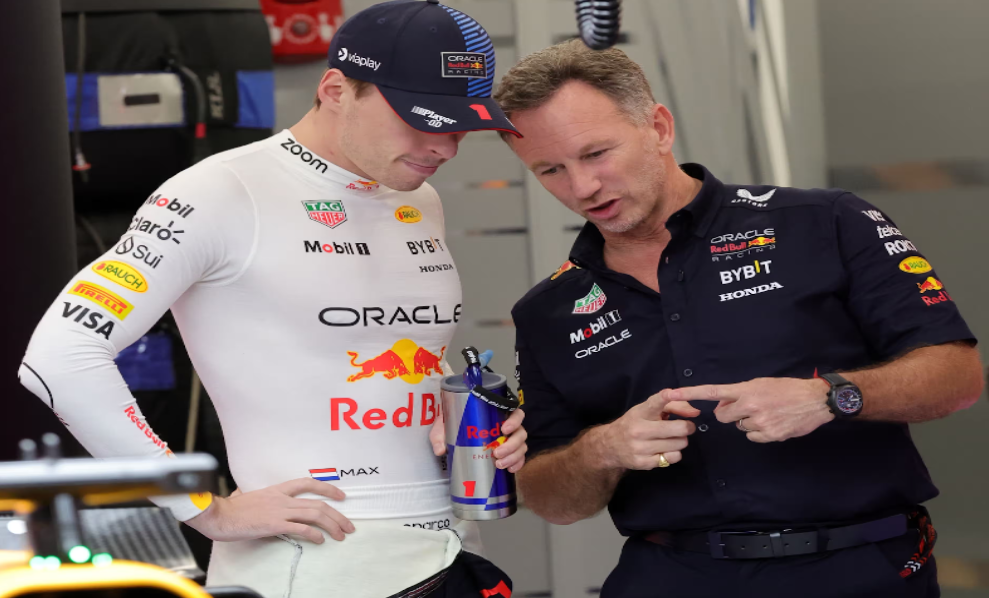
The car’s performance dipped. McLaren surged past. Verstappen’s title hopes evaporated early this season, and his teammate Yuki Tsunoda has struggled to keep up.
Behind the scenes, whispers grew louder. Was Mercedes making a move for Max? Had a deal already been made? And if so—was Horner’s exit part of the price?
The End of an Era—And a Cautionary Tale
Red Bull’s internal losses haven’t stopped at Horner. Chief engineer Rob Marshall and aerodynamic mastermind Adrian Newey have both left. Sporting director Jonathan Wheatley followed. All pillars of the empire, now gone.
Red Bull’s ambitious in-house engine project, launching next season, adds more uncertainty. Mercedes is rumoured to be ahead in development—bad news for a team trying to woo Verstappen with promises of another championship car.
So what now? Red Bull stands at a crossroads. The team that once dominated the sport now faces a tough rebuild. Horner’s departure isn’t just the end of an era—it’s a warning.
In Formula One, success never comes with a lifetime guarantee. Just ask Williams.
Red Bull must now reckon with what happens when the winning stops—and who they become without the man who made it all happen.