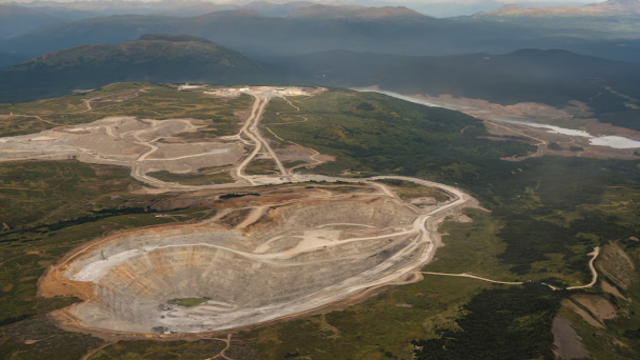
A photo taken from above shows the Red Chris mine pits as they looked in 2017. The Globe & Mail
Three workers remain trapped more than 500 metres underground at a gold and copper mine in northern British Columbia. The mine, located near Dease Lake and close to the Alaska border, suffered a ground collapse Tuesday morning. The workers reached a designated refuge station underground, where they are now waiting to be rescued.
Second collapse worsens the situation
Shortly after the first collapse, a second one followed. This blocked the rescue team’s access to the refuge station and cut off communication. The mining company said the shelter has enough food, water, and ventilation to support the trapped workers. The mine’s operations have been completely halted.
Workers are safe inside the shelter
Officials confirmed the three trapped individuals are contractors, not full-time employees of the mining company. Two of the men are from British Columbia and one is from Ontario. All of them are safe for now inside the underground shelter.
Rescue teams being assembled
British Columbia Premier David Eby said the company is working closely with some of the world’s best mining rescue experts. A team of specialists from nearby mines is being put together to help with the rescue operation. The Premier has also spoken to Ontario Premier Doug Ford and is keeping him updated.
Mr. Eby said, “It’s very concerning for the families, for workers in the sector and British Columbians and Canadians. Our thoughts are with the families and appreciation with the incredibly brave rescue teams that are working right now.”
Province sends help
B.C. has already sent a geotechnical inspector to support the rescue effort. The province has also given the green light to move heavy equipment from the Brucejack mine nearby. The ambulance service in B.C. is monitoring the rescue situation closely.
About the Red Chris mine
The Red Chris mine, where the incident happened, is owned mostly by a U.S.-based company. It was working on a major expansion, planning to shift from open-pit to underground mining. This move could help increase Canada’s copper production by 15%.
The underground work involves a technique that allows deeper parts of the mine to be reached. The company hopes this change will unlock 80,000 more tonnes of copper each year. The expansion was one of 18 resource projects fast-tracked by the province earlier this year.
Previous issues with mine partner
The remaining share of the mine belongs to a Canadian company. In December, this company was charged with violating the federal Fisheries Act. The charges were connected to a massive tailings pond spill at another mine in B.C. that happened ten years ago. That disaster polluted waterways with millions of cubic metres of wastewater containing dangerous substances.