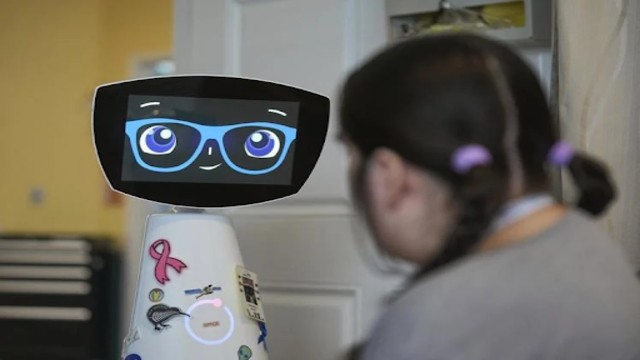
Robin the Robot visits with a patient at the HealthBridge Orange Specialty Pediatric Hospital in Orange, Calif. (AP Photo)
A chance encounter in a hospital corridor left a lasting impression on Meagan Brazil-Sheehan and her 6-year-old son, Luca. Just days after Luca was diagnosed with leukemia, a friendly voice greeted them.
“Luca, how are you? It’s been awhile,” said Robin, a robot programmed to speak like a 7-year-old girl. The 4-foot-tall robot’s cartoonlike face appeared on a large screen, instantly brightening Luca’s day.
“It was so special because she remembered him,” Brazil-Sheehan said, recalling the moment at UMass Memorial Children’s Medical Center in Worcester, Massachusetts.
A Robot with a Mission
Robin is an AI-powered therapeutic robot designed to provide emotional support to children in hospitals and seniors in nursing homes. It helps combat loneliness, anxiety, and staffing shortages in health care.
Since launching in the U.S. five years ago, Robin has become a familiar presence in 30 facilities across California, Massachusetts, New York, and Indiana.
“Nurses and staff are overworked and often cannot provide the emotional connection patients need,” said Karen Khachikyan, CEO of Expper Technologies, which developed Robin. “The robot helps fill that gap.”
How Robin Works
Robin operates with about 30% autonomy, while a remote team manages the rest under clinical supervision. The robot mirrors the emotions of the people it interacts with, laughing when patients laugh and showing empathy during difficult moments.
On a recent day at HealthBridge Children’s Hospital in Orange County, California, Robin visited several patients. It played a teen’s favorite song, made a young child laugh with silly glasses, and played tic-tac-toe with another patient.
“She brings joy to everyone,” said Samantha da Silva, a speech language pathologist. “Robin remembers names, favorite songs, and even personal details. Children love her presence.”
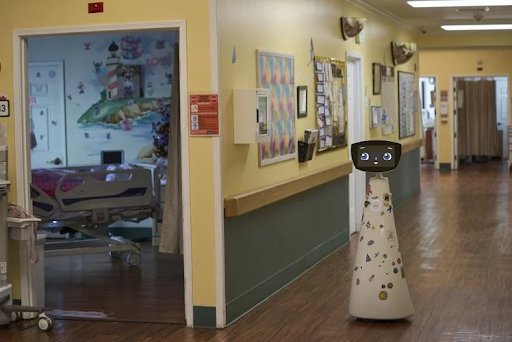
Robin the Robot, developed by Expper Technologies, visits patients' rooms at the HealthBridge Orange Specialty Pediatric Hospital in Orange, Calif., on Friday, Sept. 12, 2025. (AP Photo)
Beyond Emotional Support
Robin’s role extends to practical assistance. At UMass, it helped Luca prepare for an IV by showing a cartoon version of the procedure, easing his anxiety.
In nursing homes, Robin plays memory games with people with dementia, leads breathing exercises, and offers companionship reminiscent of a grandchild’s care.
The Vision for the Future
Khachikyan hopes Robin will evolve into a broader medical assistant. Plans include monitoring vitals, reporting patient conditions to medical teams, and eventually helping with daily care tasks for elderly patients.
“Our goal is to expand Robin’s responsibilities and make her an essential part of care delivery,” Khachikyan said. “It’s about supporting, not replacing, health care workers.”
The Story Behind Robin
Robin was conceived during Khachikyan’s Ph.D., inspired by his own childhood loneliness in a single-parent household in Armenia. Early tests in various industries revealed pediatric hospitals as the perfect fit.
Introduced at a hospital in Armenia, Robin later launched a pilot program at UCLA Mattel Children’s Hospital in 2020. Over time, interactions with patients have shaped Robin’s personality, including quirky choices like claiming her favorite animal is a chicken — which children found hilarious.
“Robin was designed by users,” Khachikyan said. “Her personality evolved based on the people she interacts with.”
From offering comfort to sparking laughter, Robin is proving that a robot can be more than a machine — it can be a friend, a companion, and a source of joy for children and seniors alike.