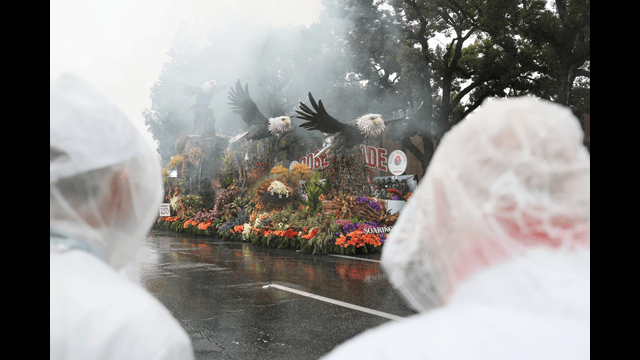
Rain comes down on a float at the 137th Rose Parade Thursday, Jan. 1, 2026, in Pasadena, Calif.
The first day of 2026 delivered dramatic weather across the United States.
Rain drenched California’s iconic Rose Parade.
Snow squalls and bitter cold hit the Midwest and Northeast.
From soaked floats to delayed flights, New Year celebrations faced nature’s full force.
Rain Returns to the Rose Parade After Two Decades
For the first time in 20 years, rain soaked the Rose Parade in Pasadena.
The historic event faced steady showers throughout New Year’s morning.
The Rose Parade weather became the biggest talking point of the day.
One to two inches of rain fell during the parade hours.
Marching bands, floral floats, and spectators stood their ground.
Umbrellas and ponchos replaced sun hats along the famous route.
Temperatures stayed cool during the early start.
The thermometer read 58 degrees Fahrenheit at 8 a.m.
It added a winter chill to the rain-soaked celebration.
Millions Watch as Pasadena Pushes Through
Hundreds of thousands gathered along the six-mile parade route.
Millions more watched the broadcast nationwide.
Despite the rain, the event continued without major disruption.
Organizers made limited adjustments to manage the Rose Parade weather.
Convertible tops were raised for dignitaries and VIPs.
Grand marshal Earvin “Magic” Johnson rode protected from the rain.
Officials said safety plans were already in place.
The parade’s schedule stayed largely unchanged.
Crowds cheered as floats rolled through wet streets.
Flood Alerts Spread Across California
Rain forecasts intensified throughout the week.
Weather agencies warned of worsening conditions by Thursday.
Flood concerns quickly expanded across California.
The National Weather Service issued flood watches statewide.
Coastal flood advisories stretched along parts of the Pacific Coast.
Warnings remained active through Sunday afternoon.
Communities near recent wildfire burn areas faced added risk.
Evacuation warnings were issued in vulnerable Los Angeles neighborhoods.
Officials feared mudslides and debris flows after heavy rainfall.
Cold Grips New York City Celebrations
While California dealt with rain, the East faced freezing air.
New York City rang in the New Year under cold skies.
The Rose Parade weather contrasted sharply with the Northeast chill.
Temperatures hovered near freezing during the ball drop.
Hats, gloves, and heavy coats were essential.
Officials called it the coldest New Year’s Eve in a decade.
Sunshine appeared ahead of Mayor Zohran Mamdani’s inauguration.
The brief warmth offered relief after a frigid night.
However, surrounding regions saw worsening conditions.
Snow Squalls Sweep the Midwest and Northeast
An Alberta clipper storm pushed across the northern states.
An Arctic front followed closely behind it.
The system brought snow squalls and strong winds.
Conditions shifted rapidly across affected areas.
Light snow turned into sudden whiteouts.
Drivers faced reduced visibility and slick roads.
Snow stretched from Wisconsin to northern Illinois.
Michigan, New Jersey, New York, and New England followed.
Travel disruptions spread quickly across the region.
Flight Delays Add to Travel Troubles
Air travel faced delays on both coasts.
About 25 percent of flights were delayed in San Diego.
Boston Logan Airport reported similar disruptions.
Weather remained the main cause of delays.
Rain affected the West Coast.
Snow and wind slowed operations in the East.
Passengers experienced long waits and rebookings.
Airlines urged travelers to monitor updates closely.
The stormy New Year tested patience nationwide.
A Wild Weather Welcome to 2026
The Rose Parade weather symbolized a turbulent start to the year.
Rain, snow, wind, and cold dominated celebrations.
America entered 2026 under dramatic skies.
Despite challenges, events continued across the country.
Crowds adapted and traditions endured.
The New Year began with resilience, soaked coats, and snowy streets.