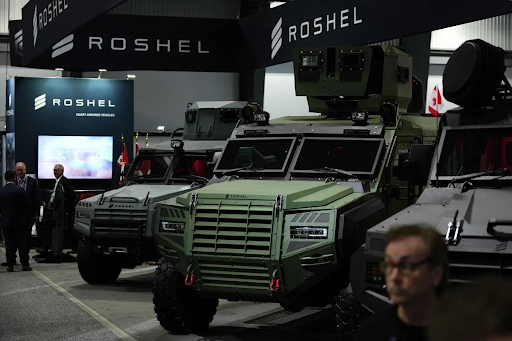
Roshel armoured vehicles sit on display at a defence industry show in Ottawa on May 28, 2025. The Canadian Press
U.S. Immigration and Customs Enforcement moves ahead with a major purchase of Canadian-built armoured vehicles. The agency sets aside millions of dollars for 20 specialized units made by Roshel, a defence manufacturer based in Brampton, Ontario. These vehicles are designed to withstand bullets and blasts, giving American field agents added protection during high-risk operations.
Public procurement records in the United States show the department preparing a rush order worth about C$10 million. The vehicles, known as Senator STANG emergency response tactical units, come equipped for dangerous situations. The federal documents also show that officials awarded the contract on November 28 after posting the justification two days earlier.
Why ICE Chose Roshel
ICE says only Roshel can deliver the required number of vehicles within 30 days. The agency’s Office of Acquisition Management states that Roshel confirmed immediate availability of units that meet all technical needs. Officials note that other companies in the United States either lacked enough inventory or could not meet the strict deadline.
“Roshel is uniquely positioned to fulfil this requirement within the necessary time frame,” the document says. ICE adds that any delay for a formal competition would harm its ability to support agents in the field.
The agency reviewed several American firms, including Alpine Armoring Inc., CITE Armored Inc., DGM LLC and Lenco Armored Vehicles. None met the full list of specifications or could complete the order in time. ICE says it needs these vehicles quickly to maintain operational readiness.
Background on Roshel and Its Vehicles
Roshel produces a wide range of armoured vehicles and has already sent hundreds of units to Ukraine during its conflict with Russia. The Senator line includes different models built for various security roles. Marketing materials describe the vehicle floors as reinforced against blasts, with added features suited for emergency and tactical response.
The company continues to build a global reputation for rapid delivery and specialized designs. Government agencies, law enforcement groups and international partners regularly purchase its vehicles for missions in dangerous environments.
Political Context Surrounding the Deal
The purchase comes during ongoing debate about U.S. immigration enforcement policies. ICE faces strong criticism from advocacy groups who raise concerns about human rights issues. Meanwhile, U.S. President Donald Trump continues to push an “America-first” economic agenda, putting pressure on Canadian industries in steel, auto and manufacturing.
Despite this stance, ICE still turns to a Canadian supplier. The agency says no U.S. company could meet its needs in time, making Roshel the only viable option for the urgent order.
Roshel, ICE and Canadian officials did not respond to requests for comment.
The procurement records list the final expected cost at US$7,331,200 for the full fleet.