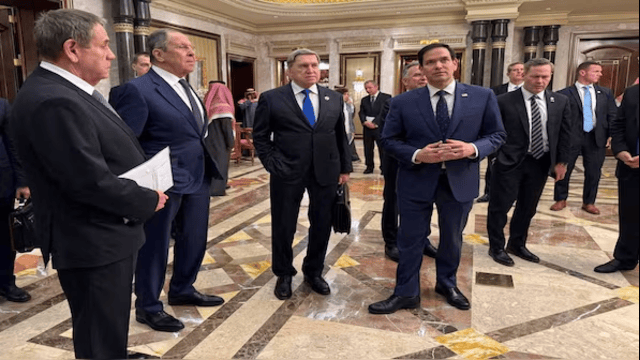
US Secretary of State Marco Rubio, Russian Foreign Minister Sergey Lavrov, Russian President Vladimir Putin's foreign policy advisor Yuri Ushakov and members of the delegations attend talks at Diriyah Palace in Riyadh, Saudi Arabia. Reuters file
As tensions rise over Russia’s escalating attacks on Ukraine, U.S. Secretary of State Marco Rubio is heading into what may be one of his most delicate diplomatic meetings yet. On Thursday, Rubio will meet Russian Foreign Minister Sergey Lavrov in Kuala Lumpur during the ASEAN Regional Forum, with Ukraine, global trade, and China's influence all on the table.
The annual gathering brings together top diplomats from 10 ASEAN countries along with partners like the U.S., China, Japan, and Russia. This year’s event, however, is fraught with heightened global tension.
U.S. Resumes Arms Support to Ukraine
Just days before the meeting, the U.S. resumed shipments of defensive weapons to Ukraine. The deliveries had been paused while the Pentagon reviewed its ammunition stockpiles. That pause had drawn praise from Moscow, but the reversal signaled Washington’s growing impatience with Russia’s actions.
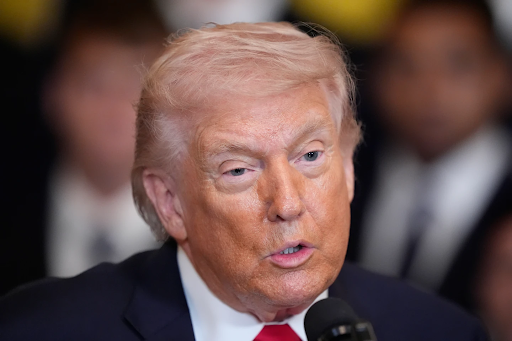
“Putin is not treating people right,” President Trump said at a Cabinet meeting earlier this week. “It’s killing too many people. So we’re sending defensive weapons, and I’ve approved that.”
Trade Tensions Overshadow Rubio’s Asia Debut
Rubio’s first official trip to Asia also comes under a cloud of tariff threats. President Trump has warned that several countries—including eight out of ten ASEAN members—will face steep tariff hikes if they don’t make new trade deals with the U.S. These tariffs, set to kick in August 1, could hit exports like electronics and electrical goods especially hard.
Trying to reassure ASEAN partners, Rubio said the Indo-Pacific remains a U.S. foreign policy priority. “We’re not distracted,” he said in a group meeting. “This region is where the story of the next 50 years will be written.”
Without naming China, Rubio added, “We will continue building partnerships here without seeking approval from anyone else.”
ASEAN Pushes Back on U.S. Trade Pressure
Yet, not all ASEAN leaders are convinced. Malaysian Prime Minister Anwar Ibrahim has warned that global trade is being “weaponized” and used to pressure smaller nations. Speaking to ASEAN foreign ministers, he emphasized the need for the bloc to reduce dependency on foreign powers.
Trade Minister Zafrul Aziz echoed the concern. He said Malaysia is open to tariff talks but won’t compromise on red lines, including U.S. demands for changes to halal certification, digital taxes, and local procurement standards.
So far, ASEAN members hit with steep tariffs include Cambodia (36%), Indonesia (32%), Laos and Myanmar (40% each), Malaysia and Brunei (25% each), and the Philippines (20%). Thailand faces 36%, while Vietnam has settled on a 20% tariff deal. Only Singapore, which agreed earlier to a 10% tariff, remains untouched this week.
China’s Quiet Presence and a Nuclear Energy Deal
Rubio is also expected to cross paths with China’s seasoned Foreign Minister Wang Yi. Analysts say Wang, a veteran of ASEAN diplomacy, is better equipped to navigate the forum’s tone. Rubio, meanwhile, is seen as pushing an “America First” agenda that may find few takers in the region.
While the U.S. is criticizing China’s support for Russia, it also accuses Beijing of quietly helping rebuild Russia’s arms industry. These accusations remain a sore point as war in Ukraine drags on.
In a calmer turn, Rubio signed a civilian nuclear energy memorandum with Malaysia Thursday morning. The deal is expected to pave the way for formal cooperation between U.S. firms and Malaysia’s nuclear energy sector.