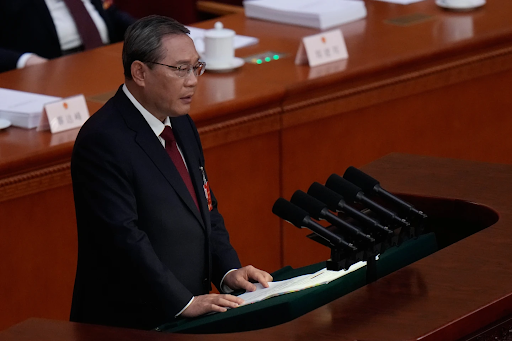
Liu, seen here in a file photo from June 2025, made her fortune in Chinese real estate before immigrating to Canada. She has argued that landlords were battling her because she’s an "outsider" and not their preferred tenant. (Canadian Press)
B.C. billionaire Ruby Liu’s ambitious plan to resurrect the legacy of Hudson’s Bay has hit a wall. The Ontario Superior Court has rejected her bid to take over dozens of the collapsed retailer’s former department store leases.
Justice Peter Osborne delivered the ruling on Friday, concluding that the landlords of the shuttered stores cannot be forced to accept Liu as a tenant. His 48-page decision raised “significant concerns” about her ability to meet lease terms and described the landlords’ objections as “compelling.”
Neither Hudson’s Bay Company (HBC) nor Liu’s representatives have commented on whether they will appeal the judgment.
A Costly Dream Meets Legal Reality
Liu, who made her fortune in Chinese real estate before immigrating to Canada, spent the past several months fighting to acquire 28 Hudson’s Bay leases. Her vision was to launch a new department store chain under her own name, featuring dining, entertainment, and retail all under one roof.
HBC, burdened with $1.1 billion in debt, filed for creditor protection in March. When no buyer emerged, it liquidated its 80 Hudson’s Bay stores and 16 Saks locations, later opening bids for remaining assets — including leases, art, and intellectual property.
Among a dozen bidders for 39 properties, Liu’s $69.1-million offer was the highest. Three of her bids — for properties located in malls she already owns in B.C. — were approved without objection. The remaining 25, however, ignited a fierce courtroom battle.
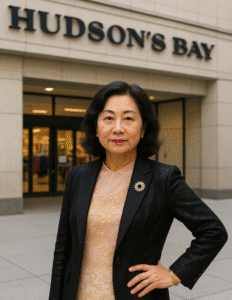
Landlords Question Experience and Viability
Landlords including Cadillac Fairview, Ivanhoé Cambridge, and Oxford Properties pushed back strongly. After meeting Liu, they argued she lacked preparation and retail experience. Some said she initially failed to provide a business plan. Others raised doubts about her $400-million renovation budget and financial capability, noting her malls had accumulated $19 million in debt over the past two years.
Osborne shared their skepticism. In his judgment, he called Liu’s plans “superficial” and said the updated version “remains deficient.”
“While proposals were made to hire former HBC executives, those efforts remain incomplete,” he wrote. “The overall lack of experience at the leadership level represents a significant risk to launching and managing 25 large stores.”
A Struggle Behind Closed Doors
Liu’s plan depended on swift turnarounds — 20 stores renovated and reopened within 180 days. Landlords dismissed the timeline as unrealistic. They also objected to her proposed mix of shopping, dining, and entertainment, saying such uses violated existing lease terms.
Despite pressure from HBC and creditors to strengthen her team, Liu failed to hire the suggested financial and consulting advisors. She also faced criticism for personally contacting the judge — an action that drew a stern rebuke from the court.
The Court’s Final Word
Judge Osborne ultimately ruled that Liu was not an “appropriate” buyer under Section 11.3 of the Companies’ Creditors Arrangement Act, which governs lease transfers in bankruptcy cases.
While the court-appointed monitor believed Liu could meet her financial obligations, it warned of a “very real risk” that her plan would fail due to inexperience and the scale of the challenge.
For now, Liu’s dream of bringing the Hudson’s Bay spirit back to life remains out of reach — a vision stalled by doubt, debt, and a daunting dose of reality.