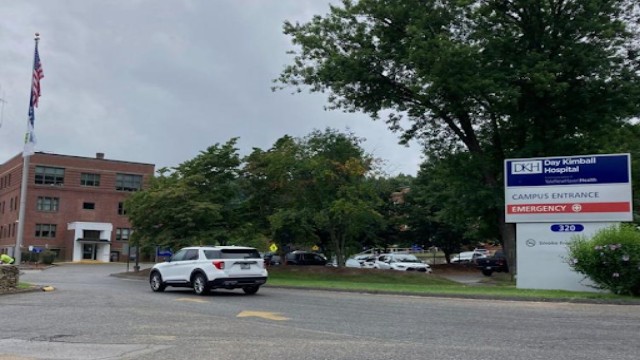
A vehicle drives into Day Kimball Hospital in Putnam, Connecticut (AP Photo/Susan Haigh, File)
Tyler Sherman, a nurse in Red Cloud, Nebraska, sees a troubling future ahead. In this small, rural town near the Kansas border, many older residents often delay treatment until it becomes urgent. But now, a looming $1 trillion cut to Medicaid funding over the next decade has raised fears that local health care might vanish altogether.
Webster County Community Hospital, where Sherman works, serves over 3,000 people. It relies heavily on Medicaid reimbursements. If those funds shrink, the hospital, along with its connected clinic and nursing home, may be forced to shut its doors.
“If that happens,” Sherman said, “people who live just five minutes from the hospital will have to drive nearly an hour to reach the next closest facility. And in an emergency, that could be too late.”
Rural Hospitals on the Edge of Collapse
Across the country, rural hospitals already face tight budgets. Advocates warn that stripping Medicaid funding could lead to the closure of hundreds of these facilities, leaving entire regions without emergency care.
A University of North Carolina study estimates that over 300 hospitals could shut down if the proposed Republican bill passes. The warning signs are already here — a clinic in Curtis, Nebraska, just announced its closure, partly blaming the expected Medicaid cuts.
Real People, Real Risks
In Connecticut, 70-year-old Bruce Shay worries about what the future holds for him and his wife. Day Kimball Hospital, their nearest medical center, is already struggling financially. Around 30% of its patients rely on Medicaid, and for services like childbirth and mental health care, that number is even higher.
Shay fears a time might come when they’ll need emergency care — and find it hours away. “If it closes, thousands of people would have to go somewhere else,” he said. “The rest of the health system can’t handle that.”
Financial Lifeline Not Enough
While the new bill promises $50 billion over five years to support rural hospitals, experts argue it’s nowhere near enough. According to the American Hospital Association, hospitals lost $28 billion in 2023 alone because Medicaid payments didn’t cover their full treatment costs.
Carrie Cochran-McClain from the National Rural Health Association explained, “Rural hospitals are barely getting by. Cutting Medicaid funding will push many of them over the edge.”
Kentucky Faces the Worst Hit
A KFF analysis reveals that 36 states stand to lose at least $1 billion in rural Medicaid funds over the next 10 years — even after factoring in the $50 billion rural hospital support. Kentucky is expected to suffer the most, with a projected $12.3 billion loss.
Why? The state has one of the lowest Medicare reimbursement rates and one of the highest poverty rates. One-third of Kentuckians depend on Medicaid for health care.
Governor Andy Beshear warns this could lead to the closure of 35 hospitals and strip insurance from 200,000 people. “Half of Kentucky’s children are on Medicaid,” he said. “You cut that, and you’re forcing families to go without medicine, without treatment.”