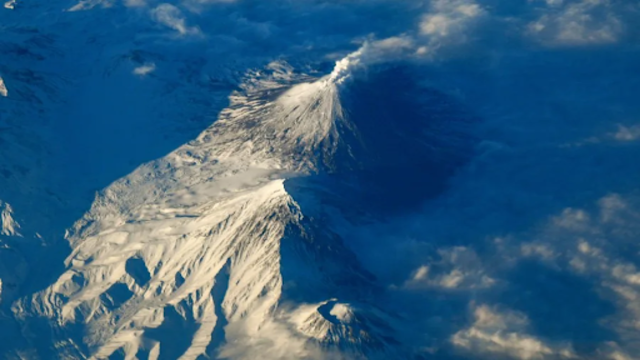
A 7.8-magnitude earthquake struck near Russia’s Kamchatka Peninsula on Thursday morning. This led the National Weather Service to issue a tsunami warning for Alaska’s Aleutian Islands, which was later canceled. (NASA)
A powerful 7.8-magnitude earthquake shook the eastern coast of Russia on Thursday, prompting a tsunami warning for parts of Alaska and alerting emergency officials along the U.S. Pacific coast. However, the warning was lifted after no tsunami waves appeared.
Tsunami Advisory Issued and Quickly Canceled
The National Tsunami Warning Center issued a high-level tsunami advisory for the Western Aleutian Islands, between Amchitka Pass and Attu. Officials urged residents and visitors near the water to avoid beaches and stay clear of waterways as a precaution.
Hawaii’s Pacific Tsunami Warning Center also issued an alert but later gave an all-clear, saying there was no threat to the islands. The National Weather Service confirmed there was no risk of a destructive tsunami along the West Coast or Canadian shores.
While no dangerous waves were recorded, officials advised people in Alaska not to return to coastal hazard zones until local authorities declare it safe.
Recent History of Quakes and Tsunamis
This recent quake follows a similar event in July, when an 8.8-magnitude earthquake hit the same region near Russia’s Kamchatka Peninsula. That quake caused tsunami waves that reached Washington, Oregon, California, and Hawaii, causing minor flooding but no serious damage.
The July tsunami produced waves that quickly rose and fell over hours. For example, Maui’s Kahului Harbor recorded water levels dropping over two feet and then surging nearly seven feet in just minutes. Similar changes occurred along California’s coast.
What to Do During a Tsunami Warning
Tsunamis can travel fast and create large waves. Officials remind people living near the coast to prepare ahead of time and follow safety steps during warnings:
- Drop, cover, and hold on during an earthquake first.
- Move away from water and head inland.
- Watch for signs like sudden ocean water retreat or rapid rises.
- Follow official instructions without delay.
- Evacuate quickly if told to do so.
- On a boat, move out to deeper water.
How Tsunamis Are Monitored
NOAA operates a system called DART (Deep-ocean Assessment and Reporting of Tsunamis). This system uses buoys and sensors across the ocean to detect waves early and alert coastal areas. Scientists keep improving this technology to protect communities.
About Attu Island
The tsunami advisory covered the remote Aleutian Islands, including Attu Island. Located about 1,500 miles from Anchorage, Attu has a tragic history from World War II when Japanese forces occupied it. Many Indigenous people were taken prisoner, and the island later became a U.S. military base.
Today, Attu is part of a wildlife refuge and is famous among birdwatchers for rare Asian bird species that visit. It was also featured in a 2011 movie about birdwatching. Access to the island is now only by boat.