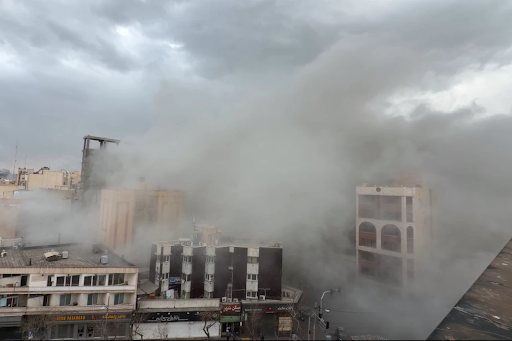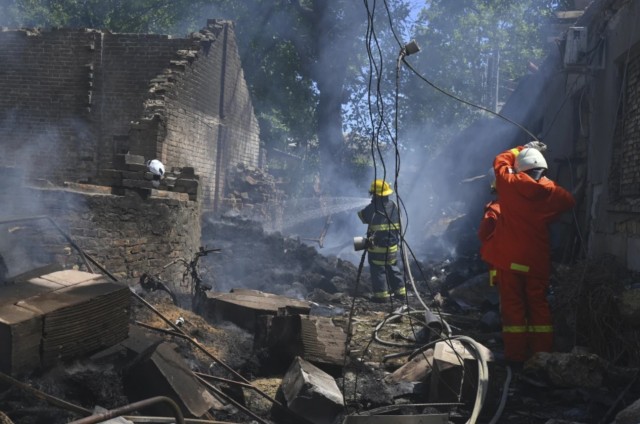
Emergency services personnel work to extinguish a fire following a Russian attack in Odesa, Ukraine, Friday, July 11, 2025.
The European Union and the United Kingdom have jointly introduced a fresh round of sanctions against Russia. This new crackdown is focused on Moscow’s critical energy revenues, military intelligence, and its elusive shadow oil fleet. The move comes amid intensifying Russian strikes and continued Western backing for Ukraine.
EU Foreign Policy Chief Kaja Kallas stated that this latest package is one of the bloc’s toughest measures yet. “Europe will not back down in its support for Ukraine,” she said, emphasizing that pressure will continue until Russia halts its aggression. The announcement came as several EU nations began procuring U.S. weapons to bolster Ukraine's defense capabilities further.
Ukrainian President Volodymyr Zelenskyy welcomed the new measures, calling them “timely and necessary.” He stressed the need to dismantle all infrastructure fueling Russia’s war machine. Ukraine also pledged to align its own sanctions with the EU’s and introduce further actions shortly.
UK Hits Russian Spies and GRU Operatives
The UK has taken direct aim at Russia’s intelligence operations. Britain sanctioned units of the GRU, Russia’s military intelligence agency, along with 18 officers allegedly involved in deadly plots. These include the bombing of a theatre in Mariupol in 2022, which killed hundreds of civilians, and an attempt to harm the family of a former Russian spy using a nerve agent.
UK Foreign Secretary David Lammy accused Russian operatives of “destabilizing Europe and threatening British citizens.” He described the move as a necessary step to disrupt GRU activities and defend democratic values.
NATO Condemns Cyber Threats
NATO weighed in with a strong rebuke of Russia’s cyberattacks, vowing a collective response in coordination with EU partners.
The alliance emphasized it would retaliate in accordance with international law and at a time of its choosing.
Sanctions Strike at Russian Oil Revenue
A major focus of the EU’s new sanctions is the Russian energy sector. The EU approved a revised oil price cap, lowering it from $60 to just under $48 per barrel. Though still above the originally proposed $45, the move is designed to shrink Moscow’s oil profits, which fund its military.
Oil exports are a lifeline for Russia’s economy, helping President Vladimir Putin finance the war while shielding the public from inflation and currency instability. The EU's strategy aims to cut off this vital stream of income.
Additionally, a new import ban addresses a loophole that previously allowed Russia to reroute crude oil through non-EU countries. The Nord Stream pipelines, though non-operational, were also targeted to prevent future revenue generation and discourage investment.
India’s Rosneft refinery, operated by Russian energy giant Rosneft, was also hit with restrictions, demonstrating the EU’s global approach to limiting Russia’s economic reach.
Financial Crackdown and Chinese Banks Involved
The sanctions extend beyond oil. Russia’s financial system is now under greater strain. Several Russian banks, along with two Chinese banks allegedly facilitating Russian transactions, were added to the blacklist. These measures are intended to restrict Russia’s ability to raise funds and engage in international finance.
Sanctioning Russia Is Getting Harder
Since Russia’s full-scale invasion began on February 24, 2022, the EU has imposed multiple rounds of sanctions. More than 2,400 individuals and entities have faced asset freezes and travel bans.
However, consensus among the 27 EU members is proving increasingly difficult. Some nations, including Slovakia, voiced concerns about energy-related sanctions that could harm their own economies. German Chancellor Friedrich Merz admitted that persuading Slovakia took considerable time, calling the negotiation process “too sluggish.”
EU Expands Shipping Sanctions
The EU has continued its assault on Russia’s shadow fleet — a network of aged tankers used to bypass sanctions. In this latest wave, 105 additional ships were banned from European ports and territorial waters. This brings the total number of sanctioned vessels to over 400.
A Clear Message from the West
While Moscow dismissed the sanctions as unlawful, Kremlin spokesman Dmitry Peskov admitted Russia had “adapted” to life under restrictions. Still, he said, authorities would analyze the latest measures to mitigate damage.
The EU and UK’s coordinated sanctions signal a strong and unified stance. With cyber threats, energy revenues, and intelligence networks under fire, the West is tightening the noose, sending Russia a clear message: the cost of war will keep rising.