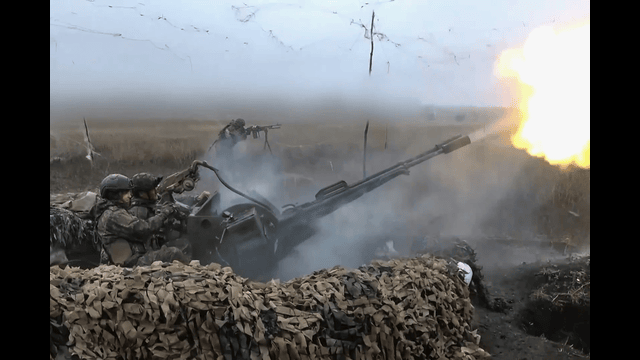
In this image made from video provided by Russian Defense Ministry Press Service on Friday, Nov. 7, 2025, Russian army soldiers fire to shoot a Ukrainian drone on an undisclosed location in Ukraine.
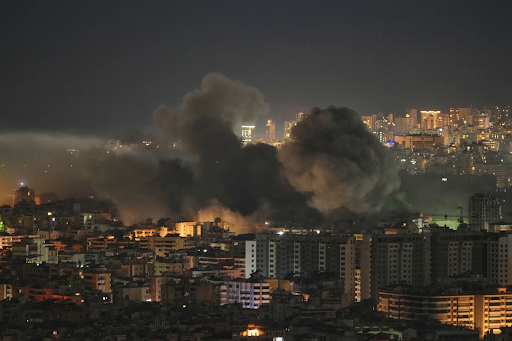
Two major Russian cities near the Ukrainian border were plunged into blackouts after Ukrainian strikes hit power and heating systems, officials confirmed on Sunday. The attacks mark another escalation in the ongoing energy warfare between Moscow and Kyiv, as both nations target each other’s infrastructure amid stalled diplomatic efforts.
Power and Heating Knocked Out in Russian Cities
Regional authorities said a drone strike disrupted electricity and heating across parts of Voronezh, a city of over one million people. Governor Alexander Gusev reported that several drones were electronically jammed, but one strike caused a fire at a local utility facility before being extinguished.
Unverified reports from Russian and Ukrainian Telegram channels claimed the attack targeted a thermal power plant in the city.
Meanwhile, in Belgorod, a missile strike late Saturday caused severe damage to power and heating networks, affecting around 20,000 households, according to Governor Vyacheslav Gladkov.
The Russian Defense Ministry said its forces intercepted or destroyed 44 Ukrainian drones overnight across the Bryansk and Rostov regions. However, the statement did not mention the incidents in Voronezh or Belgorod, leaving key details unclear.
Russia Faces Energy Disruptions and Fire Incidents
In the Rostov region, local authorities reported hourslong blackouts in Taganrog, a city of 240,000 residents. Officials cited an emergency power line shutdown but gave no cause. Local media later reported a fire at a transformer substation, raising speculation about possible drone activity.
Ukraine has intensified long-range drone strikes on Russian oil refineries and power sites, aiming to curb Moscow’s energy revenues that fund the war. In response, Russia has launched repeated attacks on Ukraine’s power grid, trying to deny civilians access to heat and electricity during the upcoming winter — a strategy Kyiv has labeled as “weaponizing the cold.”
Ukraine Accuses Russia of Threatening Nuclear Safety
Ukraine’s Foreign Minister Andrii Sybiha accused Moscow of deliberately endangering nuclear safety in Europe. He said Russia’s mass drone and missile strikes on Friday targeted power substations connected to Ukraine’s Khmelnytskyi and Rivne nuclear plants.
“These were deliberate, well-planned strikes. Russia is intentionally putting Europe at risk,” Sybiha said in a statement on X (formerly Twitter).
He urged the International Atomic Energy Agency (IAEA) to hold an emergency meeting to address the potential risks from such attacks.
Officials in Kyiv warned that last year’s similar Russian strikes exposed weaknesses in the Ukrainian Energy Ministry’s protection of critical facilities near nuclear sites. This renewed offensive has revived fears of another winter of blackouts and power shortages.
Kremlin Reaffirms Commitment to Nuclear Test Ban
Amid rising nuclear concerns, Kremlin spokesman Dmitry Peskov said Russia remains committed to its global nuclear test ban obligations, even as President Vladimir Putin ordered studies into resuming atomic tests.
“President Putin has repeatedly said that Russia has no intention of conducting nuclear tests,” Peskov told reporters.
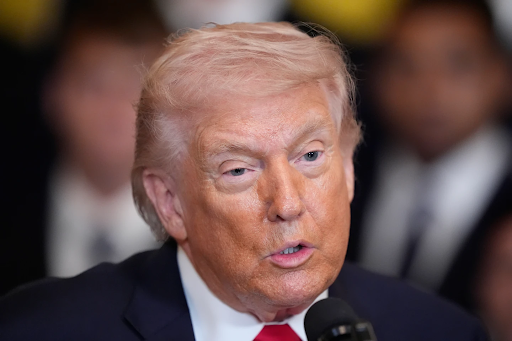
The statement followed remarks by U.S. President Donald Trump, suggesting that Washington could consider restarting nuclear testing after more than three decades. Moscow insists it would not act unless the U.S. did so first.
Diplomatic Efforts Stalled, Talks Proposed
In a separate development, Russian Foreign Minister Sergey Lavrov said he was ready to meet U.S. Secretary of State Marco Rubio to discuss the Ukraine war and broader relations.
“Both sides understand the need for regular communication,” Lavrov told the RIA news agency. However, he reiterated that peace talks were impossible without “taking Russian interests into account,” signaling no shift in Moscow’s stance.
The near-daily attacks on energy infrastructure, growing nuclear tensions, and diplomatic deadlock underscore how the nearly four-year war shows no sign of easing — leaving both nations locked in a dangerous and destructive stalemate.