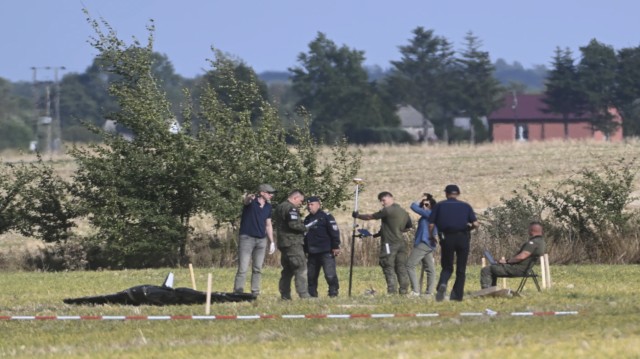
Police and Military Police secure parts of a damaged UAV shot down by Polish authorities at a site in Wohyn, Poland, Wednesday, Sept. 10, 2025.
European leaders expressed alarm after Russian drones struck Polish territory this week, intensifying fears of a wider conflict. The incident comes amid relentless Russian strikes on Ukraine and highlights growing concerns over NATO security.
Drone Strikes Deepen Regional Fears
The drone incursion into Poland has renewed anxiety across Europe. Leaders worry that Moscow’s actions could spill the Ukraine war beyond its current borders.
For NATO, it marked one of the most serious tests of its airspace security. Some officials called the move a deliberate provocation designed to measure the alliance’s resolve.
NATO Faces Tough Questions
NATO’s supreme commander in Europe, U.S. Gen. Alexus Grynkewich, admitted uncertainty about the number of drones and whether they were intentionally fired. He stressed the need to adapt NATO’s posture to respond more effectively to such incursions.
Foreign ministers of Ukraine, Poland, and Lithuania issued a joint statement condemning the attack as “a deliberate and coordinated strike” and labeling it an unprecedented escalation.
European Leaders React Strongly
British Prime Minister Keir Starmer discussed the matter with French President Emmanuel Macron and German Chancellor Friedrich Merz. They agreed that Russia is systematically stepping up its aggression.
Germany confirmed plans to expand air policing missions over Poland in response.
Finnish President Alexander Stubb, visiting Kyiv, warned that the line between war and peace is now “blurred.” He compared the incident to the 2014 seizure of Crimea, calling it another milestone in Europe’s age of uncertainty.
Moscow Denies Targeting Poland
The Kremlin maintained that Russian forces had not targeted Poland. Officials said they were open to discussing the incident with Warsaw. The U.N. Security Council scheduled an emergency meeting at Poland’s request to address the escalation.
Poland Shows Defiance
Polish Prime Minister Donald Tusk praised his country’s forces and NATO allies for their swift response. Speaking at a military base in Lask, he promised to accelerate military modernization. Poland expects its first U.S.-made F-35 fighter jets in 2026, part of a larger defense package.
Polish President Karol Nawrocki also struck a defiant tone during a visit to an air base in western Poland. He said Russian drones were testing Poland’s ability to react, but stressed the country would not be intimidated.
Meanwhile, Poland imposed air traffic restrictions in the east and announced it would close its border with Belarus. The move comes ahead of joint Russian-Belarusian military drills set to begin this week.
Global Ripple Effects
The incursion carried global implications. China urged Poland to keep open part of the Belarus border to allow its Belt and Road freight trains to continue operating.
Analysts at the European Council on Foreign Relations warned that Russian President Vladimir Putin is testing Europe’s resolve. They said inconsistencies between rhetoric and action have weakened Europe’s credibility.
U.S. Response and Political Reactions
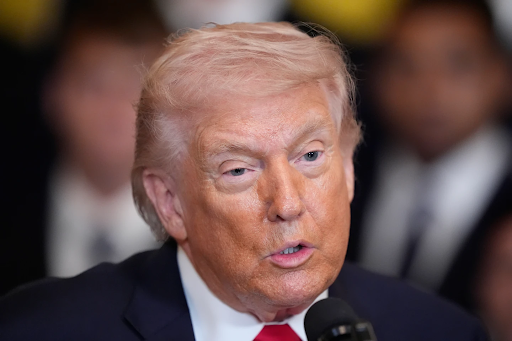
U.S. President Donald Trump offered a brief and ambiguous reaction on social media, questioning Russia’s actions. However, during recent talks with President Nawrocki, Trump reassured Poland of a continued strong American military presence.
Drone Warfare at the Center
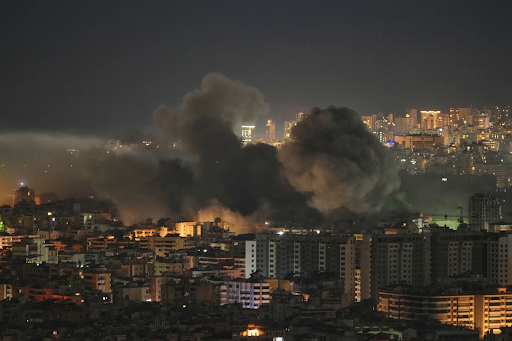
Russian drone strikes remain a daily reality in Ukraine. Kyiv has responded by developing interceptor drones to counter the attacks.
On Thursday, Ukraine’s defense minister announced a new deal with the United Kingdom to produce advanced Ukrainian drones. That same night, Ukrainian forces intercepted 62 out of 66 Russian drones in its airspace.
A Growing Test for NATO
Polish airspace violations have occurred before, but never on this scale. For NATO, the incident highlights a dangerous new phase of the conflict.
European leaders now face the challenge of strengthening defenses while avoiding direct escalation with Russia. The future of regional security may depend on how swiftly NATO adapts to this evolving threat.