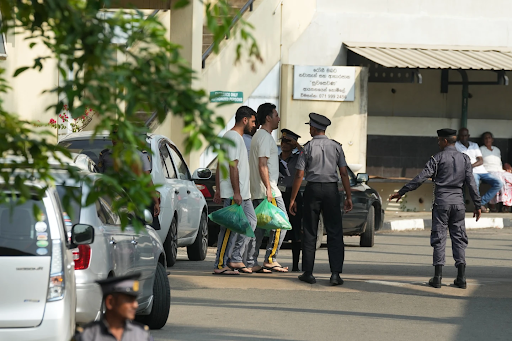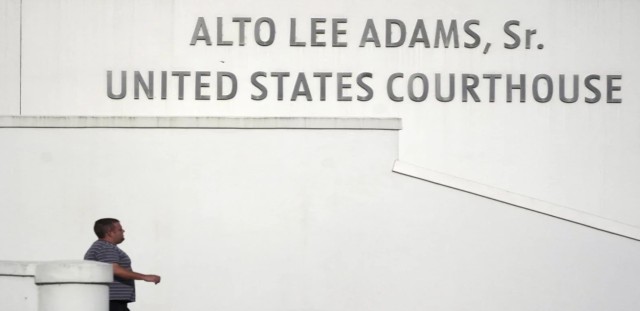
A man leaves the Alto Lee Adams Sr. U.S. Courthouse as jury selection began in the trial of Ryan Routh, charged with trying to assassinate Donald Trump while he played golf last year in South Florida, Monday, Sept. 8, 2025, in Fort Pierce, Fla.
A federal jury has convicted Ryan Routh of attempting to assassinate Donald Trump at a Florida golf course. The verdict came Tuesday after a two-week trial, with jurors deliberating for only two hours.
The shocking case involved a carefully planned attack that was stopped just in time by the Secret Service.
Courtroom Chaos After Guilty Verdict
Moments after being found guilty on all counts, Routh tried to stab himself with a pen. Officers restrained him and dragged him from the courtroom.
His daughter, Sara Routh, shouted: “Dad, I love you. Don’t do anything. I’ll get you out.” She and her brother later waited outside.
Officials confirmed the pen was flexible and designed to prevent harm. Routh did not injure himself.
Sentencing Set for December
Routh was brought before U.S. District Judge Aileen Cannon shortly after the incident. He was shackled and no longer in the suit he wore while representing himself.
Judge Cannon set his sentencing for December 18. He faces life in prison.
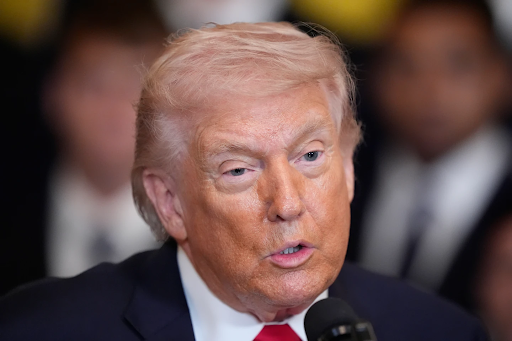
Former President Donald Trump responded to the verdict, saying justice was served. He added: “You can’t let things like that happen… even to a president or a person.”
Assassination Attempt Planned for Weeks
Prosecutors revealed Routh, 59, had spent weeks preparing to kill Trump. On September 15, 2024, he positioned himself with a rifle at Trump’s West Palm Beach country club.
Secret Service agent Robert Fercano spotted him before Trump entered his sightline. When Routh aimed at the agent, Fercano fired, forcing him to flee and abandon the weapon.
A witness later identified Routh as the man fleeing the scene. He was arrested shortly after.
Trump Faced Earlier Attack in Pennsylvania
This was not the first attempt on Trump’s life. Just nine weeks earlier, Trump was grazed by a bullet during a campaign rally in Butler, Pennsylvania.
That attacker was killed by a Secret Service sniper.
Charges Against Routh
Routh faced multiple charges, including:
- Attempting to assassinate a presidential candidate
- Assaulting a federal officer
- Possessing firearms and ammunition as a convicted felon
- Possessing a firearm with an obliterated serial number
Despite overwhelming evidence, Routh argued in his closing statement that no crime occurred because he never fired a shot. He claimed he could have harmed agents but chose not to.
Representing Himself in Trial
Judge Cannon allowed Routh to represent himself after hearings in July. His previous attorneys acted as standby counsel.
Routh called only three witnesses — a firearms expert and two character witnesses — while prosecutors brought forward 38 witnesses over seven days.
Attorney General Pam Bondi said the conviction shows the Justice Department’s commitment to punishing political violence.
Ryan Routh’s Troubled Background
Routh’s past paints a picture of instability and violence. Once a construction worker from North Carolina, he later moved to Hawaii and called himself a mercenary leader.
He attempted to recruit fighters for Ukraine during Russia’s invasion. In 2002, he was arrested for eluding police with a machine gun and explosives. In 2010, police found over 100 stolen goods in his warehouse.
Judges had previously given him probation or suspended sentences in felony cases.
Now, Routh still faces state charges of terrorism and attempted murder tied to the Trump plot.
A Case That Shook the Nation
The Trump assassination attempt highlights ongoing threats against political figures in America. While the Secret Service stopped the attack, prosecutors stressed the danger was real.
With sentencing ahead, Ryan Routh’s case stands as a reminder of the risks faced by presidential candidates — and the justice system’s role in deterring political violence.