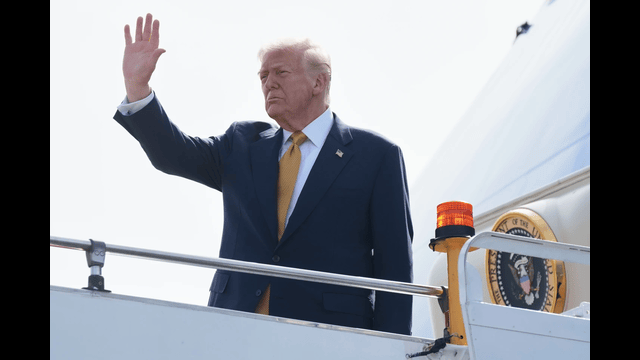
President Donald Trump waves as he boards Air force one at Kuala Lumpur International airport in Singapore.
Japan’s newly appointed Prime Minister, Sanae Takaichi, is preparing for her first major diplomatic test as she welcomes U.S. President Donald Trump to Tokyo. Her strategy? A mix of symbolic gestures and trade diplomacy — and possibly, a fleet of Ford F-150 trucks.
Trump’s visit comes at a time when both nations are seeking to rebalance their trade relationship amid rising tensions with China. For Takaichi, Japan’s first female leader, this meeting is not just about diplomacy — it’s a chance to prove her political strength at home and abroad.
A Truck That Could Drive Diplomacy
Reports suggest Japan is considering the purchase of Ford F-150 trucks as a goodwill gesture to the United States. The move, while largely symbolic, could help Japan address U.S. concerns about limited access for American carmakers in the Japanese market.
The idea, however, raises practical questions — Japan’s cities are known for their narrow streets, hardly ideal for large American pickup trucks.
Still, Trump appeared enthusiastic when told about the proposal during his flight to Asia.
“She has good taste,” he told reporters. “That’s a hot truck.”
The two leaders spoke over the phone as Trump traveled on Air Force One. Takaichi highlighted her connection to former Prime Minister Shinzo Abe, a leader Trump admired deeply, and praised Trump for his role in brokering the Gaza ceasefire.
“I thought he was very cheerful and fun,” Takaichi said. “He remembered me as someone Prime Minister Abe cared about. I told him I look forward to welcoming him in Tokyo.”
Aiming to Reset the Trade Relationship
Behind the warmth of diplomatic courtesies lies a deeper goal — resetting the U.S.-Japan trade relationship.
Earlier this year, Trump imposed new tariffs, demanding that allies like Japan increase their purchases of American goods and invest in U.S. industries. Japan’s previous administration had already committed $550 billion in U.S. investments, leading Trump to reduce planned tariffs on Japanese exports from 25% to 15%.
But Tokyo wants to ensure those investments favor Japanese companies and contractors. Japan’s Economy and Trade Minister, Ryosei Akazawa, confirmed that his ministry is working on a list of new projects in semiconductors and energy to meet the investment target.
“There are a number of Japanese companies showing interest,” Akazawa said, though he declined to provide specifics.
Strengthening Ties Before Trump Meets Xi
Trump’s Tokyo visit precedes a high-profile meeting with Chinese President Xi Jinping in South Korea.
Experts say Trump may be looking to bolster U.S.-Japan relations before engaging with China on trade and technology issues. Both nations are wary of China’s growing dominance in electric vehicles, AI, and advanced chips, industries critical to their own economies.
“In light of Trump’s upcoming meeting with Xi, he might want to show a strong U.S.-Japan alliance,” said Kristi Govella of the Center for Strategic and International Studies.
Symbolism on Wheels
For Trump, seeing Ford trucks cruising Tokyo’s streets would symbolize a long-desired breakthrough. U.S. officials have often complained that American cars face unfair barriers in Japan, the home turf of Toyota, Honda, and Nissan.
Commerce Secretary Howard Lutnick even joked earlier that Japanese consumers avoided U.S. vehicles because “Chevys” had a gangster reputation.
According to reports, Takaichi may showcase Ford trucks in areas Trump will visit. The government is considering using them for public works inspections — a practical touch to an otherwise political gesture.
Meanwhile, Toyota Chairman Akio Toyoda might announce plans to import U.S.-made Toyotas back to Japan during a dinner with Trump and business leaders later this week.
Echoes of the Abe Era
Takaichi’s connection to Shinzo Abe could also play a crucial role. Trump often speaks fondly of Abe, recalling their shared love of golf and lamenting Abe’s 2022 assassination.
“I think she’s going to be great,” Trump said aboard Air Force One. “She’s a great friend of Mr. Abe — a great man.”
However, analysts warn that relying too heavily on Abe’s legacy could limit Takaichi’s ability to build her own political identity.
“She wants to start with a bang,” said Rintaro Nishimura of The Asia Group. “But leaning too much on the Abe line may not help her establish her own image.”
A Packed Itinerary Ahead
Trump landed in Tokyo on Monday, first meeting with Emperor Naruhito. On Tuesday, he is scheduled to meet Takaichi, deliver a speech aboard the U.S.S. George Washington, and later attend a dinner with Japanese business leaders.
By Wednesday, he will head to South Korea for his long-awaited meeting with Xi Jinping.
Whether or not Ford F-150s ever roll down Tokyo’s streets, one thing is certain — the gesture alone has already put Japan’s new leader in the global spotlight.