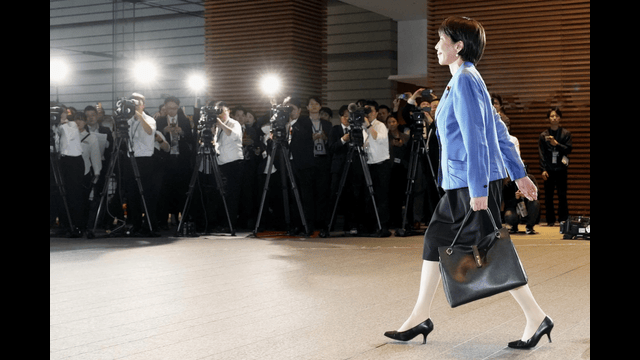
Japanese Prime Minister Sanae Takaichi arrives at the Prime Minister's office in Tokyo, Japan.
Japan’s first female prime minister, Sanae Takaichi, has captured national attention not only for her politics but for her relentless message to “work, work, work, work and work.” The phrase, spoken during her election as leader of the ruling Liberal Democratic Party in October, has now been named Japan’s catchphrase of the year.
The award reflects both admiration for her determination and unease about her stance in a country already struggling with overwork. Takaichi insists the phrase highlights enthusiasm, not a call for excessive labor. Still, the reaction has been mixed in a nation where long hours remain a sensitive issue, especially for women balancing career, caregiving, and household obligations.
Takaichi Clarifies Her “Work” Message
Accepting the catchphrase award this week, Takaichi stressed that she does not endorse overwork.
She emphasized that her words were meant to inspire energy, not pressure citizens into longer workdays.
Her original remark came during an emotional speech to party members in early October. She urged lawmakers to “work like a horse” and added that she would “abandon the idea of a work-life balance” as she pushed to rebuild the struggling LDP. The determined tone made a powerful impression across Japan’s political landscape.
New Leader, New Tensions With China
Takaichi’s first weeks in office have not been quiet. She quickly entered a diplomatic clash with Beijing after suggesting possible Japanese military action if China attacked Taiwan.
The comments heightened tensions in the region and underscored her hard-line conservative approach, an ideology she hopes will win back right-wing supporters after the party’s recent election setback under former leader Shigeru Ishiba.
The Rise of the “Sana-katsu” Trend
While her political positions spark debate, her style has created a wave of fascination. Young women across Japan have begun “Sana-katsu,” a trend meaning “rooting for Sanae,” where fans copy her workwear, accessories, and professional look.
Her simple but polished wardrobe has become a cultural talking point, bringing new attention to the prime minister’s everyday appearances.
Exhausting Schedules and a Hot-Tub Escape
Takaichi’s dedication comes with personal sacrifice. She admitted to lawmakers that she sleeps “two hours a night, four at most.”
Her grueling schedule once included a 3 a.m. meeting ahead of parliament’s first day in November.
Alongside her workload, she also cares for her husband recovering from a stroke. She joked that the lack of sleep is “probably bad for my skin,” revealing a rare glimpse of vulnerability.
Her one indulgence? A relaxing soak in a hot tub morning and night — which she calls her “blissful time.”
Fashion Fandom: The “Sanae Bag” and Viral Pen
One accessory has become a nationwide sensation — her black leather Grace Delight Tote, now popularly called the “Sanae Bag.”
Made by Hamano Inc., a 145-year-old Tokyo bagmaker, the bag costs 136,400 yen ($875) and can fit A4 papers. After photos of Takaichi entering her office with it went viral, sales skyrocketed. All eight colors sold out, and new buyers must wait until August for delivery.
Her favorite pink Jetstream 4&1 pen also went viral. Fans proudly post photos saying “Matching Sanae,” adding to her rising status as a cultural icon.
A Style Icon, But Not a Feminist Leader
Psychologists note that Takaichi represents a new kind of female role model in Japan — one not defined by femininity but by power, simplicity, and discipline.
Her short hair, practical clothing, and no-frills attitude differ from past female figures celebrated for grace rather than authority.
However, many feminists remain skeptical. Takaichi strongly supports traditional gender norms, advocates for male-only imperial succession, and opposes allowing married couples to keep separate surnames — a change widely supported by gender equality groups.
Still, her influence is undeniable. As Professor Namiko Kubo-Kawai explains, “She fits perfectly as a stylish role model” for women who never expected to admire a prime minister. Her rise shows that female role models in Japan are becoming more diverse, even if their politics differ from modern feminist ideals.