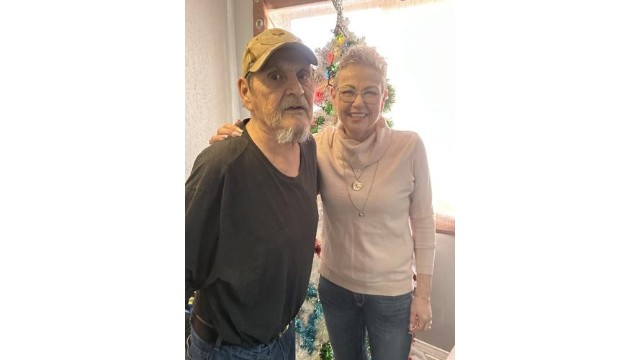
Ruben St. Charles, left, stands next to his patient advocate Bonnie Marwood in Saskatoon in a Dec. 25, 2024, handout photo, months after his ponytail was cut off without his consent at a Saskatoon hospital. THE CANADIAN PRESS/Handout - Bonnie Marwood
Saskatchewan’s health authority has introduced a new policy requiring staff to get explicit consent before cutting the hair of Indigenous patients. The change follows the outcry over a 2023 incident where a Métis man’s ponytail was cut without his approval just before surgery.
The new directive is being shared across health care facilities in the province. It clearly states that no Indigenous patient’s hair should be cut without consent from the individual, their family, or a designated health decision-maker. Hair should only be trimmed when absolutely necessary, such as in cases involving head trauma or brain surgery.
A Cultural Step Forward
Hair holds deep cultural and spiritual significance in many Indigenous communities. Cutting it without permission is not just a personal violation—it can carry emotional and spiritual harm.
This policy marks a shift toward acknowledging that reality in the healthcare setting.
The Incident That Sparked Change
The move comes nearly a year after Ruben St. Charles, a Métis elder in his 70s, had his ponytail cut at a Saskatoon hospital before undergoing hip surgery. He hadn’t given permission. And since that day, he’s struggled to grow his hair back.
His patient advocate, Bonnie Marwood, has been pushing for change ever since. While she sees the new policy as a positive step, she says St. Charles has never received a formal apology.
“He still wants the same thing,” Marwood said. “An apology from the woman who cut his hair.”
A Step, But Not the Full Journey
Marwood believes this policy is just the beginning. She says what’s really needed is cultural education for healthcare workers, especially when treating Indigenous patients.
In March, the Saskatchewan Health Authority invited St. Charles to a sharing circle at the hospital. There, he was given an eagle feather and a package of cigarettes by an elder—gestures steeped in traditional meaning. But Marwood says St. Charles didn’t fully understand the cultural symbolism, as he had never been part of such ceremonies before.
“To truly reconcile, you have to ask what will make someone feel whole again,” Marwood said. “Right now, Ruben doesn’t feel whole.”
Calls for Inclusion and Education
Beverly Fullerton with Métis Nation–Saskatchewan welcomed the policy but echoed the need for deeper changes.
“This is a small but meaningful step,” she said. “But Indigenous voices must be included in decisions about health care. That’s how we build systems that honour dignity and rights.”
Not an Isolated Case
Sadly, the experience of St. Charles isn’t unique.
In December, Dexter Adams, another Indigenous patient, had his braids cut at Edmonton’s Royal Alexandra Hospital. His wife later discovered his eagle feather and traditional medicine tossed in the trash.
Alberta Health Services has since begun training staff on the cultural importance of hair. Sessions are being held to help employees understand what these practices mean to the people they serve.
Moving Toward Respectful Care for Indigenous Patients
As Canada reckons with its relationship with Indigenous communities, healthcare has become a critical front for change. Policies like Saskatchewan’s—while small on paper—can have a profound impact on restoring trust.
But trust isn’t built in a day.
It comes with listening. It comes with learning. And it comes with the willingness to ask a simple question before taking any action: Is this okay with you?
That’s where reconciliation begins.