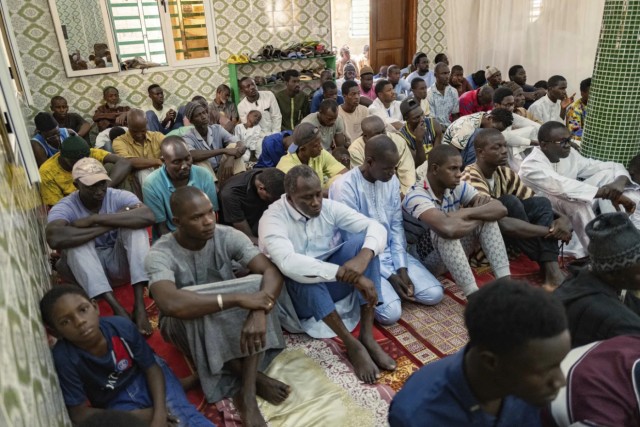
Worshippers listen to Imam Ibrahima Diane, advocate for an end to gender-based violence and practices like female genital mutilation, deliver his sermon at the Great Mosque of Nietty Mbar in Thiaroye, a suburb of Dakar, Senfal, Friday, July 4, 2025.
On a warm evening in Dakar, Imam Ibrahima Diane addressed a group of men. His message was simple—help your wives, support your families, and strengthen your faith.
“The Prophet himself says a man who does not support his wife and children is not a good Muslim,” Diane reminded them. He spoke about bathing his baby, helping with chores, and sharing responsibility. Some men laughed, while others clapped.
This gathering was part of Senegal’s “school for husbands” program, an initiative backed by the United Nations. It trains respected community men to promote gender equality, better health practices, and family responsibility.
Breaking Old Traditions
In many parts of Senegal, men hold the final say in family decisions. This includes vital choices like hospital visits, family planning, and prenatal care. Women often need permission to seek medical help.
By attending these sessions, leaders like Diane take the message to wider audiences. During Friday prayers, he discusses maternal health, gender-based violence, and HIV stigma. Many women say their husbands have changed since listening to him. Some men have even admitted the sermons inspired them to become more caring partners and fathers.
From Soldiers to Supporters
Former army commando Habib Diallo shared how the program changed his mindset. He once doubted hospitals. But after attending discussions, he encouraged his son to take his pregnant wife to the hospital.
“At first, my son worried about cost and didn’t trust doctors. But I explained it was safer,” Diallo said. His advice likely saved two lives.
A National Strategy
The program began in Senegal in 2011. In recent years, it gained recognition from the Ministry of Women, Family, Gender and Child Protection. Officials view it as a powerful tool to reduce maternal and infant deaths.
Health worker Aida Diouf believes change cannot happen without men’s involvement. Many husbands are still uncomfortable with their wives being treated by male doctors. That’s why engaging men directly has become essential.
Similar programs in Niger, Togo, and Burkina Faso showed success. They improved access to prenatal care, expanded use of contraceptives, and encouraged skilled birth attendance.
Beyond Maternal Health
The “schools for husbands” also focus on wider gender issues. Topics include girls’ education, equality, and the dangers of female genital mutilation.
Today, more than 20 such schools operate across Senegal, training over 300 men. These men act as peer educators, visiting homes and hosting talks. Many were once strict enforcers of patriarchal rules. Now they promote family planning and reject forced marriages.
Candidates are chosen carefully. They must be married, respected, and trusted in their communities. After training, they become role models for other men.
For many women, the change is visible. “My husband used to bark orders,” said 52-year-old Khary Ndeye. “Now he cooks and helps with daily chores.”
Progress but Challenges Remain
Maternal and infant deaths have declined in Senegal. But the numbers remain alarming. In 2023, there were 237 maternal deaths for every 100,000 live births. Twenty-one newborns out of every 1,000 died within a month.
The UN wants those figures reduced to 70 maternal deaths per 100,000 and fewer than 12 newborn deaths per 1,000 by 2030. Senegal still has a long way to go.
One major issue is home births. Program coordinator El Hadj Malick stresses that educating men is crucial. “When men support their wives, take them to hospitals, and help at home, lives are saved,” he said.
Changing Mindsets
Still, shifting deep-rooted beliefs is difficult. Some men resist conversations on gender, fearing they are linked to foreign ideas or taboo topics.
“When we talk about gender, it creates tension,” Malick explained. “But when we frame it around women’s right to health, people understand. It becomes human, not political.”
The “schools for husbands” movement is slowly reshaping families and communities in Senegal. By encouraging men to step forward as partners, it aims to save more mothers, protect more children, and build a healthier future.