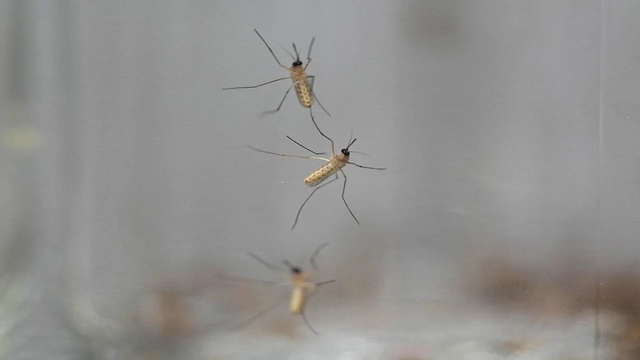
Mosquitoes stick to the inside of a jar filled with repellent during a test at the Centers for Disease Control lab in Fort Collins, Colorado. (Photo: David Zalubowski, The Canadian Press/AP)
In a move to protect public health, officials in British Columbia have set up mosquito traps throughout the Sea-to-Sky region as part of a new pilot study. The project aims to monitor the local mosquito population and better understand the diseases these insects may carry.
Health experts decided to take action after four people fell seriously ill late last year due to mosquito-borne viruses. All four developed brain swelling and had likely caught the infections somewhere between Howe Sound, Whistler, and Pemberton. Thankfully, each of them recovered.
Dr. Moliehi Khaketla, a medical health officer with Vancouver Coastal Health (VCH), explained that while these types of viruses aren't new to the province, it's rare to see such severe cases. “This prompted us to look more closely at what’s happening in the Sea-to-Sky corridor,” she said.
Traps are already in place, and the study is expected to run for three months. Health authorities hope to identify what types of mosquitoes are active in the region and which viruses they may be spreading.
Dr. Khaketla added that the aim is not just scientific—it’s also about public awareness. “We want residents and visitors to understand that mosquitoes are active in this region during the summer,” she said. “Being aware helps people take steps to protect themselves.”
The viruses under investigation are part of a group known as the California Serogroup viruses. Most infections don’t cause symptoms, but in some cases, people may experience flu-like signs—fever, headaches, fatigue, and even nausea or vomiting. In more severe instances, brain swelling can occur.
According to Vancouver Coastal Health, most mosquito-related illnesses happen between May and October, when mosquito activity peaks. However, with temperatures rising due to climate change, that season may be stretching longer than before.
Officials are urging people to take precautions. Dr. Khaketla advised wearing long-sleeved clothing, using insect repellent, and eliminating stagnant water near homes—things like birdbaths, buckets, or clogged gutters—since these are ideal breeding spots for mosquitoes.
Vancouver Coastal Health is working with several partners on the project, including the B.C. Centre for Disease Control, the University of British Columbia, and local Indigenous communities such as the Lil’wat and Squamish Nations. This teamwork is vital to ensuring a broader understanding of potential health risks.
Anyone who has been in the Sea to Sky region recently and begins to experience severe headaches, fever, or seizures is advised to seek medical attention without delay.
As the summer continues, residents and visitors alike are encouraged to stay vigilant, take preventive steps, and support ongoing efforts to monitor and manage the risks posed by mosquito-borne illnesses.