

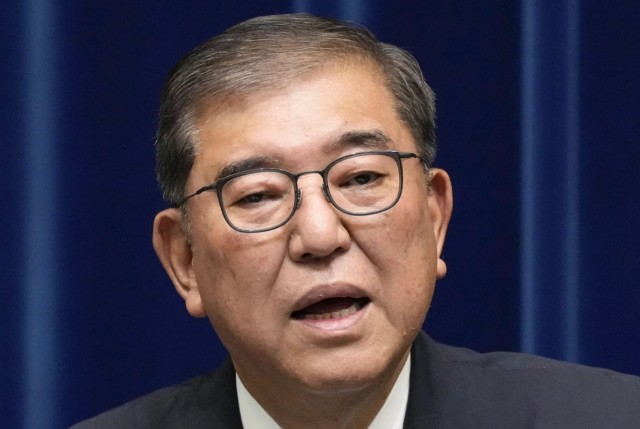
Japanese Prime Minister Shigeru Ishiba speaks during a press conference at the prime minister’s office in Tokyo, Japan, Sunday, Sept. 7, 2025.
Japan’s Prime Minister Shigeru Ishiba has announced his resignation after his party suffered a historic parliamentary election loss. The 68-year-old leader, who took office less than a year ago, confirmed on Sunday that he will step down as both prime minister and head of the ruling Liberal Democratic Party (LDP).
The announcement comes after weeks of growing pressure from within his own party to take responsibility for July’s electoral defeat. Ishiba admitted it was a “painful decision,” but said it was necessary to preserve unity within the LDP.
Ishiba Steps Down After Tariff Talks Breakthrough
Ishiba explained that he delayed his resignation until he achieved progress in U.S. tariff negotiations. On Friday, U.S. President Donald Trump agreed to reduce tariffs on Japanese cars and other products from 25% to 15%.
“Who would seriously negotiate with a government whose leader says he is stepping down?” Ishiba said at his press conference. He added that once the tariff milestone was secured, it was the right time to make way for a successor.
Party Pressure Forces Ishiba’s Hand
The resignation comes just a day before the party was to decide on an early leadership election, widely seen as a no-confidence vote against him. Ishiba said he stepped aside to prevent a damaging split within the LDP.
He announced that the party will instead hold a leadership vote in October. Until then, Ishiba will continue as prime minister, ensuring a smooth transition to the next government.
A Brief and Turbulent Leadership
Ishiba’s leadership lasted only one year, highlighting instability within Japan’s minority government. He had finally won the top job in his fifth attempt but now admits he could not meet the public’s expectations.
“As a result, I failed to go my own way, and I wonder how I could have done better,” Ishiba confessed. He ruled out contesting the next leadership race, though he expressed regret about leaving behind unfinished reforms. These included salary hikes, agricultural restructuring, and national security measures.
Consecutive Election Defeats
The July parliamentary election was a major blow for the LDP. The ruling coalition failed to secure a majority in the 248-seat upper house. This followed another defeat in the more powerful lower house in October, shortly after Ishiba became prime minister.
Although his supporters argue that many losses came from ultra-conservatives tainted by corruption scandals, the damage to his government was undeniable. Public opinion polls showed that while pressure to resign temporarily boosted Ishiba’s support, the calls for change grew too strong to ignore.
Rivals and Successors
Several prominent figures are emerging as possible replacements. Agriculture Minister Shinjiro Koizumi, former economic security minister Sanae Takaichi, and Chief Cabinet Secretary Yoshimasa Hayashi are among the frontrunners.
Analysts warn that whoever succeeds Ishiba will inherit a difficult challenge. With the LDP lacking a majority in both houses, the new leader will need opposition support to pass legislation. Otherwise, the government risks repeated no-confidence motions.
A Nation Divided But Hopeful
Despite the political turmoil, opposition parties remain too divided to unite against the government. Voters, however, are demanding stability and action.
Office worker Takahiro Uchi said he welcomed Ishiba’s resignation but worries about the uncertainty ahead. “I hope for change, but there is concern about who will take over,” he said.
Masataka Nishioka, an employee at a dental equipment firm, shared similar hopes. “I really want a kind of politics that makes life easier for everyone,” he said.
Prime Minister Shigeru Ishiba’s resignation marks the end of a short and turbulent leadership. His departure reflects not only the fallout of consecutive election defeats but also the deep divisions within the ruling party. As Japan faces economic challenges, tariff negotiations, and regional tensions, the choice of the next leader will be crucial in shaping the country’s future.













