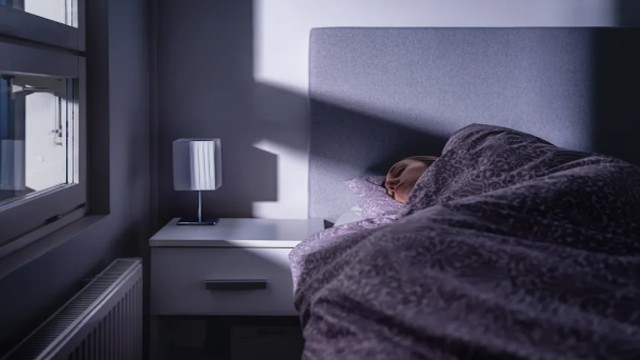
Your level of nighttime light exposure while you’re sleeping could affect your cardiovascular health. Getty Images.
Keeping your room dark while sleeping might do more than just improve your sleep. New research suggests it could also protect your heart.
A large-scale study has found that exposure to bright light during sleep hours may increase the risk of developing cardiovascular disease — the leading cause of death globally.
Bright Nights, Higher Heart Risk
Researchers discovered that people who slept under the brightest nighttime light — comparable to having overhead bedroom lights on — faced significantly higher health risks. They were 56% more likely to develop heart failure, 47% more likely to suffer a heart attack, and 32% more likely to have coronary artery disease.
The study, published in JAMA Network Open, tracked nearly 89,000 participants over nine years using wrist-worn light sensors. On average, participants were around 62 years old and part of the long-running UK Biobank project, which has been monitoring the health of over half a million people since 2006.
Dr. Daniel Windred, co-first author and research associate at Flinders University in Australia, said the team analyzed an astonishing 13 million hours of nighttime light data. However, he noted that while the study measured light intensity, it didn’t record the exact sources — such as lamps, screens, or outdoor lights.
Why Light at Night Matters
Exposure to light at night can interfere with melatonin production — the hormone that regulates sleeping and supports heart health. Disruptions to this rhythm, known as the circadian cycle, can throw several vital processes off balance, including blood pressure and metabolism.
“Our internal clock runs on a 24-hour cycle and affects almost every cell in the body,” Dr. Windred explained. “When light exposure confuses that rhythm, it can impact cardiovascular function.”
Past studies have linked circadian rhythm disruption with heart problems, but this research — one of the largest of its kind — strengthens that evidence.
Who Faces the Greatest Impact
The study also found that women had higher risks of heart failure and coronary artery disease, while younger participants were more prone to heart failure and atrial fibrillation, a rapid and irregular heart rhythm.
Interestingly, researchers observed that bright light exposure during daytime hours was linked with better cardiovascular health — underscoring the importance of getting natural light in the morning and keeping nights dark.
A Simple Lifestyle Change
Experts say reducing nighttime light exposure could be a simple yet effective way to support heart health.
“Start by dimming household lights a few hours before bed,” advised Dr. Julio Fernandez-Mendoza, a sleep specialist at Penn State Health, who was not part of the study. “Avoid screens when possible and choose warm, low lighting instead.”
If complete darkness isn’t possible, researchers suggest blackout curtains, sleep masks, or turning off bright alarm clocks.
More Research Needed
While the findings show a clear link between nighttime light and cardiovascular risk, they don’t prove direct cause and effect. Experts believe more diverse studies are needed to confirm whether reducing light exposure can actively prevent heart disease.
Still, the message is clear — your bedroom lighting habits might be influencing more than just how well you sleep. Keeping nights dark and mornings bright could be one of the simplest ways to care for your heart.