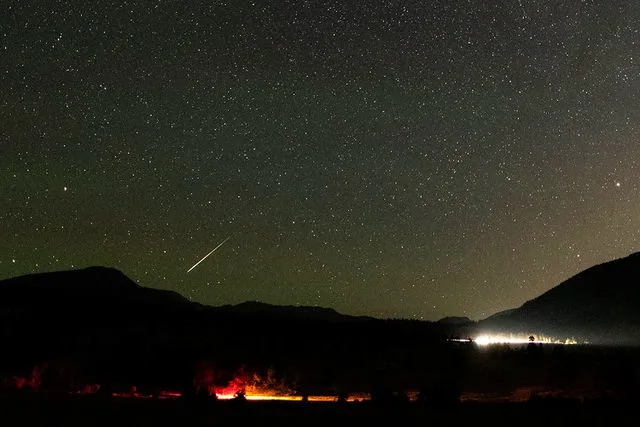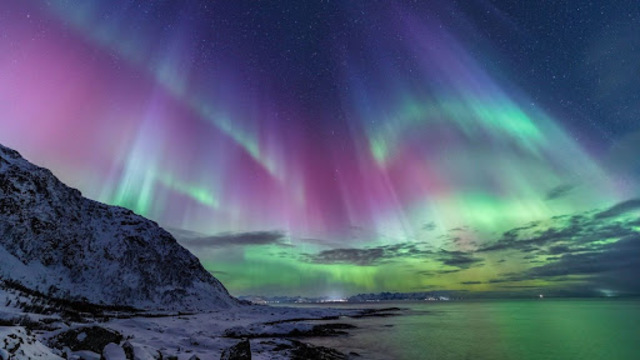
The northern lights might be seen from Alaska to Illinois this Labour Day, as an approaching solar storm could trigger geomagnetic activity. (Image credit: Space.com)
A powerful solar storm is heading toward Earth, and it could bring an impressive northern lights display across much of the United States during the Labour Day holiday.
The event comes from a fast-moving coronal mass ejection (CME) that erupted from the sun on August 30. The system is expected to hit Earth’s magnetic field late on September 1 and continue into early September 2.
Auroras may reach farther south
Forecasters at the Space Weather Prediction Centre expect the storm to trigger geomagnetic activity at G2 levels, possibly reaching G3 strength. That could push auroras much farther south than usual. Millions of people across northern states may have a chance to see colourful skies.
The storm’s centre could cause green and purple lights to stretch into areas unaccustomed to aurora sightings.
A rare double eruption
Scientists believe this event may involve two separate solar eruptions merging on their way to Earth. Dr. Tamitha Skov, a space weather expert, explained that one ejection might catch up with another, creating what she called a “cannibal CME.”
She warned that the combined force could cause stronger than expected effects. “Impact is expected by late September 1. G2+ conditions possible,” she wrote.
Where and when to look
The best viewing times are expected from late night September 1 through the early hours of September 2. The strongest activity should occur between 2 a.m. and 5 a.m. Eastern time.
Forecasts show 18 states where people may glimpse the lights if skies stay clear. They include Alaska, Montana, North Dakota, Minnesota, Wisconsin, Michigan, Maine, South Dakota, Vermont, New Hampshire, Idaho, Washington, Oregon, New York, Wyoming, Iowa, Nebraska, and Illinois.
Tips for better viewing
Auroras remain unpredictable, but skywatchers can improve their chances with a few steps. Experts recommend leaving city lights behind, facing north, and finding a clear horizon. The lights often appear around midnight, but can show up earlier or later. Patience is key, as auroras often flicker in waves.
Understanding the storm scale
Geomagnetic storms range from G1 (minor) to G5 (extreme). A G3 storm, like the one expected, can bring auroras down to states like Illinois, New York, and Oregon. These storms may also cause minor radio issues or small power grid disturbances.
Looking ahead
With the solar cycle approaching peak activity, more storms like this one are likely over the coming years. For now, the upcoming weekend could offer one of the best northern lights shows in recent memory for people across the United States.