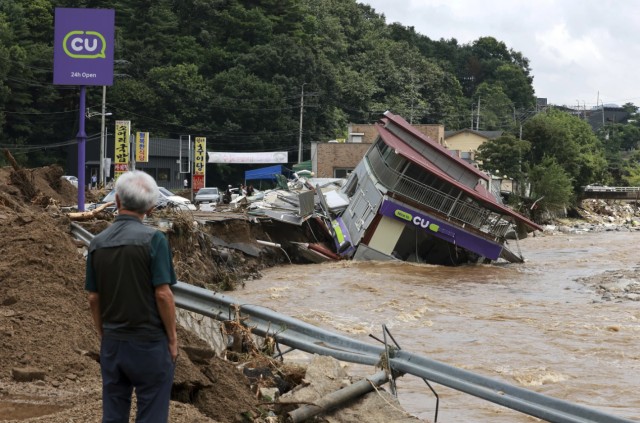
A damaged convenience store building is seen after heavy rains in Gapyeong, South Korea, Sunday, July 20, 2025.
Torrential rains battered South Korea for five straight days, leaving a deadly trail of destruction. By Sunday, the government confirmed 17 deaths, and 11 people were still missing. The nonstop downpour triggered flash floods, landslides, and structural collapses across multiple regions.
Fatal Weekend in Sancheong
Sancheong, a southern town, bore the brunt of the disaster. Over the weekend alone, 10 bodies were recovered there. Landslides, collapsing homes, and rapid flash floods claimed lives and swept away residents. The ministry confirmed that four people remain unaccounted for in the area.
Gapyeong and Gwangju Hit Hard
Gapyeong, located northeast of Seoul, also reported two tragic incidents. One person died when their house crumbled under heavy rainfall. Another victim was swept away by an overflowing stream. Meanwhile, Gwangju reported one fatality and seven missing individuals, making it one of the worst-affected cities.
Previous Deaths from Collapsed Infrastructure
Earlier last week, a fatal incident occurred in Osan, just south of Seoul. A car was buried when the retaining wall of an overpass gave way, killing one person. The collapse, caused by the saturated ground and intense rain, added to the growing list of casualties.
In South Chungcheong province, three more lives were lost. Victims were found in a submerged vehicle, a swollen stream, and a flooded basement. Each case highlights how quickly rising waters turned ordinary spaces into deadly traps.
Mass Evacuations Continue
As of Sunday 4 p.m., over 2,730 residents had been evacuated from their homes. Emergency shelters were set up to house displaced families. Local authorities continue to monitor areas vulnerable to further flooding and landslides.
While the rain has ceased in most parts of the country, concerns remain. Damaged infrastructure and saturated soil could lead to more incidents if conditions worsen again.
Rainfall Reached Dangerous Levels
The Interior and Safety Ministry reported unprecedented rainfall totals. Southern regions experienced between 600 and 800 millimetres (24–31 inches) of rain since Wednesday. These numbers represent some of the heaviest rainfalls South Korea has seen in recent years.
Heavy Rain Alerts Lifted – But Vigilance Remains
By Sunday, heavy rain alerts were lifted in most regions. The skies cleared, but rescue operations and damage assessments continued. Officials urged the public to remain cautious, especially in areas prone to landslides and flash floods.
A Wake-Up Call on Climate Resilience
The recent heavy rains in South Korea have underscored the growing risks of extreme weather events. The widespread destruction has raised concerns about infrastructure preparedness and emergency response systems. As rainfall patterns shift, experts warn that South Korea may need to adapt faster to avoid further tragedies.
A Nation in Recovery
The aftermath of the heavy rains in South Korea has left families grieving and towns rebuilding. With 17 lives lost and 11 people still missing, the disaster has deeply shaken the nation. As recovery efforts continue, the focus remains on supporting survivors and strengthening the country’s resilience against future weather-related catastrophes.