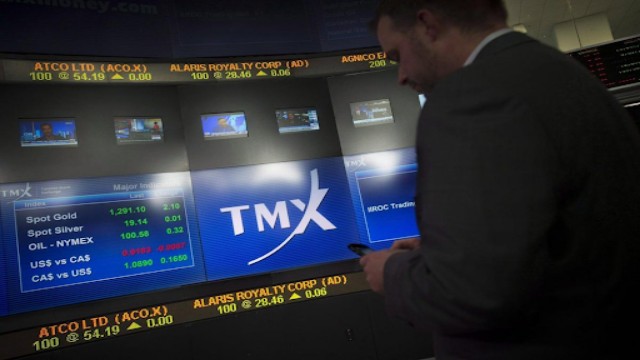
The TMX Group’s broadcast centre, located in Toronto’s financial district (Photo credit: Darren Calabrese, The Canadian Press)
Canada’s main stock index slipped on Monday, dragged down by losses in the real estate sector and renewed concerns over international trade tensions. The S&P/TSX composite index closed at 27,020.28, down 15.88 points, marking a sluggish start to the week for Canadian markets.
According to Ryan Crowther, a portfolio manager at ClearBridge Investments under Franklin Templeton, investors faced a "soft start to the week" as trade worries took center stage. Fresh talk of tariffs, particularly from the U.S., rattled confidence on both sides of the border.
“Tariffs are back in the headlines, and that’s driving uncertainty,” Crowther explained. “Even though it’s not new, the re-emergence of the issue has forced investors to reconsider the risks.”
Tariffs Trigger Widespread Pullback
Markets across the board reflected investor unease. In the U.S., all major indexes ended the day in the red. The Dow Jones dropped 422.17 points to 44,406.36. The S&P 500 fell 49.37 points to 6,229.98, while the tech-heavy Nasdaq shed 188.59 points, closing at 20,412.52.
The decline followed news that the U.S. will impose steep tariffs on goods from Japan and South Korea starting August 1. The move, announced via letters from the White House, aims to pressure the two Asian allies into renegotiating trade terms. U.S. officials say the 25% duties are meant to address trade imbalances.
Commerce Secretary Howard Lutnick stated Sunday that there’s still time to reach new deals before the deadline, which was extended from July 9 to August 1.
Canada Not Directly Targeted—But Not Off the Hook
While Canada wasn’t named in the latest wave of global tariffs, it continues to face economic pressure. Tariffs related to fentanyl, energy, and potash remain in place—at rates of 25% and 10% respectively—for goods not meeting the Canada-U.S.-Mexico trade agreement guidelines. In addition, Canadian exports of steel, aluminum, and automobiles are still subject to older tariffs imposed by the U.S.
Crowther warned that the indirect effects of these measures are already showing. “Companies are holding back on spending,” he said. “We’ve seen delays in capital investments, which eventually impact valuations and, by extension, stock prices.”
Earnings Season Could Offer Clues
As the third-quarter earnings season approaches, Crowther urged investors to keep an eye on company valuations. “It’s not just about tariffs. Investors should weigh all risks—tariffs, inflation, general market uncertainty—and consider how they’re reflected in current stock prices.”
Despite the unease, Crowther remains optimistic about investment opportunities in Canada. “There are still good options out there,” he noted. “But it’s vital to be smart about what you’re buying and how much you’re paying.”
Currency and Commodities Update
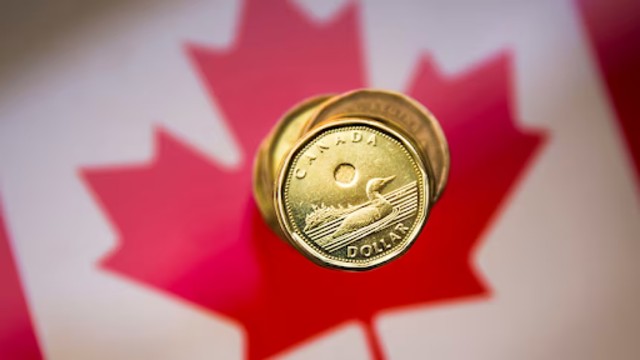
On the currency front, the Canadian dollar dipped slightly to 73.23 cents U.S., compared to 73.50 cents U.S. on Friday.
Commodities showed mixed movement. August crude oil rose by 93 cents to US$67.93 per barrel, while gold fell by 10 cents to US$3,342.80 an ounce.