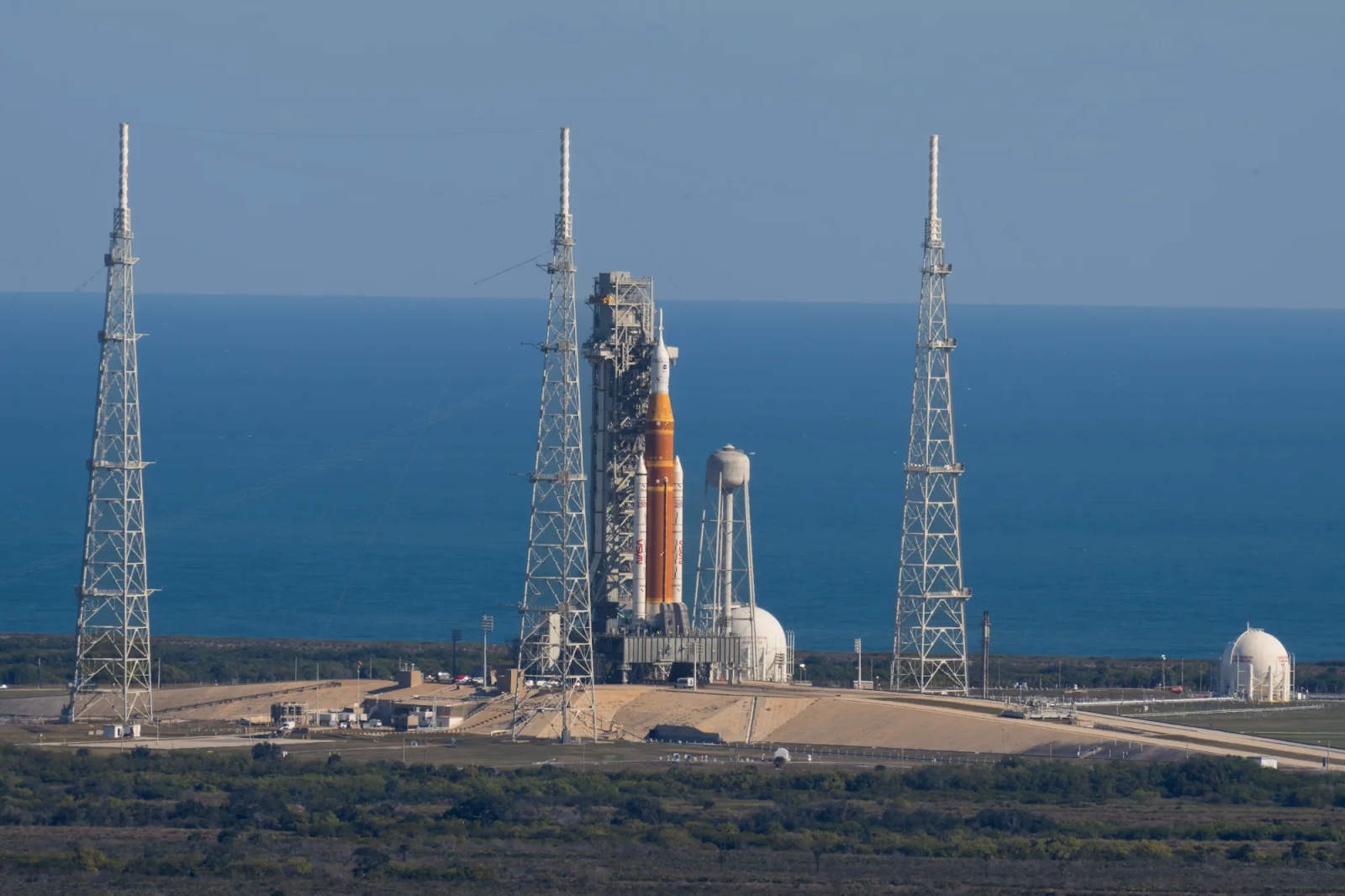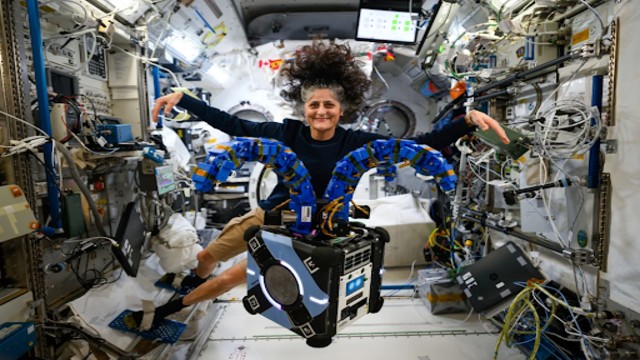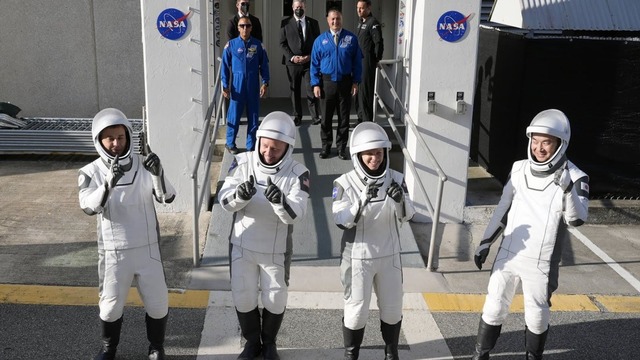
Astronauts Oleg Platonov (Russia), Mike Fincke, Zena Cardman, and Kimiya Yui (Japan) are seen in a group photo as they head out from the Operations and Checkout Building to Kennedy Space Center’s Launch Pad 39A. They’re preparing for their scheduled launch aboard a SpaceX Falcon 9 rocket on Friday, August 1, 2025, in Cape Canaveral, Florida. (AP Photo/John Raoux)
After a long wait caused by Boeing’s Starliner issues, four astronauts finally launched toward the International Space Station (ISS) on Friday, thanks to SpaceX. The international crew—made up of astronauts from the U.S., Japan, and Russia—blasted off from NASA’s Kennedy Space Center to begin their six-month mission in orbit.
A Much-Delayed Mission Finally Takes Off
Zena Cardman, a NASA biologist and polar explorer, was originally set to go to space last year. But she and fellow NASA astronaut Mike Fincke were bumped to make room for Starliner’s troubled test flight. Now, after more than a year of waiting, Cardman called the SpaceX ride “the experience of a lifetime” upon reaching orbit.
Joining her were Fincke, Japanese astronaut Kimiya Yui, and Russian cosmonaut Oleg Platonov. They’ll replace the crew who launched in March as temporary fill-ins for the two astronauts still stuck aboard the space station due to the failed Starliner return mission.
From Starliner to SpaceX: A Necessary Switch
Starliner’s troubles continue to shadow NASA’s schedule. The spacecraft’s last mission left astronauts Butch Wilmore and Suni Williams stranded in orbit for nine months on what was supposed to be a one-week flight. Engineers are still dealing with helium leaks and thruster failures that occurred shortly after liftoff.
Because of Starliner’s uncertain future, NASA reassigned Fincke and Yui—both originally training for Starliner missions—to the current SpaceX flight. Fincke expressed his joy at being back in space, having last flown during the shuttle era in 2011.
Overcoming Personal and Technical Setbacks
Oleg Platonov’s journey to space was no less dramatic. A former Russian fighter pilot, he was removed from earlier Soyuz flights due to a confidential health issue, which has since been resolved. His addition to this mission marks a return after years of waiting.
This successful SpaceX mission shows NASA’s increasing reliance on Elon Musk’s company while Boeing tries to fix its ongoing Starliner issues.
Budget Cuts Force New Strategy
NASA’s budget crunch has forced the agency to rethink its plans. It is now considering stretching astronaut missions from six months to eight and possibly flying only three astronauts instead of four per trip. SpaceX’s Dragon capsule is being certified for longer stays, which means the newly launched crew might not return until April next year.
NASA may also send a cargo-only Starliner flight before risking another crewed mission, buying more time to work out the technical kinks.
What Lies Ahead for the ISS
NASA and Roscosmos are already planning the final years of the space station. The goal is to safely guide the ISS into the Pacific Ocean between late 2030 and early 2031. The U.S. and Russia must work together to ensure a safe descent, involving complex thruster coordination and fuel deliveries by 2028.
NASA hopes SpaceX will launch the final “deorbit” mission in 2029. Crews will remain on board until the station’s final four to six months to address any last-minute issues, after which the uncrewed station will be guided into the ocean.