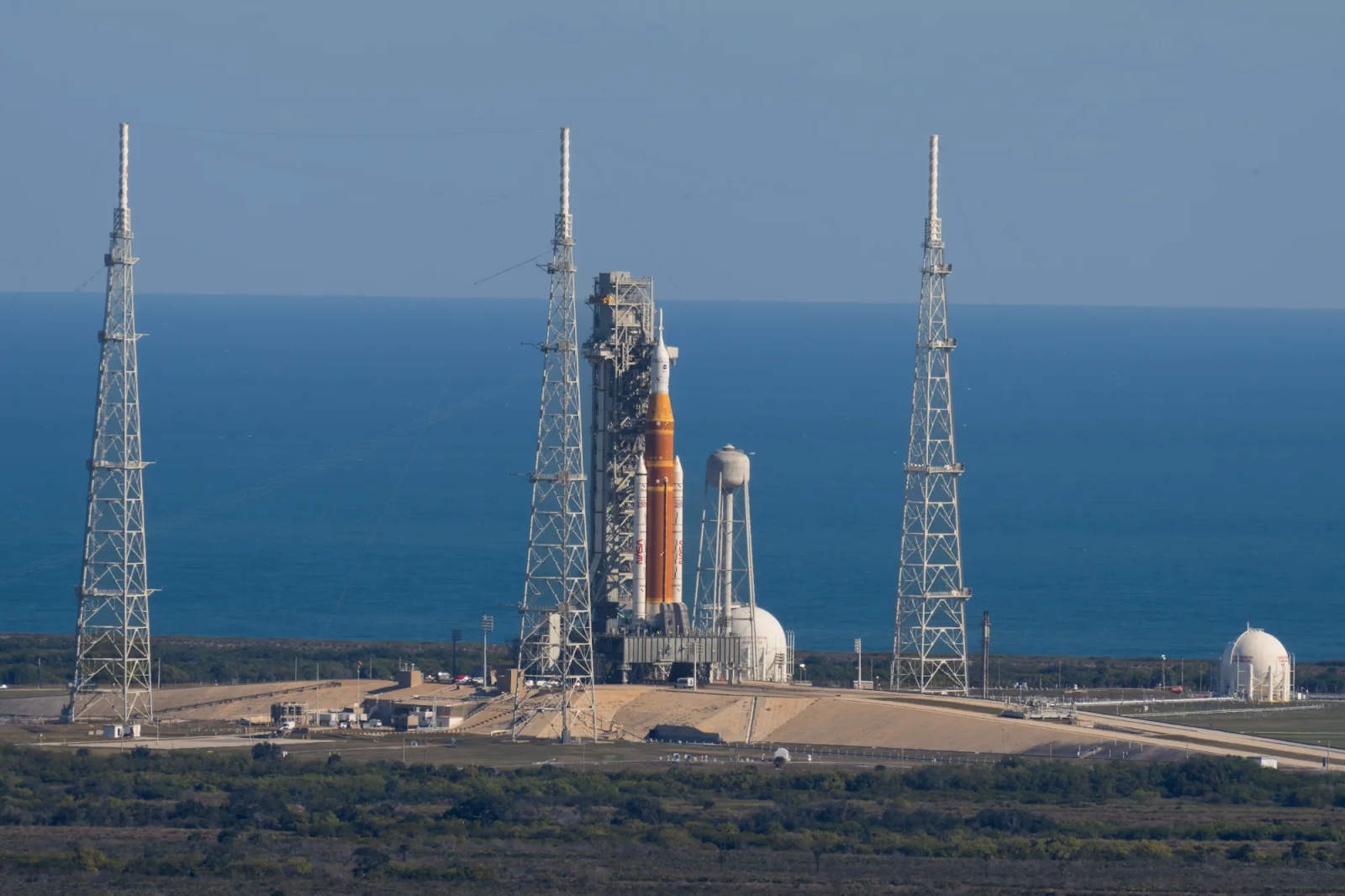
A SpaceX Falcon 9 rocket carrying four astronauts launched aboard the Dragon spacecraft from Launch Pad 39A at Kennedy Space Center in Cape Canaveral, Florida, on Wednesday, June 25, 2025. (Photo: AP/Terry Renna)
SpaceX’s ambitious space plans hit a wall in the Bahamas after an agreement to land reusable Falcon 9 rocket boosters in Bahamian waters ran into controversy, confusion, and public backlash. What began as a seemingly smooth deal between Elon Musk’s aerospace company and the Bahamian government eventually stirred frustration among local officials and concern among citizens.
Last year, SpaceX offered the Bahamas a tempting proposition: in return for letting its Falcon 9 boosters land off the Exuma coast, the nation would receive Starlink internet terminals for military vessels — a deal sweetened further with a $1 million donation to the University of the Bahamas and educational seminars. The contract was signed by Deputy Prime Minister Chester Cooper without involving other key ministries, raising eyebrows within the government.
Though the arrangement promised technological benefits and global prestige, it also sparked confusion and raised questions about transparency. While there’s no evidence Cooper broke any rules, several officials felt sidelined. The situation grew worse after a separate SpaceX rocket — the Starship — exploded mid-flight in March. Its debris reached nearby islands, including parts of the Bahamas, alarming both residents and tourists.
That explosion wasn’t the first. Another similar Starship failure earlier in the year scattered debris over the Turks and Caicos Islands. These repeated accidents stirred environmental concerns and led the Bahamian government to suspend the Falcon 9 landing deal in April, citing the need for a detailed investigation and environmental assessment.
Although no harmful substances were found in Bahamian waters after the blast, the incident amplified fears among citizens, especially those living near launch paths or sailing in local waters. Maritime traffic in the Caribbean is essential for the Bahamas’ economy, particularly tourism. A rocket mishap involving cruise ships or private boats could have disastrous consequences.
SpaceX quickly deployed teams and equipment to recover debris from the ocean around Ragged Island after the explosion. Helicopters, sonar, and ships searched and retrieved remains of the failed launch. Kiko Dontchev, a top SpaceX executive, addressed local reporters, distinguishing the dangerous Starship from the more stable Falcon 9, but skepticism remained.
Environmental groups in the Bahamas have criticized the secretive nature of the agreement. Joe Darville of Save The Bays condemned the lack of public consultation, while government environmental planner Arana Pyfrom voiced concern over airspace sovereignty and future risks. The review process now underway will determine how the nation handles such deals in the future, focusing on clearer rules and stronger environmental safeguards.
Despite the pause, Falcon 9 landings may resume later this year. But for now, the incident serves as a reminder of the delicate balance between cutting-edge technology and the trust of sovereign nations. SpaceX, driven by Elon Musk’s Mars vision, must tread carefully as it seeks global cooperation while handling increasingly complex space operations.