Stellantis, the major carmaker, expects to lose around US$2.68 billion in the first half of the year, mainly because of U.S. tariffs and several large financial penalties.
Stellantis, the automaker behind Jeep and Ram, has announced a projected net loss of 2.3 billion euros (nearly $2.7 billion USD) for the first half of 2025. The company attributes this steep financial blow to the ongoing strain from U.S. tariffs and a series of costly operational changes.
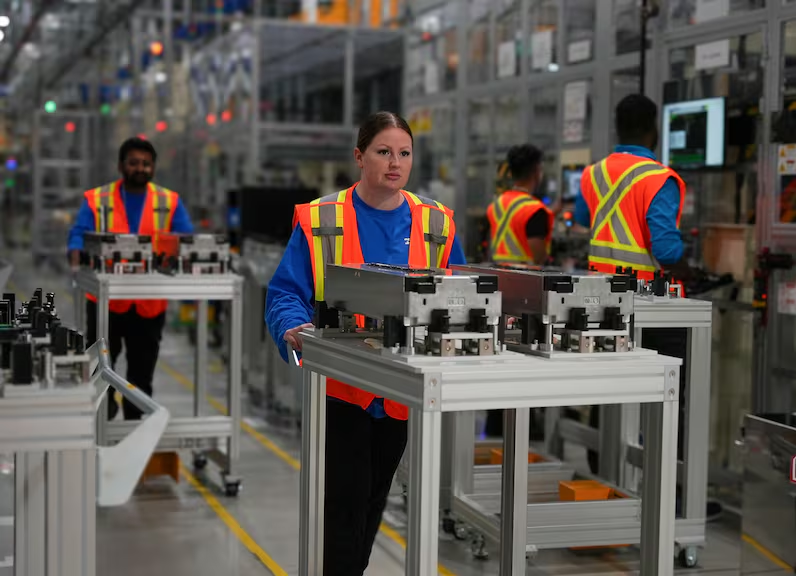
In a statement released Monday, Stellantis outlined that about 300 million euros of the loss stems directly from new U.S. import taxes. The tariffs are part of a broader trade crackdown reinstated earlier this year. In response, Stellantis was forced to pause production at several plants in Mexico and Canada, laying off around 900 workers in Michigan and Indiana.
But the financial fallout doesn't stop there.
Major Charges Deepen the Damage
Stellantis is also preparing for around 3.3 billion euros (approx. $3.84 billion) in pretax charges. These include costs from scrapped vehicle programs, restructuring plans, emission regulation compliance, and platform write-downs. The combined impact has shaken the company’s balance sheet, prompting it to release early financial figures ahead of its official July 29 earnings report.
The automaker had already withdrawn its previous financial forecasts in April, citing uncertainty after the reimposed tariffs by former President Donald Trump. Trump’s trade policy included a sweeping 25% tax on imported cars and parts, aiming to boost U.S. manufacturing. But the move is now backfiring across the auto industry.
Trump’s Tariffs Put Pressure on All Sides
While the goal was to encourage automakers to shift production to the U.S., the real-time result has been disruption, job cuts, and increased manufacturing costs. Vehicles and parts typically cross U.S. borders multiple times during assembly, and the tariffs now affect every step of that process.
Analysts at the Center for Automotive Research estimate that a universal 25% tariff would cost U.S. automakers an added $107.7 billion. For Detroit’s “Big Three”—Stellantis, General Motors, and Ford—the impact alone is expected to be nearly $42 billion.
GM Feels the Heat
General Motors has already felt the pressure. In May, the company cut its profit outlook for the year. It now expects adjusted earnings before interest and taxes between $10 billion and $12.5 billion. A chunk of that reduction—$4 billion to $5 billion—is blamed on potential tariff costs.
Ford’s Forecast Also Hit
Ford Motor also revised its expectations, predicting a $1.5 billion drop in operating profit due to tariffs. The company has temporarily suspended its full-year financial outlook due to the uncertain trade environment.
Although Ford and Tesla manufacture more of their cars within the U.S., which helps reduce tariff exposure, the damage is still significant. Even domestic-focused automakers can’t fully dodge the ripple effects of rising costs across the industry.
A Shift in Leadership
Adding to the turbulence, Stellantis recently saw a leadership change. Antonio Filosa stepped in as CEO just two months ago, following Carlos Tavares’s departure under internal pressure. The change in leadership coincides with one of the company’s most challenging financial stretches since its creation in 2021 through the merger of PSA Peugeot and Fiat Chrysler.
Final Word
Stellantis, headquartered in the Netherlands, now finds itself at the center of a brewing storm—caught between tariffs, restructuring, and uncertain regulations. The coming July 29 earnings release will be closely watched, not just by investors but by an industry on edge.