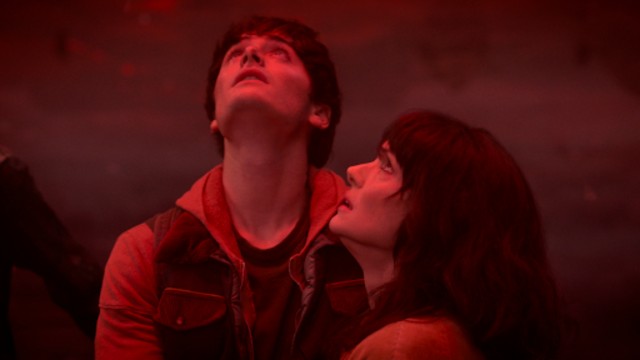
Noah Schnapp and Winona Ryder in 'Stranger Things.' Courtesy NETFLIX
After nearly a decade on Netflix, Stranger Things has finally closed the door on Hawkins. The long-running sci-fi phenomenon wrapped its story with an oversized, effects-heavy finale that aimed for emotional closure but left critics questioning its focus, restraint and long-term legacy.
A Small Show That Grew Too Large
When Stranger Things debuted in 2016, its appeal was simplicity. A tight group of kids. A sleepy town. Strange things hinted, not overexplained. The first season leaned on atmosphere, character and nostalgia rather than spectacle. That balance gradually shifted as the series expanded its mythology and scale.
By the time the final season arrived, the show had become a maximalist event series. The finale stretched beyond two hours, packed with visual effects, extended battles and repeated emotional beats. What once felt intimate now felt overstuffed.
A Finale Built on Volume, Not Precision
The last episode delivered plenty of action. Digital creatures. Apocalyptic stakes. Lengthy montages recalling earlier seasons. Yet much of it felt familiar rather than revelatory. The central conflict still hinged on defeating Vecna, a villain the show has circled for years.
Several emotional moments landed. Eleven asking Hopper to trust her resonated. Mike’s quiet moments of loss felt sincere. Smaller character exchanges carried more weight than the largest set pieces. But these moments were often buried under prolonged action and repeated reminders of past glories.
Choices That Felt Undercut
The finale framed itself around the idea of choice. Characters repeatedly spoke about respecting decisions, even painful ones. That theme weakened when the story appeared to reverse or soften its boldest moves. Eleven’s apparent sacrifice never fully committed. The ambiguity surrounding her fate felt less poetic and more cautious.
The show’s reluctance to draw firm lines extended to the younger cast. Their futures were hinted at but never defined. College plans, careers and new lives remained vague. In contrast, older characters received clearer endings, creating an uneven sense of closure.
Lore Over Humanity
As the series progressed, its mythology became heavier. Wormholes, alternate realms and cosmic explanations crowded the narrative. Critics noted that these revelations often felt anticlimactic. The more the show explained, the less mysterious its world became.
The coming-of-age core that once grounded the story faded behind layers of lore. Emotional stakes became harder to feel when the universe itself felt abstract and weightless.
Nostalgia as a Crutch
The finale leaned heavily on callbacks. Flashbacks. Musical cues. Visual echoes of season one. For longtime fans, these moments sparked recognition. For others, they felt like overuse. Nostalgia replaced momentum. Memory substituted for meaning.
The extended epilogue, set well after the main conflict, offered symmetry with the series’ opening. A final Dungeons & Dragons game closed the circle. Some saw elegance. Others saw indulgence.
So, What Is the Legacy?
At its best, Stranger Things reshaped streaming television. It launched young stars. Revived genre nostalgia. Proved that global hits could emerge from original ideas on Netflix. Its first season remains a high point of modern genre storytelling.
Its ending, however, reflects a broader trend. Bigger episodes. Longer runtimes. Fewer risks. The finale did not erase what came before, but it reinforced a sense that the show outgrew its own strengths.
Stranger Things ends not with failure, but with excess. A cultural landmark that struggled to remember why it mattered in the first place.