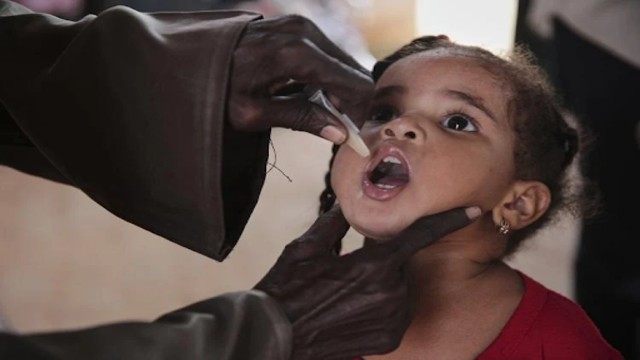
A Sudanese girl receives an oral cholera vaccine during a 10-day vaccination campaign conducted by health ministry workers in Khartoum, Sudan, Wednesday, Aug 13, 2025. (AP Photo)
Health workers in Sudan have launched a 10-day cholera vaccination campaign in Khartoum as the country battles a fast-spreading outbreak made worse by civil war, mass displacement, and heavy rains.
On Wednesday, video footage showed medical teams moving through communities, administering doses to children and adults alike. Healthcare worker Aziza Berima said the campaign began on Sunday and aims to reach more than 150,000 people in the capital.
For families already struggling with the chaos of war, the drive offers some relief. Resident Montaser al-Sayed, who recently returned home after being displaced, said the shots eased fears of infection. Another resident, mother of three Razaz Abdullah, echoed the sentiment, saying, “As a mother, I was relieved.”
A Rapidly Escalating Outbreak
Aid agencies describe the outbreak as severe and difficult to contain. “The collapsed health system makes it extremely hard to trace and control,” said Sophie Dresser, programs director at Mercy Corps-Sudan.
Figures from Sudan’s health ministry, cited by the United Nations, paint a grim picture. Since the outbreak began in July 2024, over 83,000 cases and 2,100 deaths have been reported. This year alone, there have been more than 32,000 suspected cases nationwide.
The situation is particularly concerning in Darfur, where the health ministry has recorded 1,440 suspected cases and 74 deaths. Remote regions, already cut off from consistent aid, are seeing a steady rise in infections.
War Fuels the Crisis
The cholera outbreak comes against the backdrop of Sudan’s devastating civil war, which erupted in April 2023 between the paramilitary Rapid Support Forces and the Sudanese army. The conflict has killed more than 40,000 people and forced about 12 million from their homes.
Crowded shelters, poor sanitation, and limited access to clean water have created the perfect conditions for cholera to thrive. “In places like Darfur and Kordofan, the living conditions make outbreaks almost inevitable,” Dresser explained.
Cholera: A Treatable but Deadly Threat
Cholera is an intestinal infection caused by consuming contaminated food or water. The bacterium Vibrio cholerae can cause severe diarrhea and dehydration, leading to death within hours if untreated. The disease is easily managed with oral rehydration solutions and antibiotics, but in conflict zones, reaching medical care can be difficult.
The World Health Organization calls cholera a “disease of poverty,” as it spreads most rapidly in areas lacking sanitation and clean water.
Past and Present Efforts
Khartoum has faced alarming spikes in cholera before. In late May, 172 people died and over 2,500 were infected within a week. A subsequent 10-day campaign vaccinated more than 2.2 million residents, according to WHO data in July.
This latest round of vaccinations is part of a broader emergency response. However, heavy rainfall is also raising fears of new outbreaks in provinces such as North Kordofan, White Nile, and River Nile.
Aid organizations warn that without better sanitation and stable healthcare services, Sudan will continue to face recurring waves of the disease — each deadlier than the last.